
Tools & Process
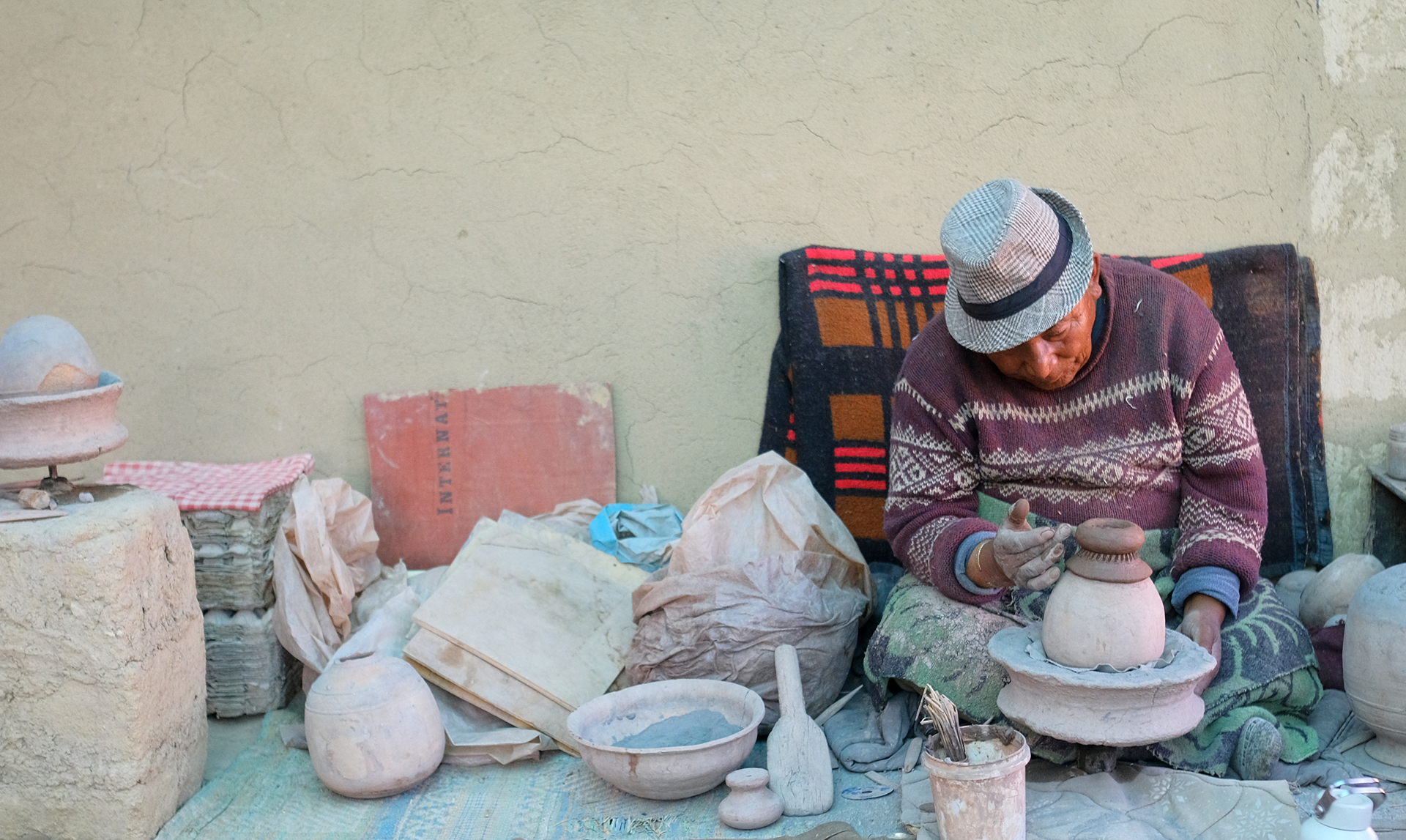
Evolving in harmony with nature, our craft reflects an intimate understanding of the land. The clay and sand are gathered from nearby mountains at an altitude of about 3,600 metres and worked using tools made from local grass, wood, roots, fur, and leather.
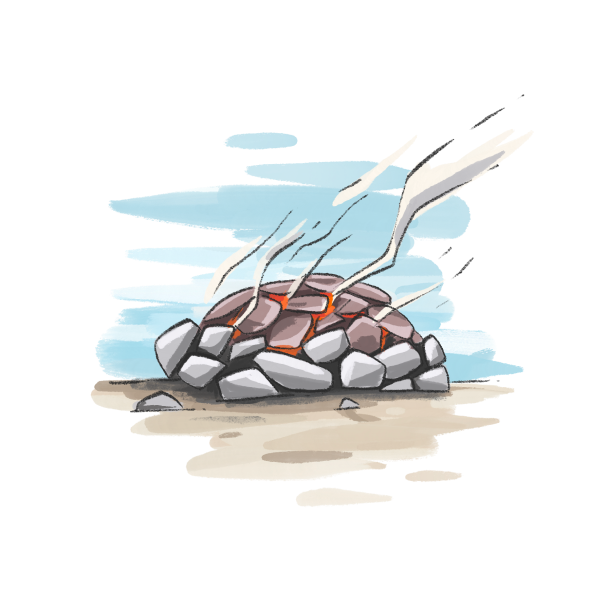
Each piece is shaped on a unique hand-spun wheel at a slow, meditative pace and left to dry for several days under the desert sun. Traditionally, our wares are fired in a cow dung igloo, where the fuel and the kiln are one and the same. It takes several hours to build this igloo-like structure, which is lit in the evening and fired overnight.
The following section describes the tools and steps involved in our pottery-making process. Italicised words are terms used in the local language.
01
Collecting
Clay & Sand
COLLECTING CLAY
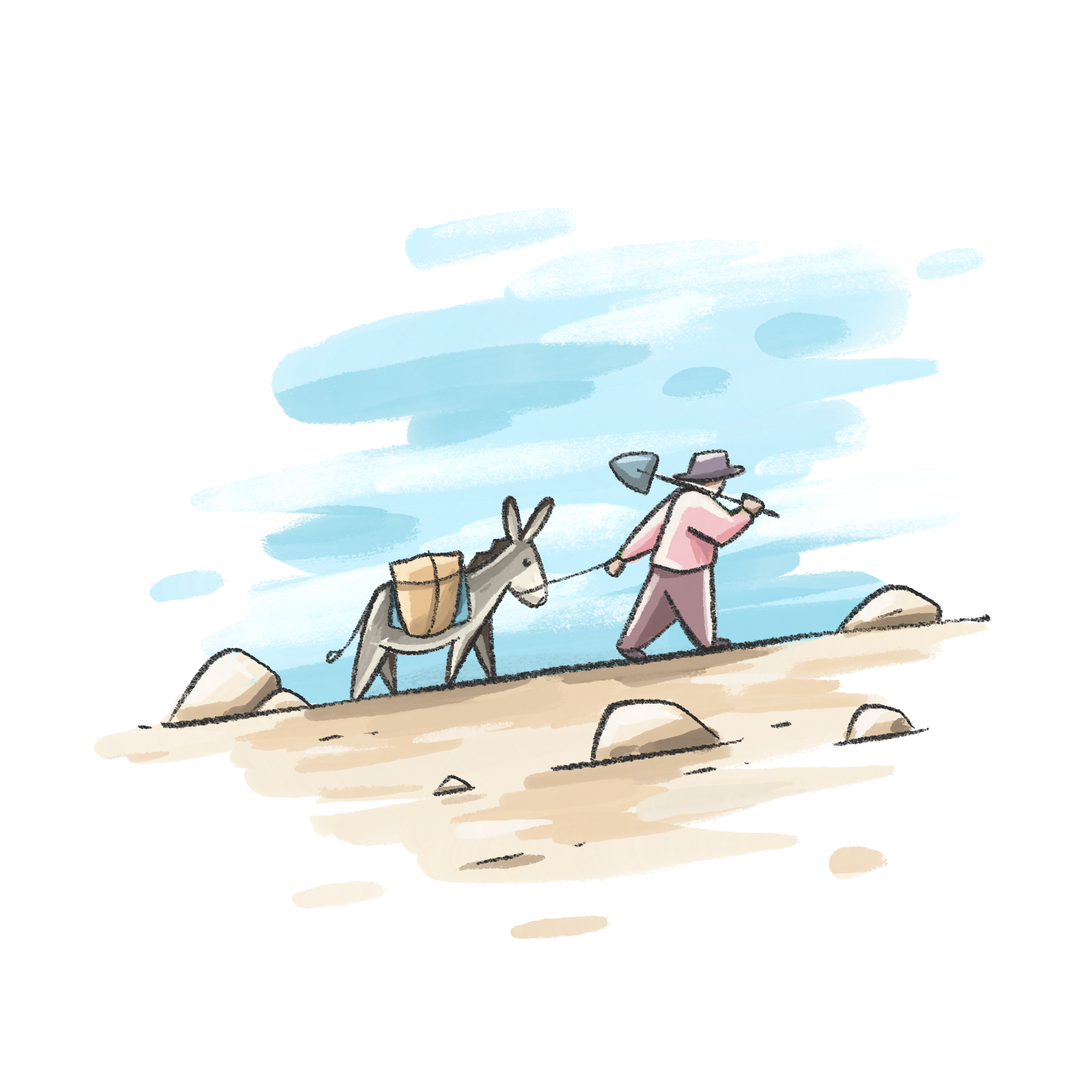
The clay (Dza’sa) used is wild and collected primarily from the mountains near lower Likir, around 5 kms from our home. This part of our village has various layers of stones, mud, limestone and along with some hidden clay. The clay used in pottery can't be sourced just on the basis of soil colour. The correct soil for pottery is collected by an expert by digging into the right layer. If the impurities get mixed, problems would occur during firing, for instance, the products would break or crack. We often experiment with wild clay from many other sources too! Earlier we used to carry the clay back on donkeys. Now with road access we transport with a car.
COLLECTING SAND
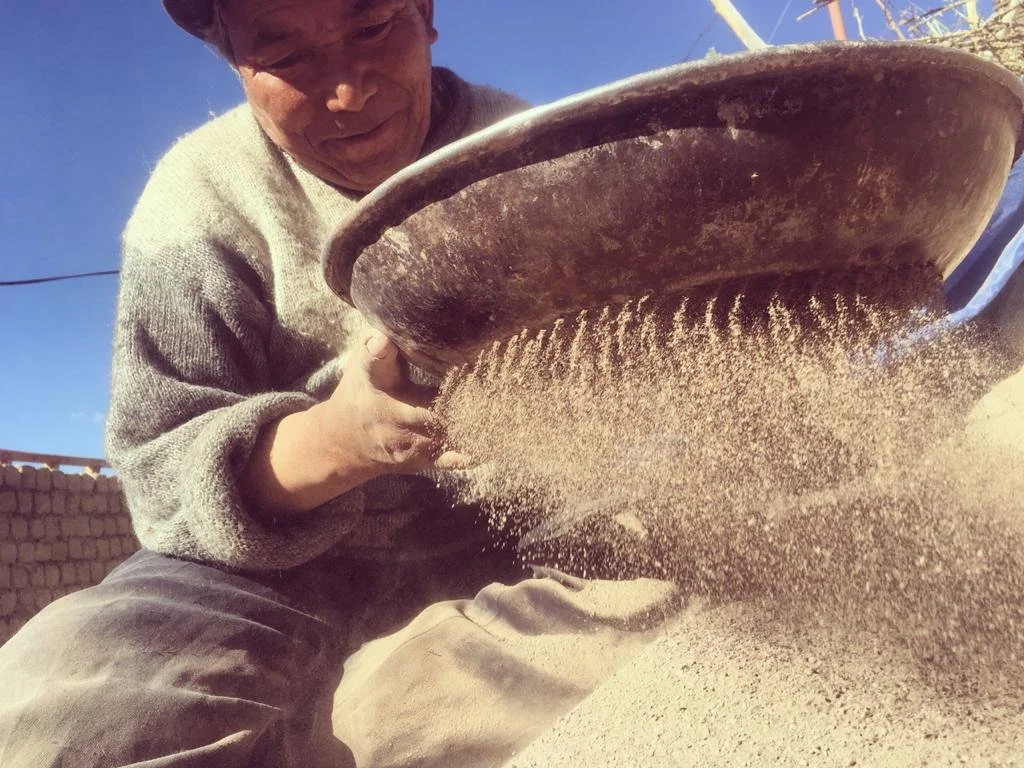
Sand (Pema) is collected from Basgo village which is 15 km from Likir. It is preferred to collect sand from near the cave area and not from close to the river. Because the sand from caves is low on mica and other impurities. The sand is almost white in colour. Sand is later sieved from a height so that the unwanted light particles of dust and mica are blown away by the wind.
TOOLS USED
Shovel, Pickaxe, Car, Sack, Rope
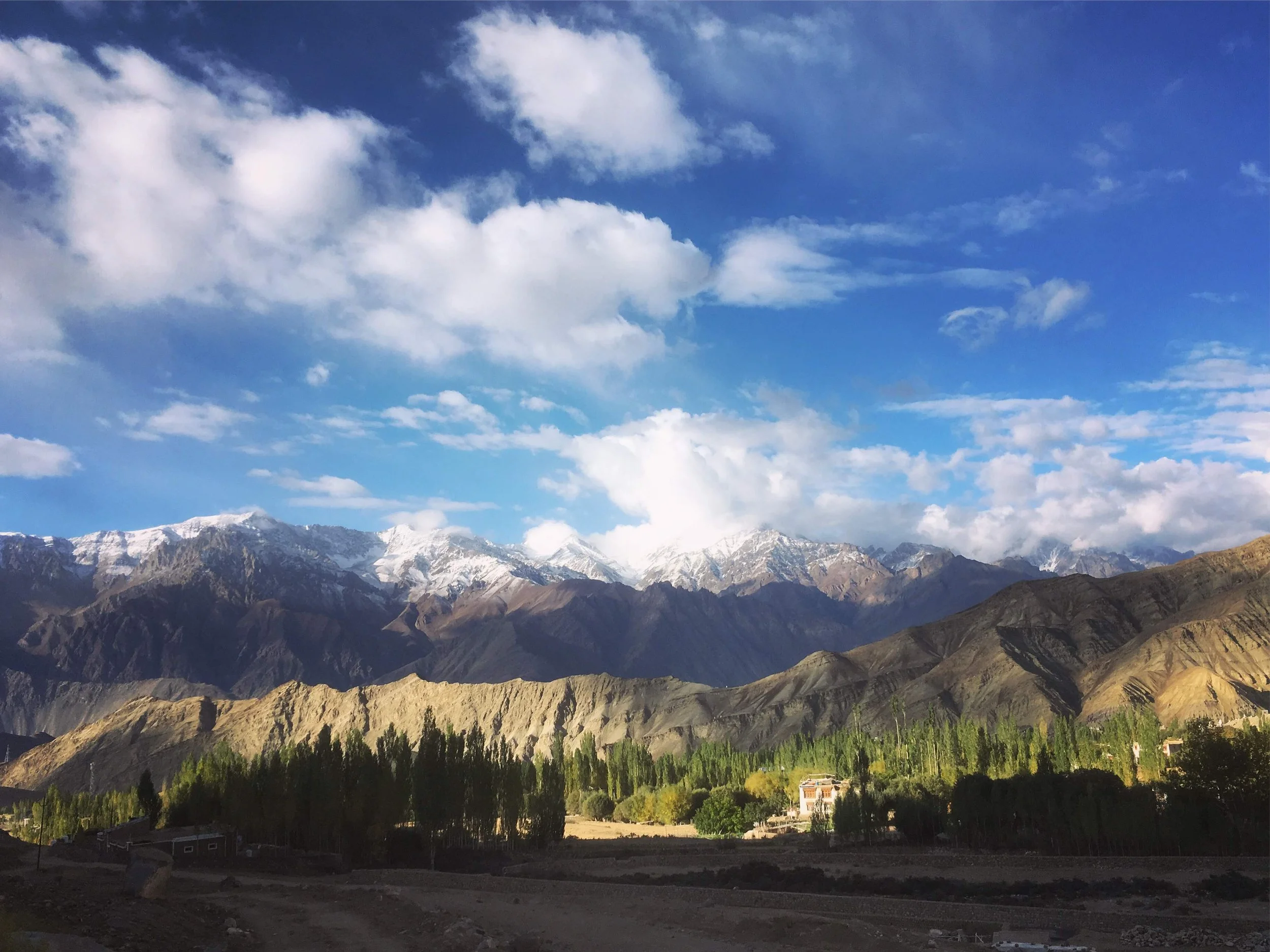
ladakh, a high-altitude cold desert, presents extreme climatic challenges and scarce resources.
02
Preparing
the Clay
TOOLS USED
WOODEN HAMMER (DOFUS)
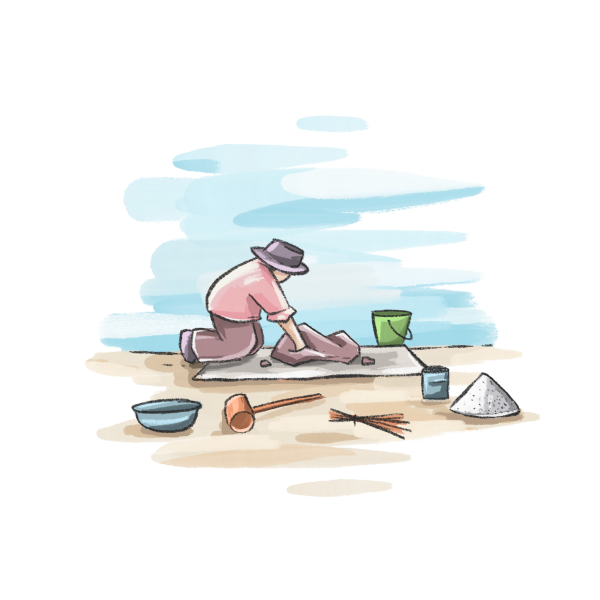
Wooden hammer is used to crush clay. Metal hammer is not used because it is very heavy and would also crush the stone impurities present in clay.
SIEVE (TSAKSMA)
Sieve is a metal tray with holes made using nails. The crushed clay and stone powders are sieved to achieve fine particles for the clay body.
BROOM (ONGMOL)
Traditionally, the broom is made from local grass known as iskling. It is used to clean clay preparing surfaces.
PROCESS
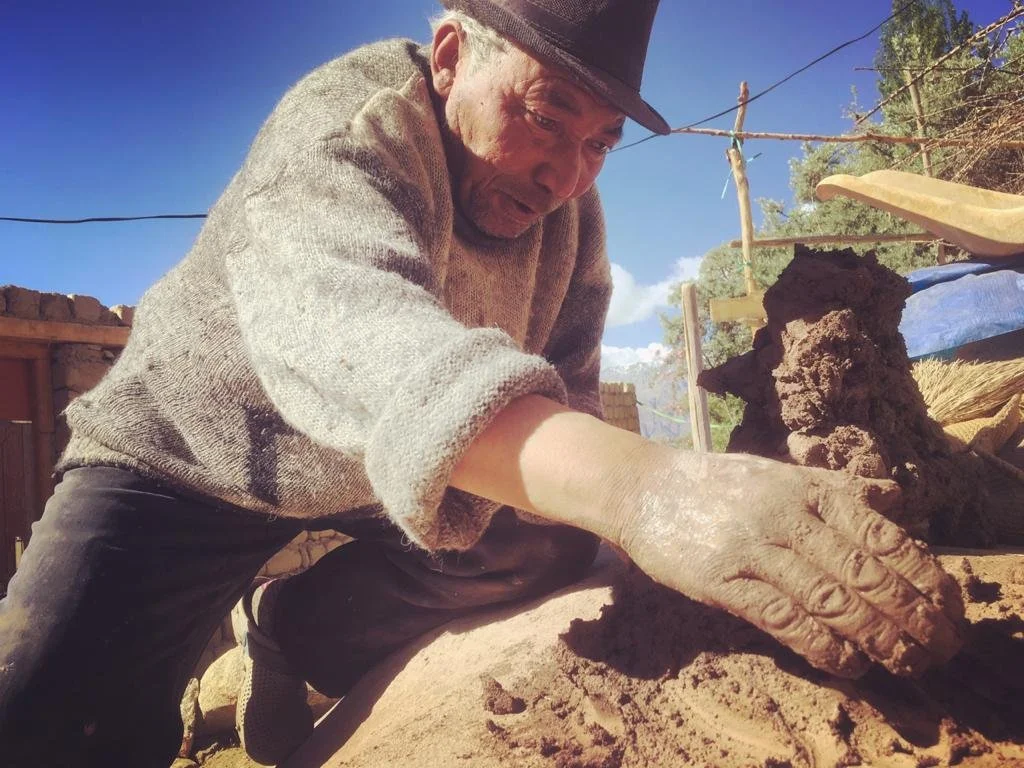
The dry clay is crushed into fine powder using a wooden hammer (Dofus). Wooden Hammer is used to prevent the stones and other impurities from being crushed. Nowadays we also use an electric crusher for this.
The clay and sieved sand are then mixed in the proportion of 2 parts clay to 1 part sand. Water is added and the mixture is kneaded.
The claybody once prepared is called Kalak. It was stored in jute bags and cloth in the earlier days. Now, it is stored in plastic.
03
Making of
the Wares
tools used
The tools of Likir pottery are simple, handmade, and deeply rooted in the land, crafted from clay, wood, grass, and ash, each shaped by generations of practice and purpose.
-
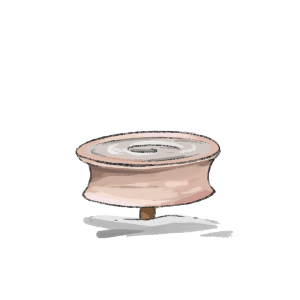
local wheel (skor)
An indigenous hand-spun wheel built over a metal frame using Kalak and yak hair (sitpa), sun-dried and fixed into the ground.
-
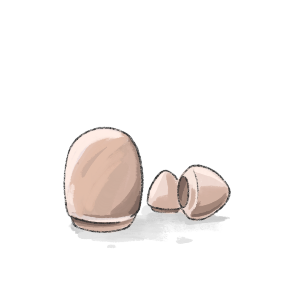
mould (po)
Fired moulds made from Kalak, produced in various shapes and sizes. Smaller moulds are thicker to add weight and stability.
-
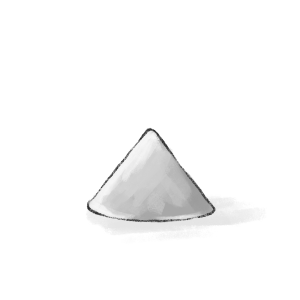
ash (thalba)
Sieved cow dung ash spread on the wheel to hold the mould in place. It is also applied to the clay and mould to prevent sticking.
-
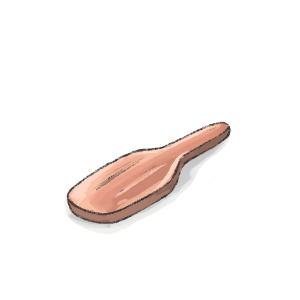
beater (khembu)
A heavy wooden tool, shaped like a cricket bat and made from apricot wood, used to beat clay over the mould.
-
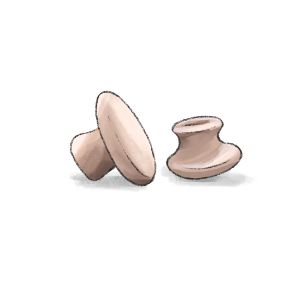
mushroom (deamun)
A fired clay tool used for shaping and refining forms.
-
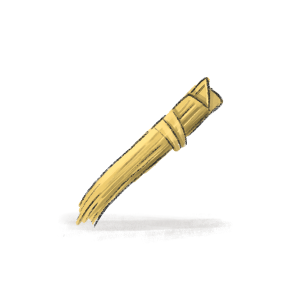
brush (jhima)
Made from tspoto grass, used to apply water.
-
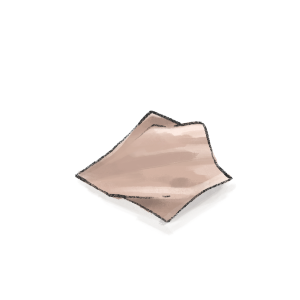
tsampis
Goat skin used to achieve a smooth surface finish.
-

churu
Broken coloured glass beads used as embellishments.
sculpting
tools
Made from juniper (shukpa) roots, chosen for their durability when kept in water. Collectively called Urshing, these tools vary in form and function:
-
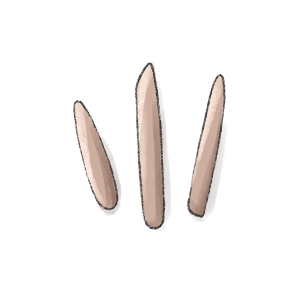
urshing
Large, flat tools for shaping and finishing surfaces
-
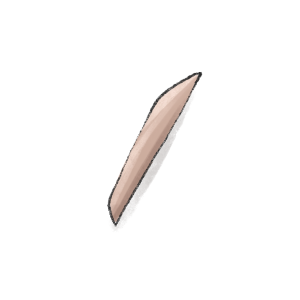
charshing
Sharp-edged tools for cutting excess clay
-
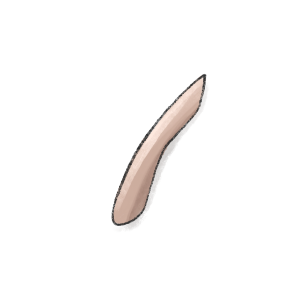
rishing
Tools for creating lines and floral patterns
-

purcha
Round-tipped, tapered tools for piercing small holes, especially in incense pots
-
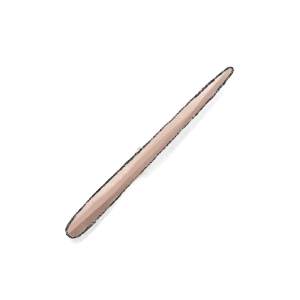
yokshin
Round-tipped, non-tapered tools for forming spouts (amchu) in teapots (tibril)
-
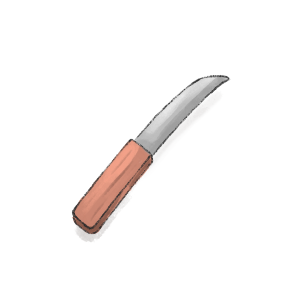
ti
knife used to cut openings in large vessels such as Tsangskun
Making of
the Form
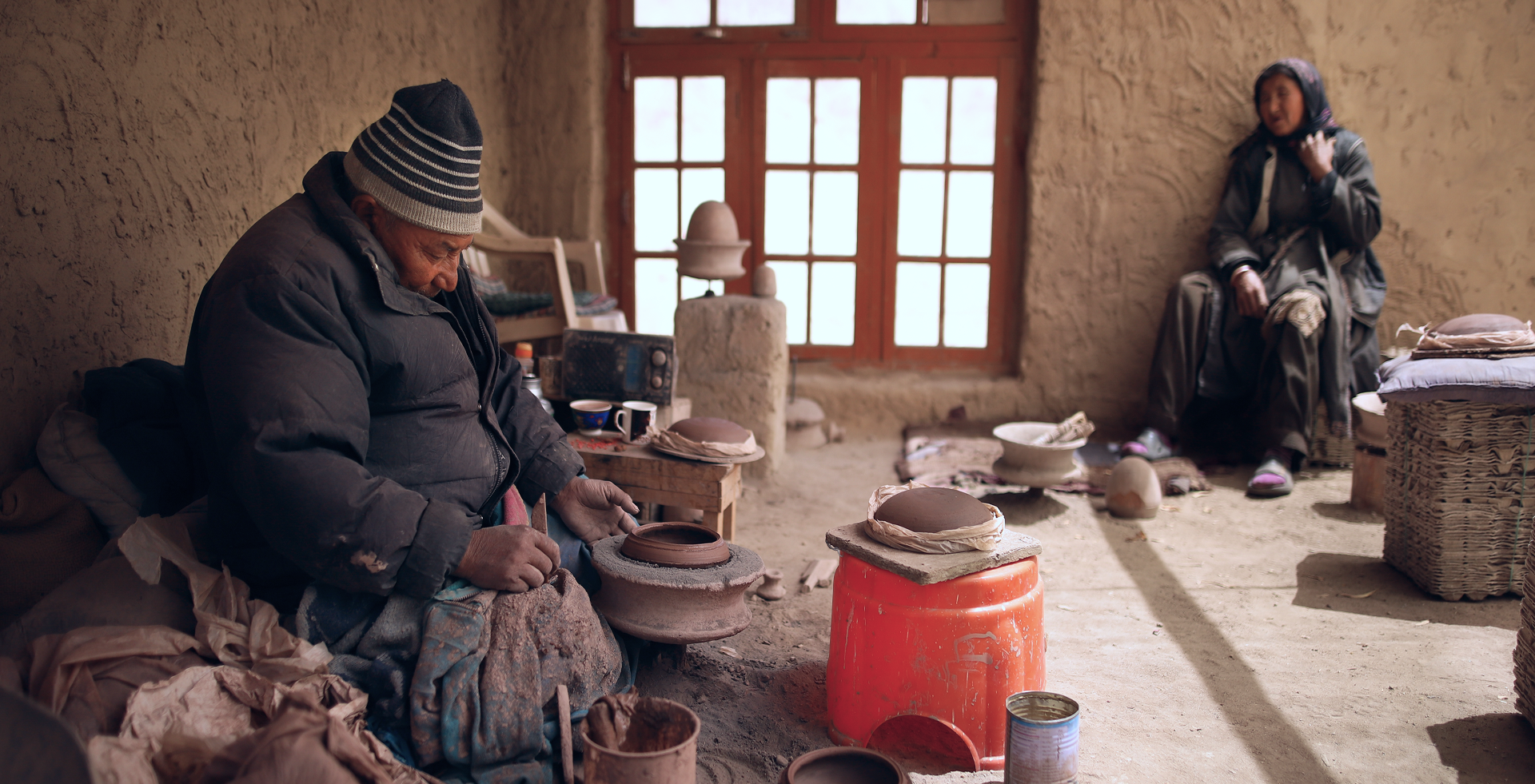
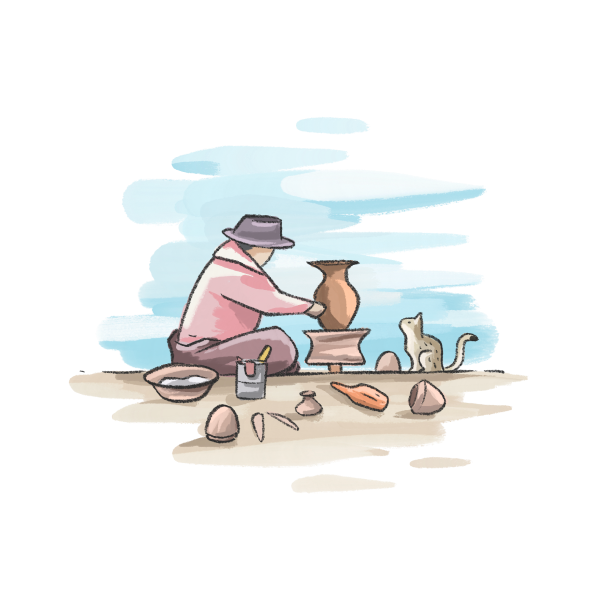
A mould (Po) is selected based on the desired form and size. It is secured to the wheel using Thalba and centred with a steady finger as reference. A lump of clay is flattened by hand and placed over the mould, dusted with ash to prevent sticking. As the wheel is turned slowly with one hand, the clay is tapped and shaped using the Daemun and Khembu.
Once the desired form is achieved, the bottom edge is cut, the mould is released, and water is applied with a brush. Depending on the object, the form may be built on both sides. The base is covered with plastic while the upper section dries in the sun. After a few hours, the piece is inverted and returned to the wheel, where coils of clay are added, pinched, beaten, and shaped to build height and detail.
Water is applied with a brush and the form is finished using Urshing and Tshampis. To create certain objects, handles and spouts are attached to the body. In some, sections are cut out. Motifs are made on the surface with the help of tools. Coloured glass pieces (Churu) are added as embellishments for surface ornamentation.
Throughout, the wheel is turned slowly by hand. Water is used sparingly, reflecting the cold desert environment where water is scarce and difficult to work with during sub-zero temperatures.
Drying
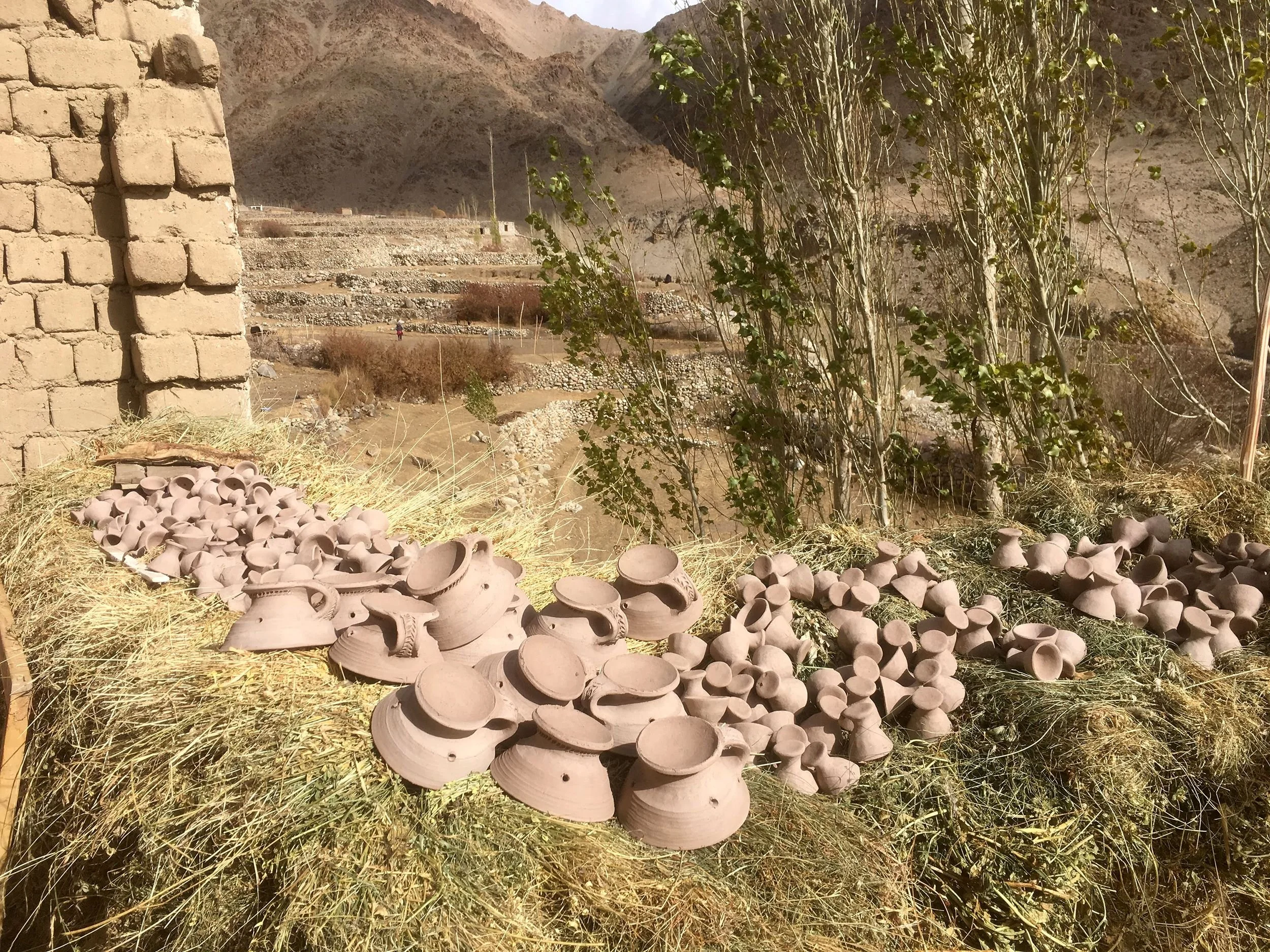
Firing takes place only once the wares are completely dry. In summer, finished pots are sun-dried for about a week. In winter, they are dried indoors near the kitchen fireplace. Sometimes, the dried wares are lightly fired in the open with cow dung for a day to remove residual moisture before the main firing.
04 a
Firing
the Traditional way
COLLECTING DUNG
Dung collection takes two to three days. Dzo (mix-breed of cow and yak) dung collected from mountain pastures at elevations of around 5,000 metres is preferred over village cow dung, as the animals graze on different vegetation, producing fuel that reaches higher temperatures. The dung is gathered 5–10 kilometres from the village, dried for at least a year to remove moisture and living organisms, and stored for firing.
COLLECTING SPUNG (TURF)
Spung is used as insulation and takes nearly twelve days to collect. It is gathered twice a year, in April and before December.
Harvesting is done carefully, patches are cut without uprooting the land, leaving gaps so the turf can regenerate. Around 300–500 patches, each about twelve inches in diameter, are collected per trip.
These journeys also allow for the collection of wild vegetables such as stinging nettle and wild chives.
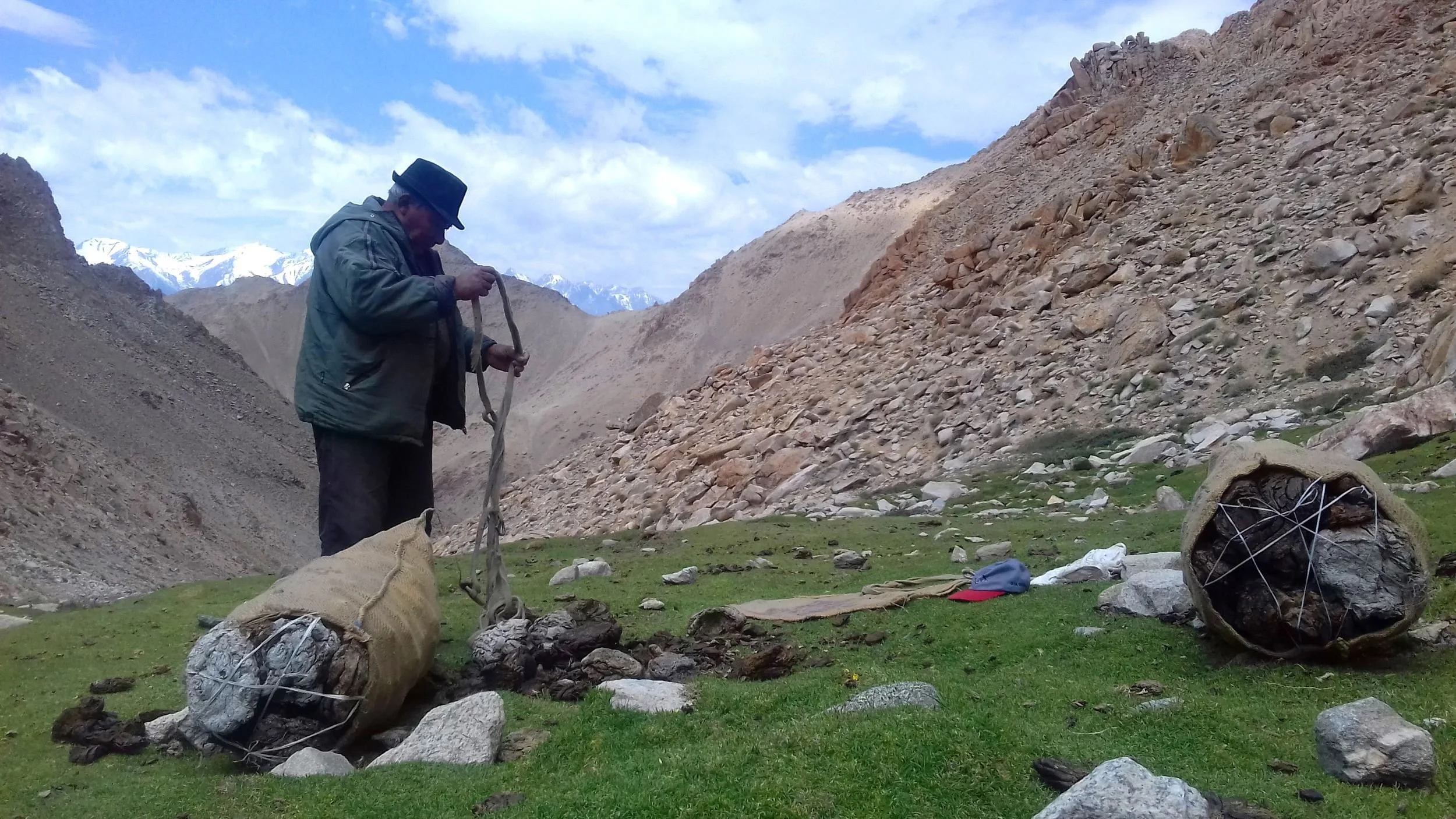
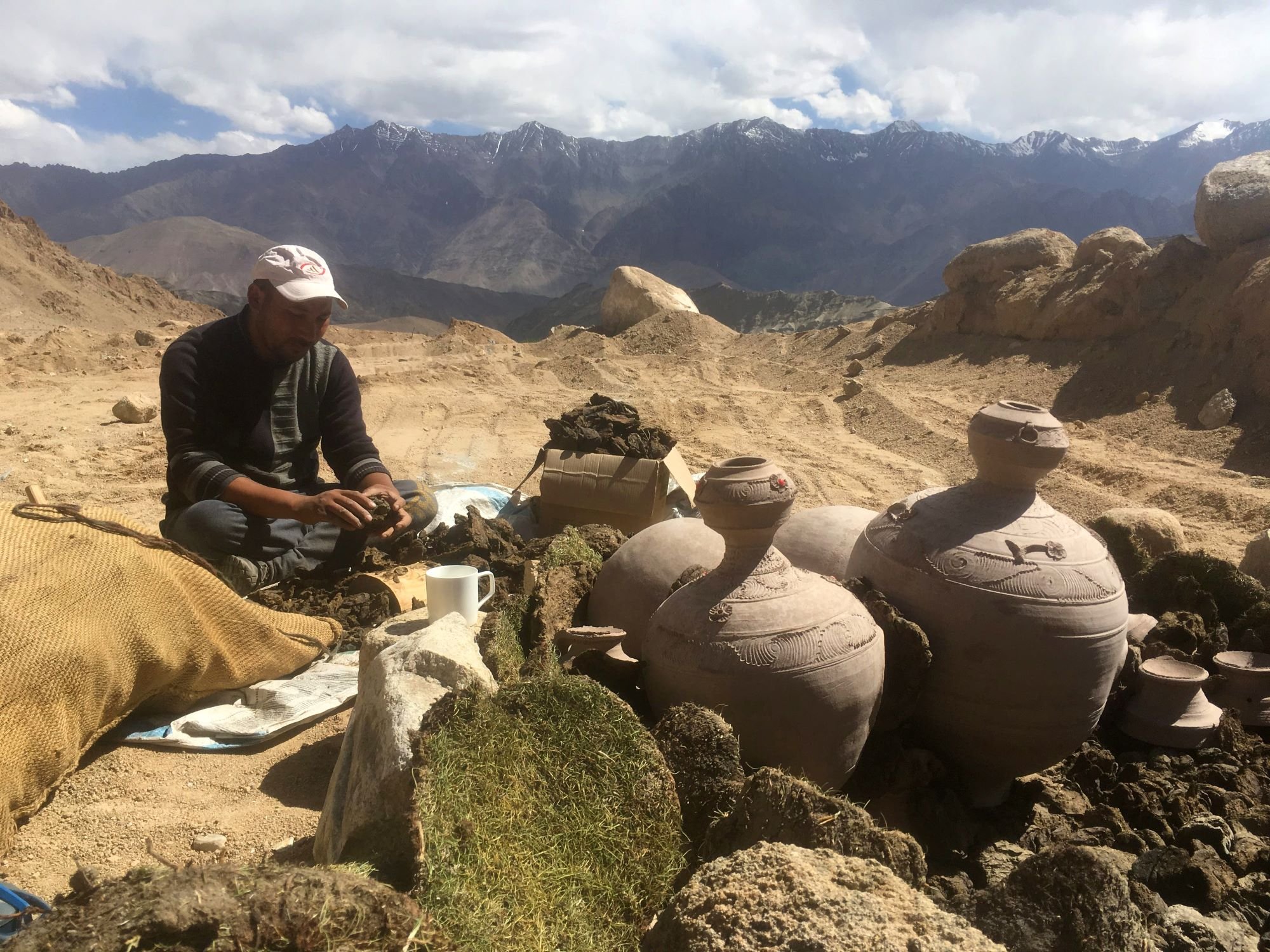
Abbaley Tsepail gathering and packing cattle dung from high meadows
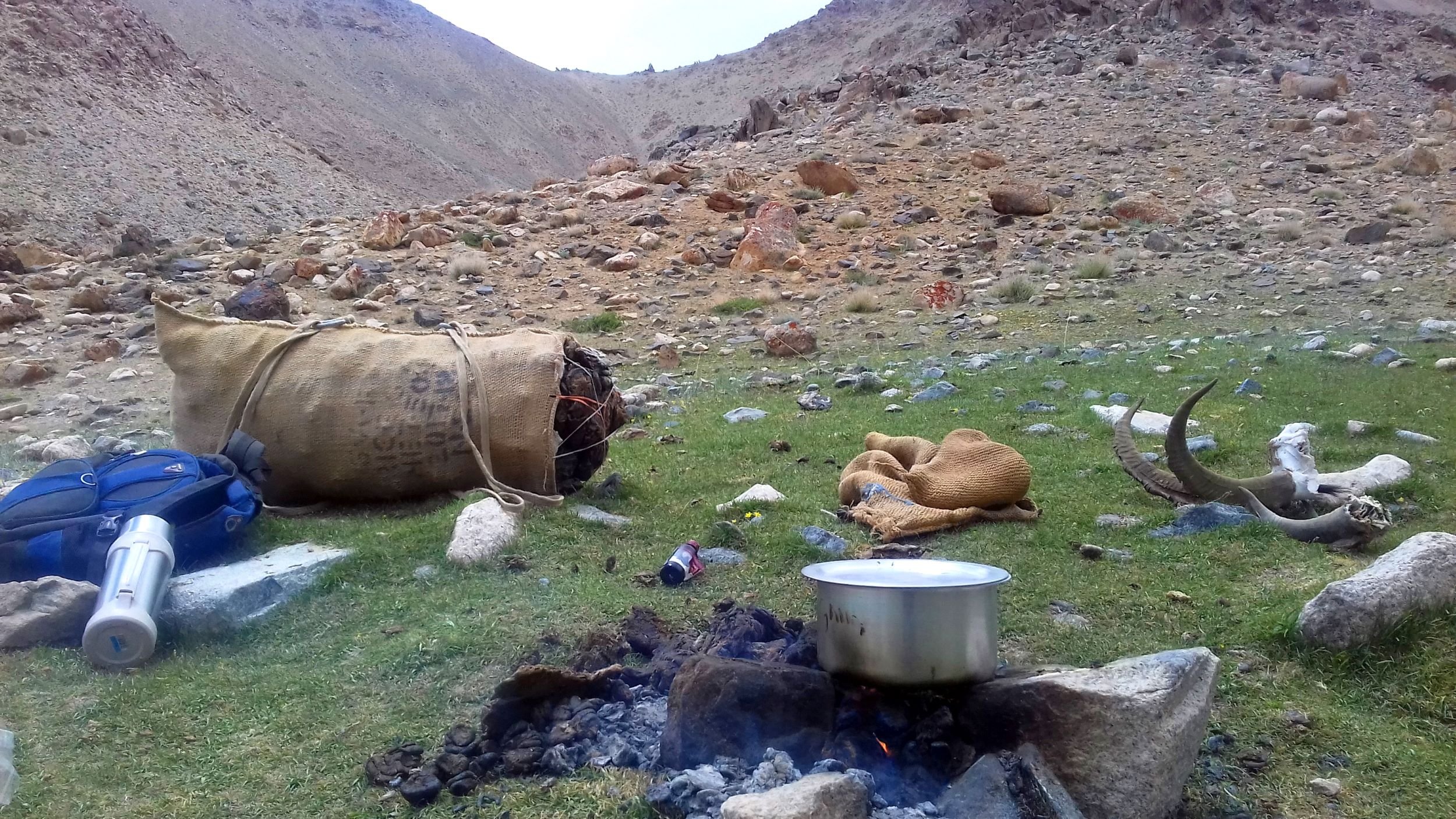
Making tea in the alpine meadows while collecting cattle dung and turf for firing
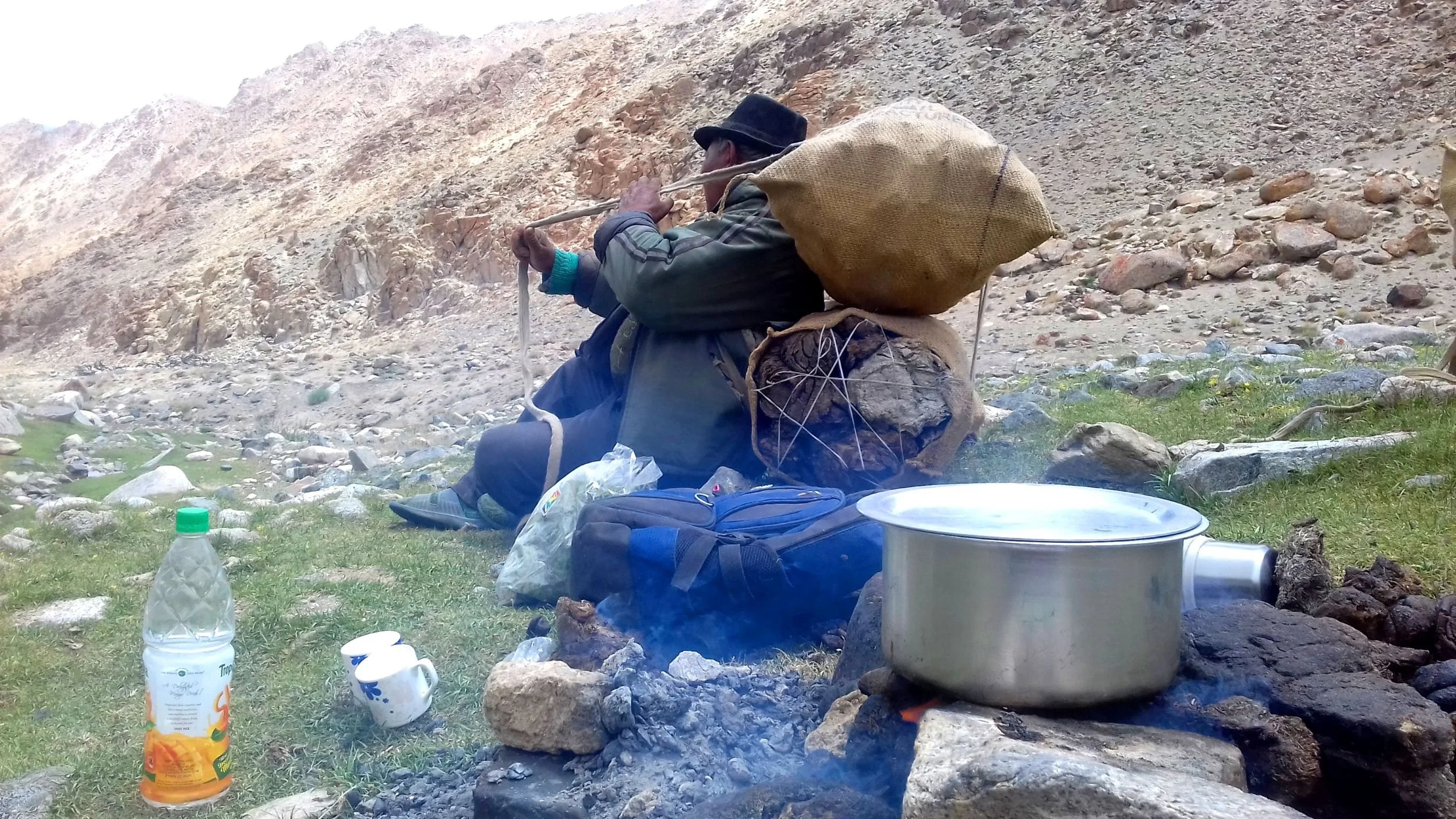
Abbale getting ready to carry home the cattle dung with sacks and ropes
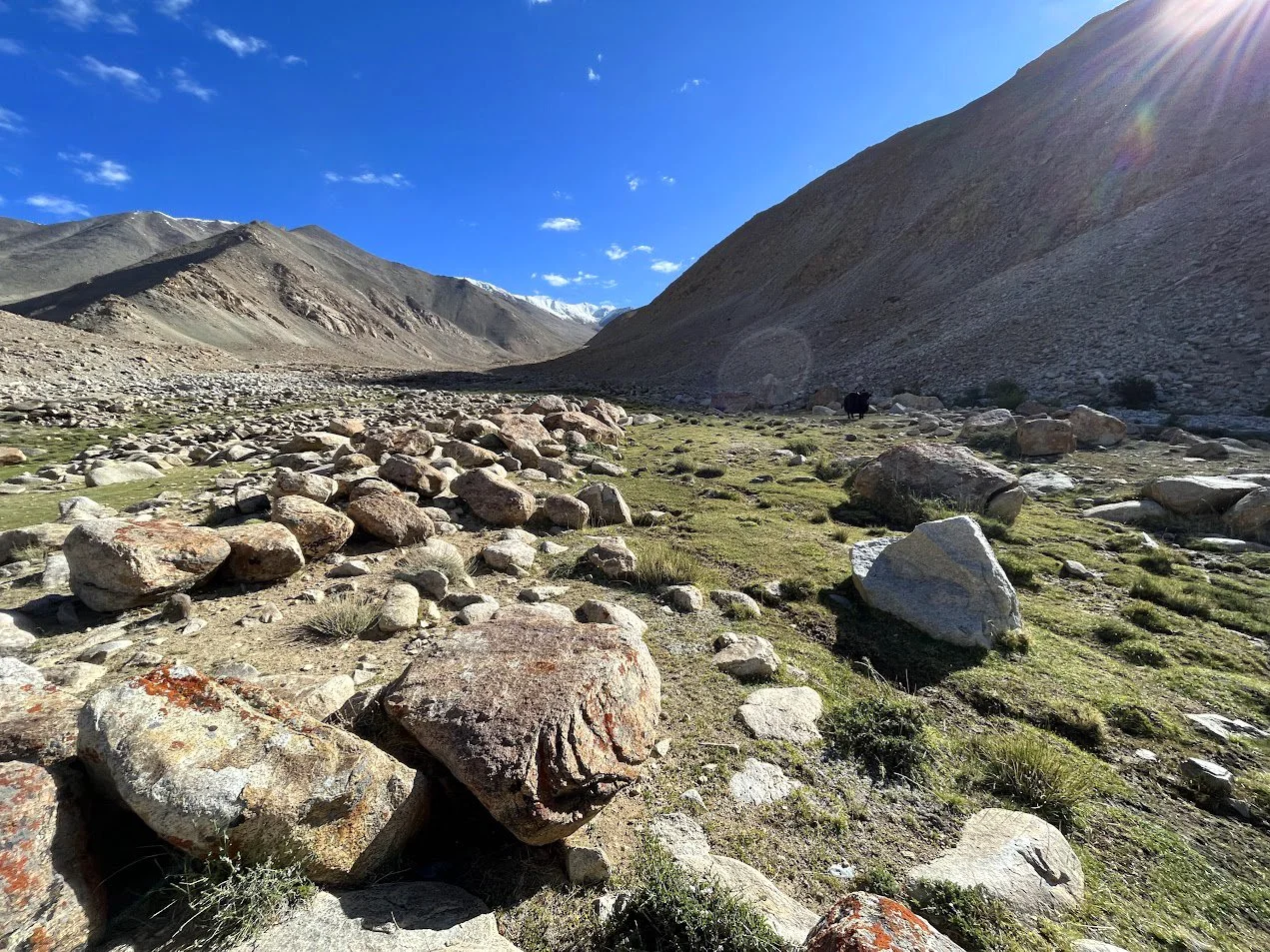
Alpine meadows above Likir Village where dung and turf is gathered from
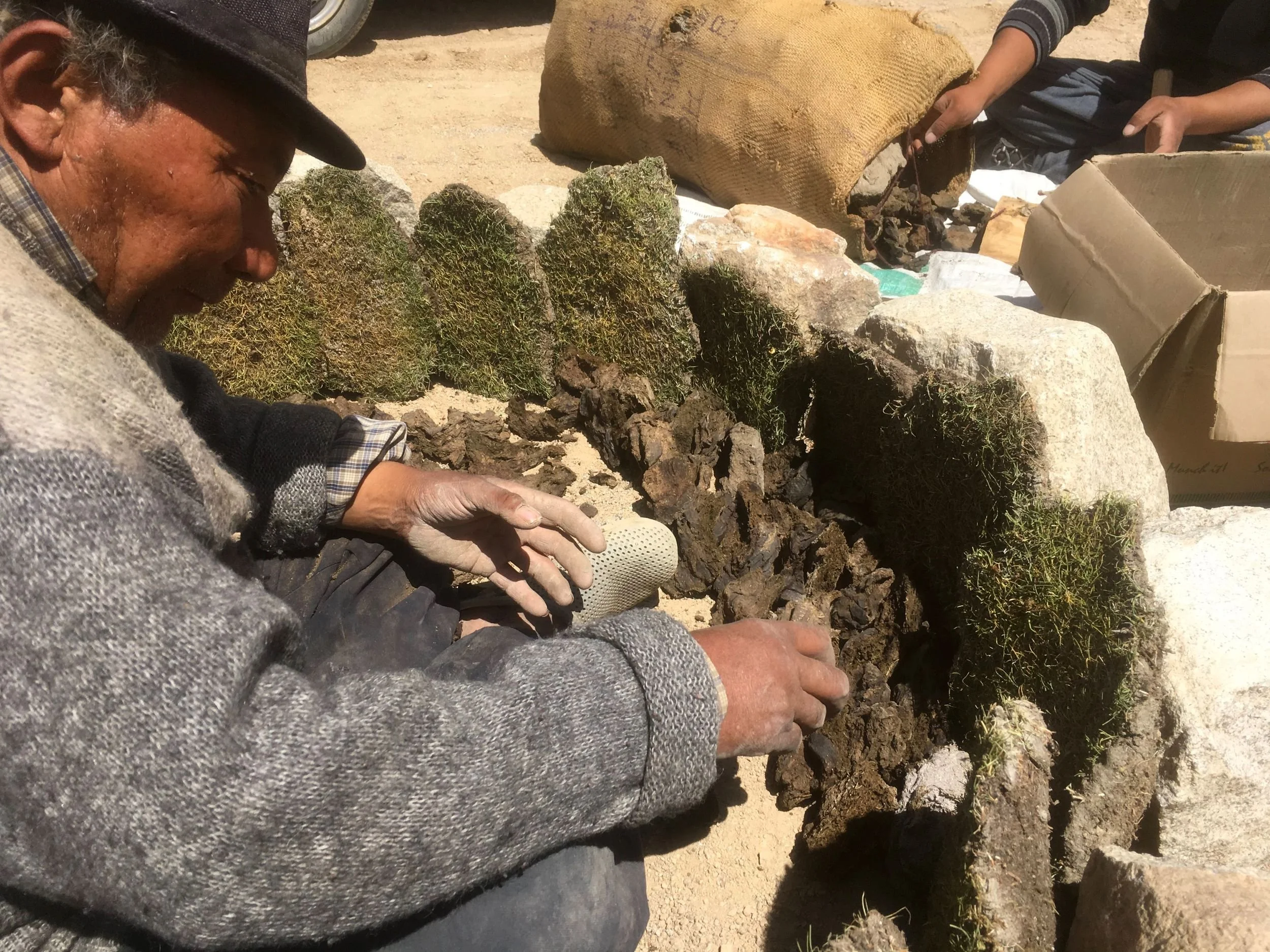
Abbale arranging stones and turf, creating boundary for pit firing
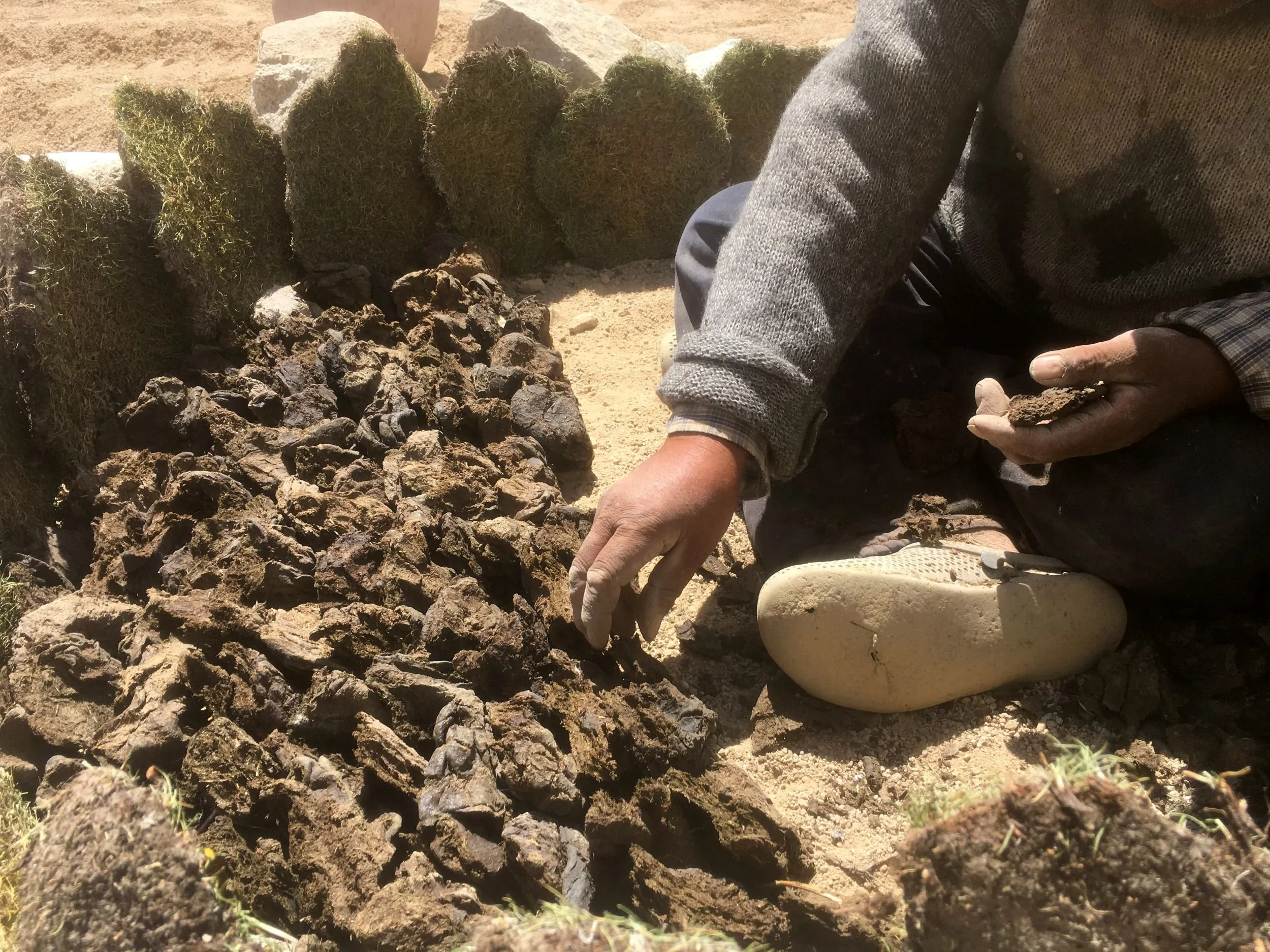
Carefully placing dried cattle dung cakes at the kiln base
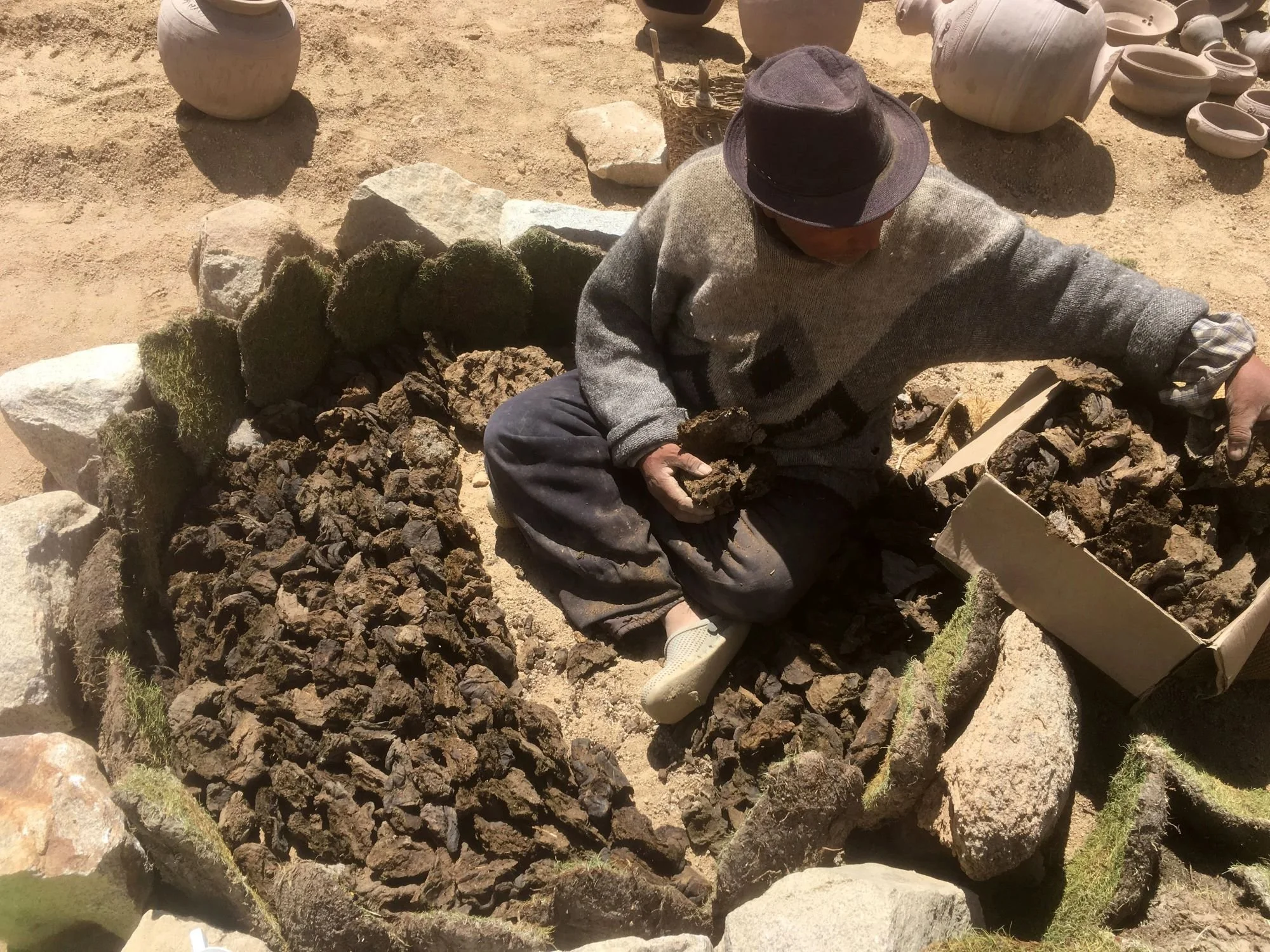
Kiln foundation taking shape
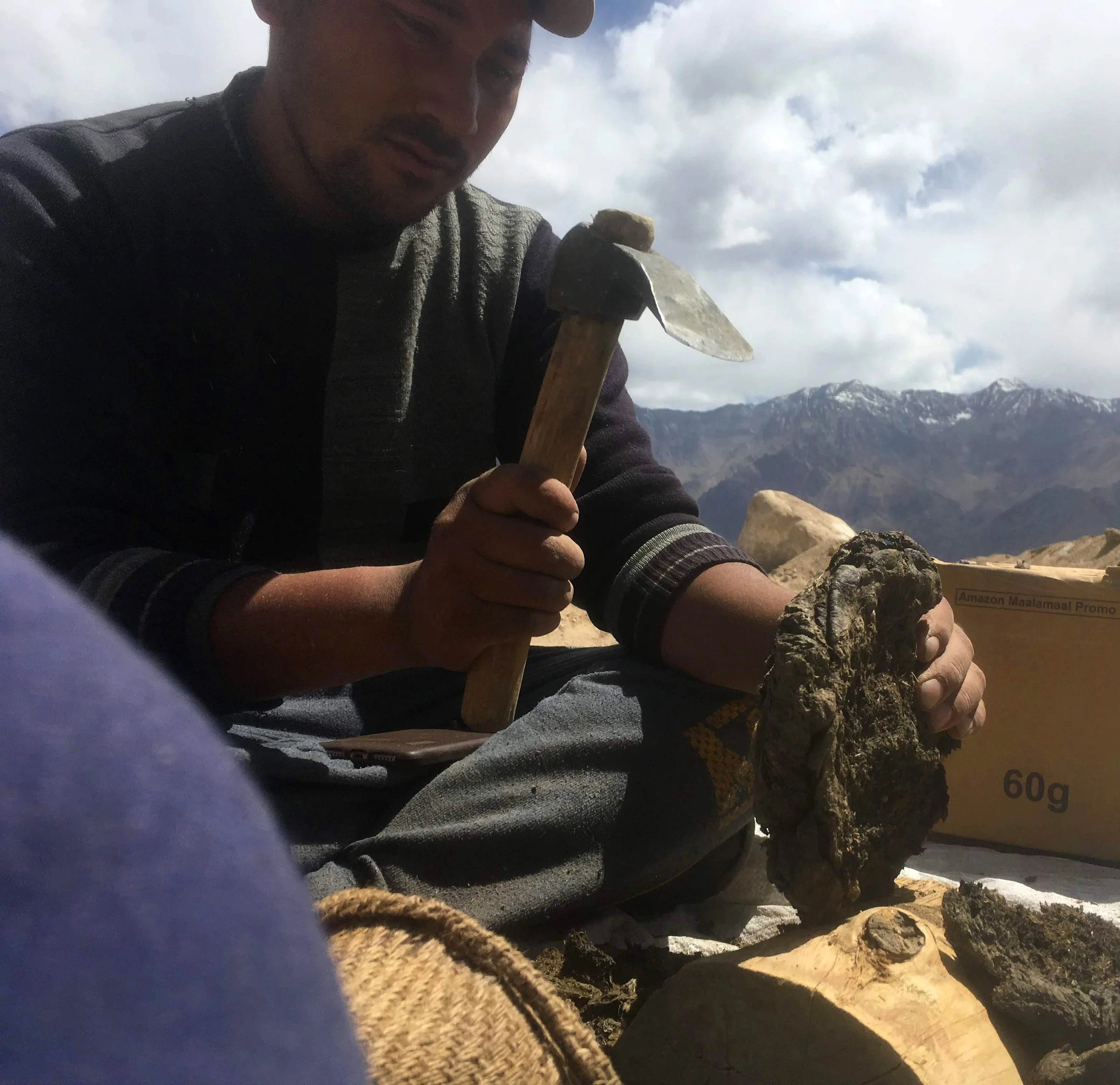
Rigzen chopping a dried Dzo dung cake to size
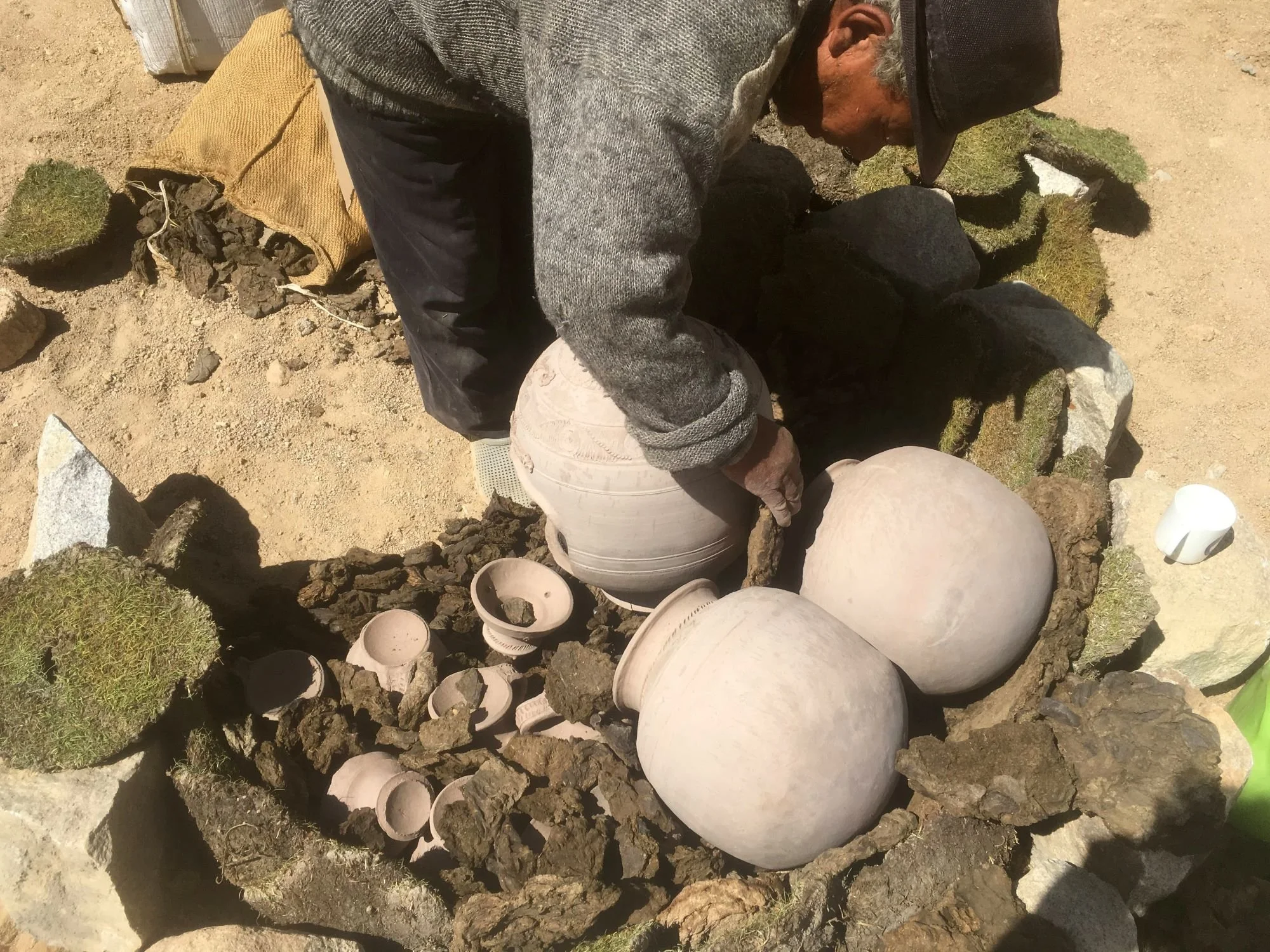
Abbale adding wares to the kiln
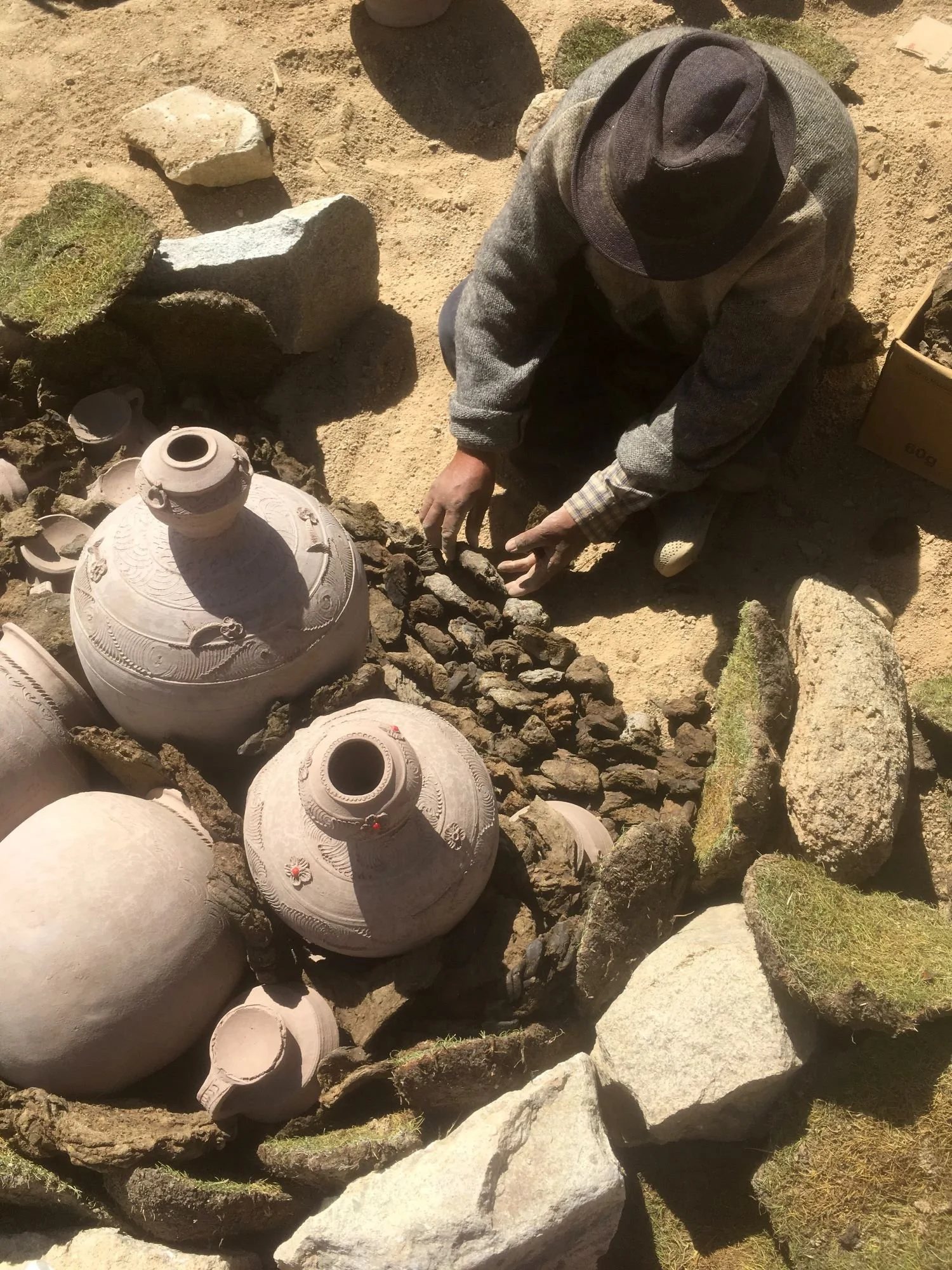
Large pots are placed at the base
More pots in!
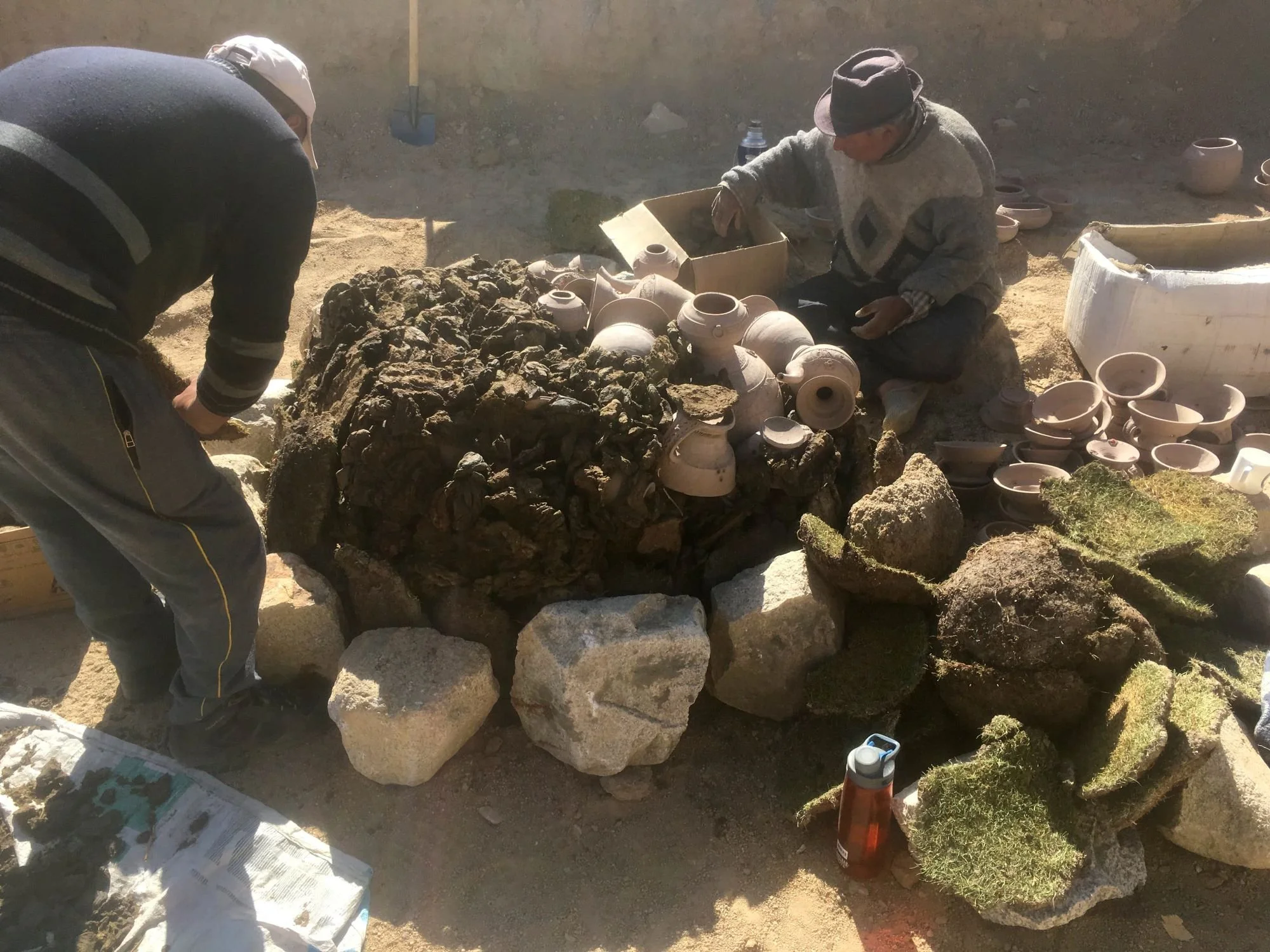
Kiln taking shape
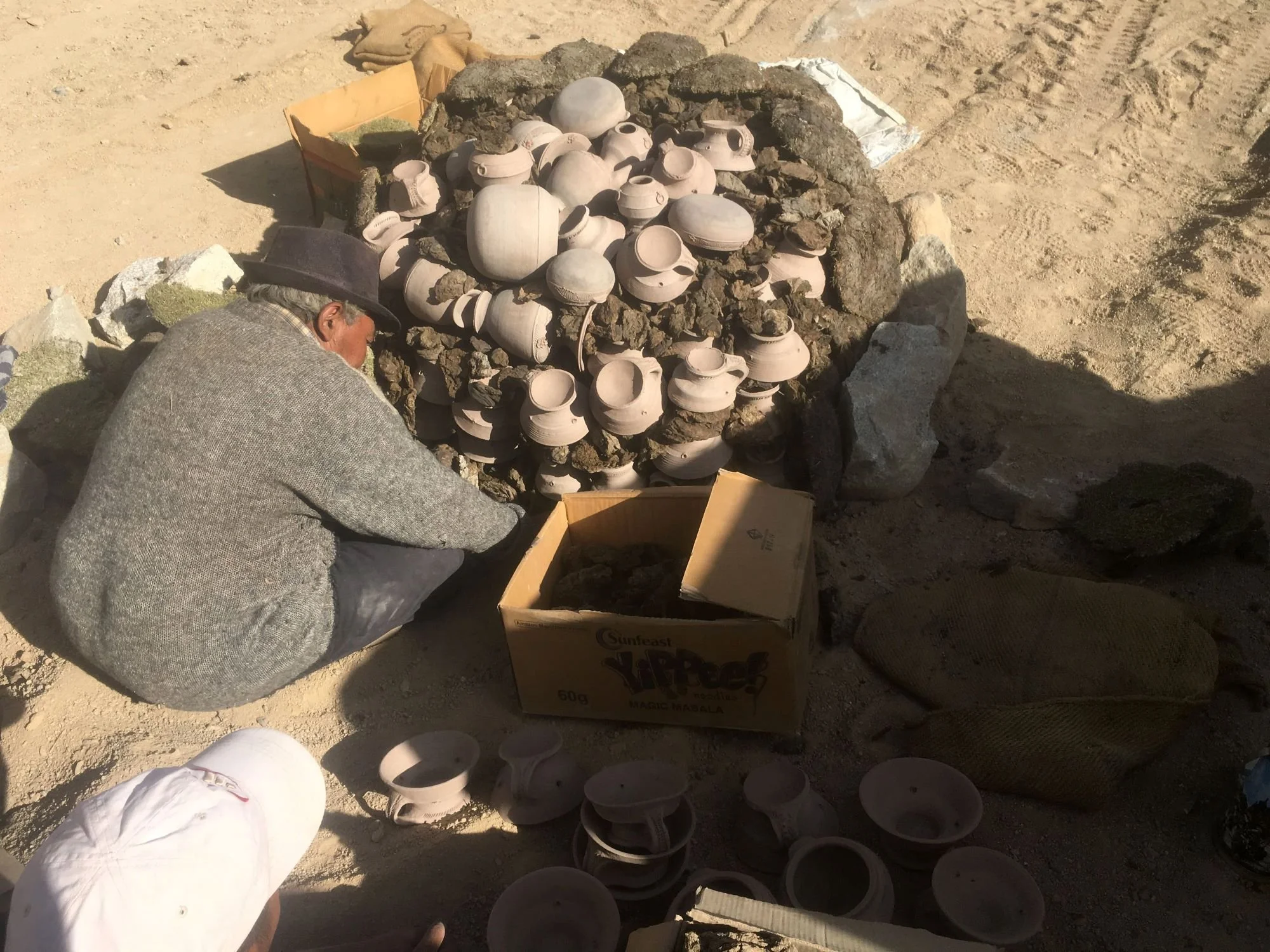
Almost there!
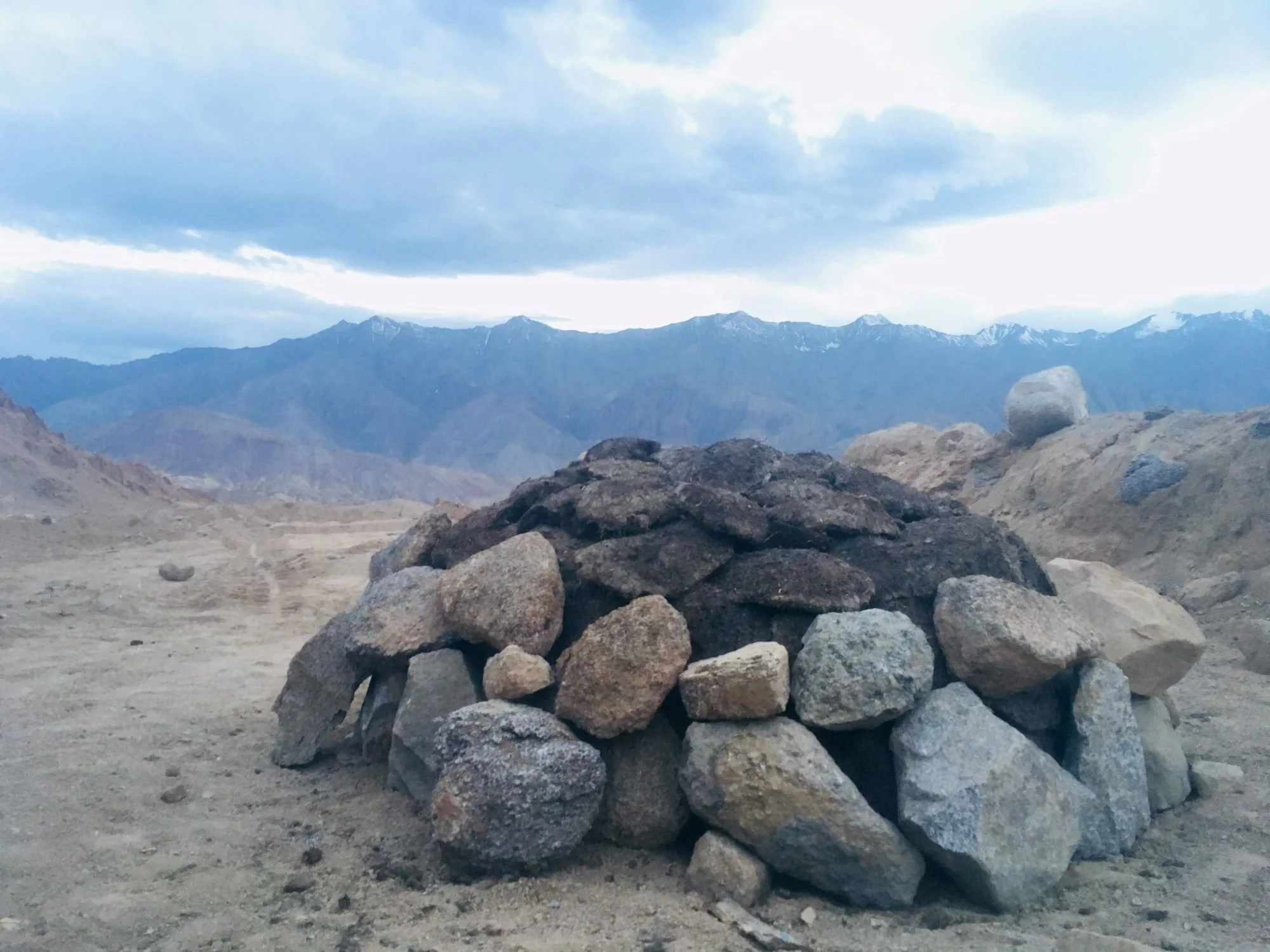
Sun is about to set. The Kiln is complete and ready to Fire!
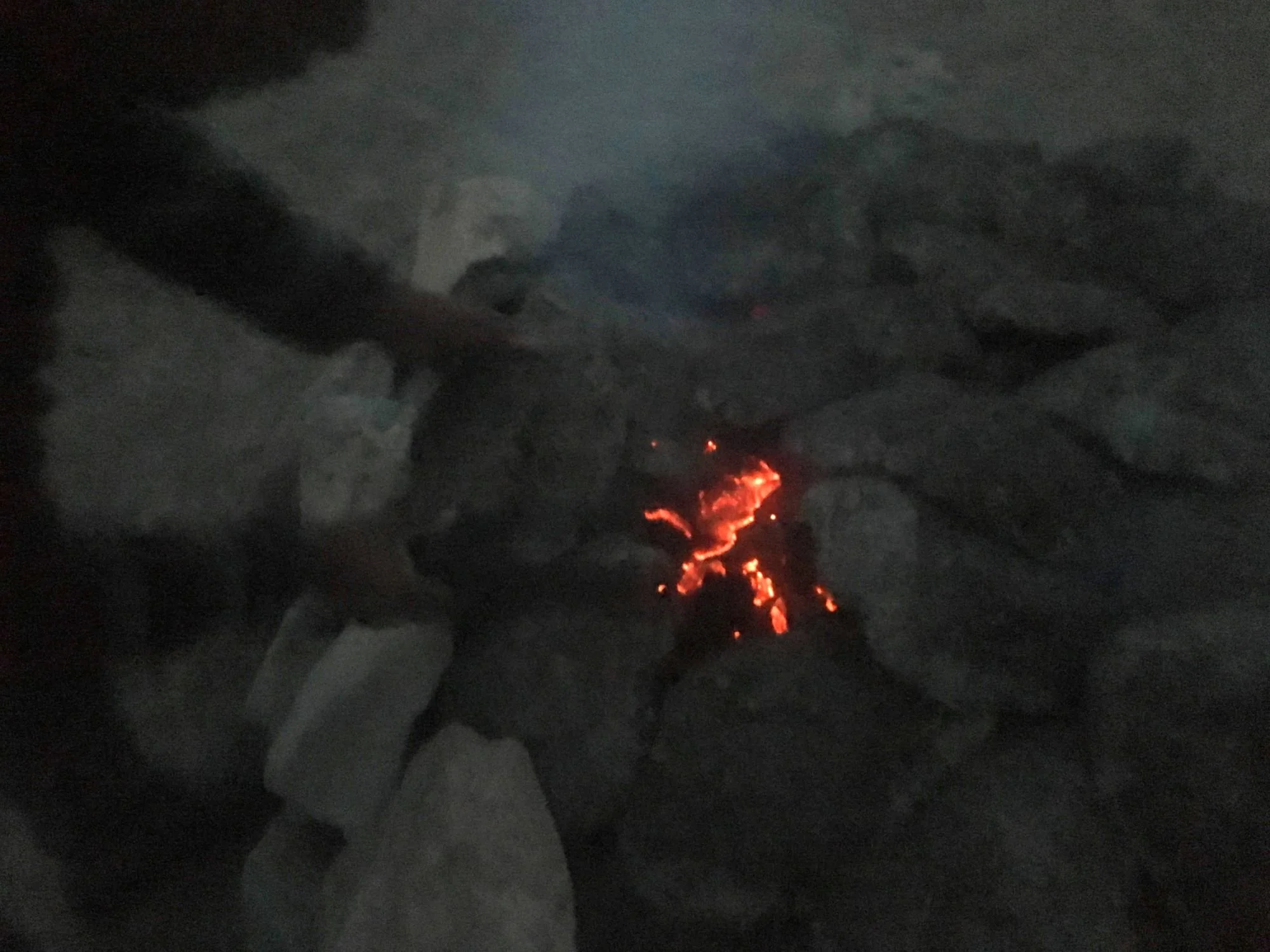
Rigzen adding fire at various spots in the kiln
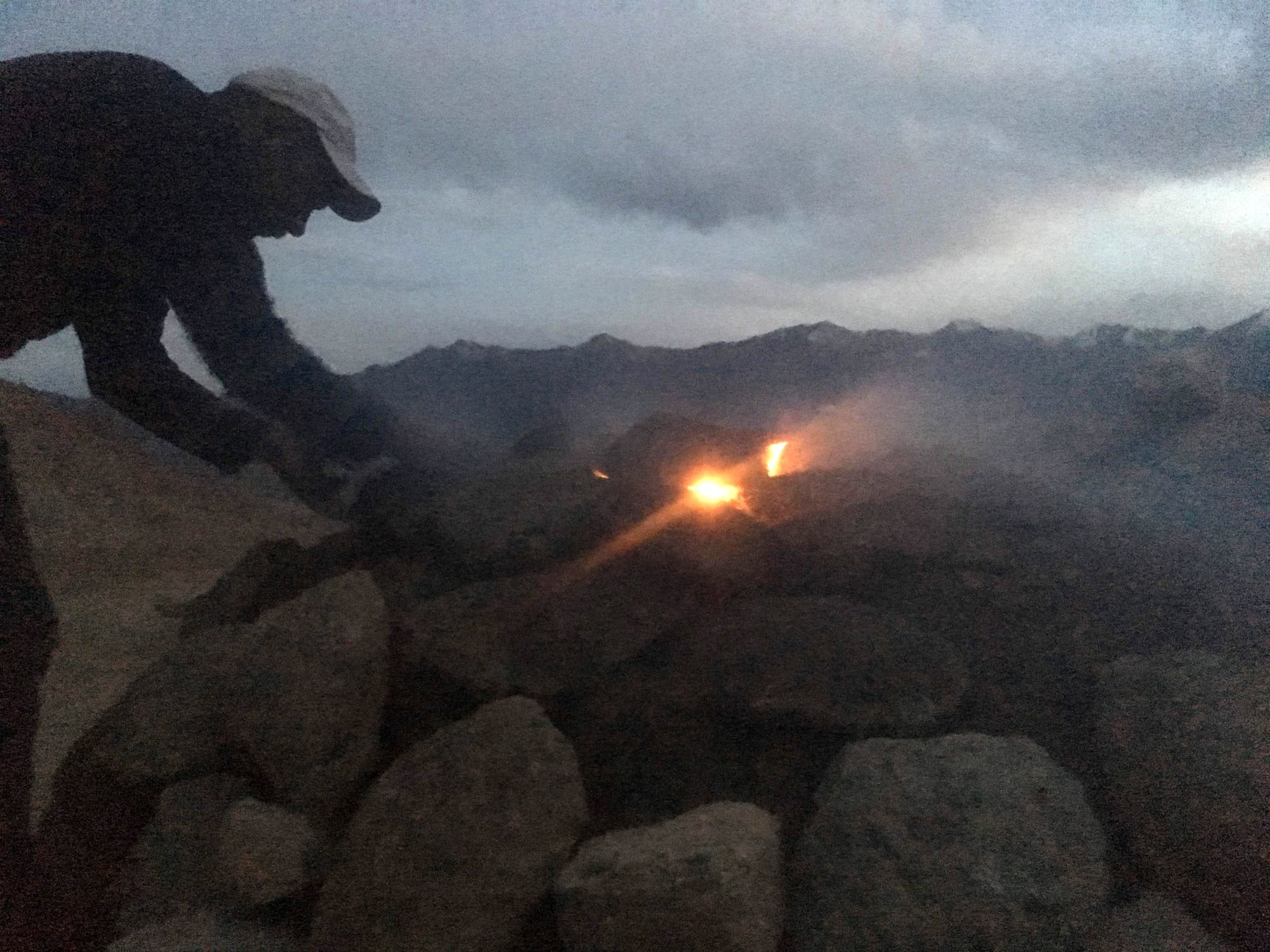
Rigzen adding fire at various spots in the kiln
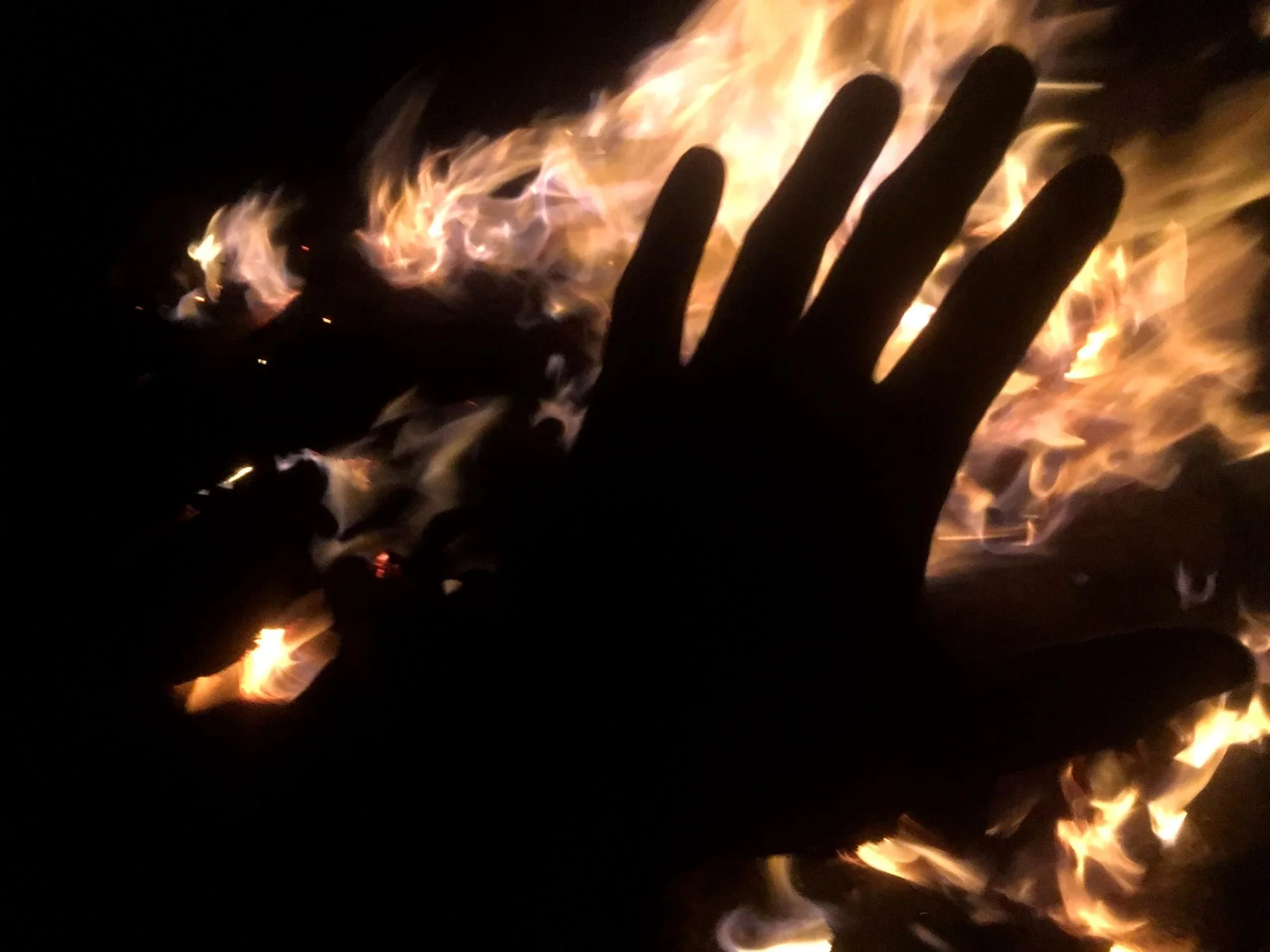
Firing overnight to a 1000°c. Keeping an eye it to ensure the stone border doesn't collapse.
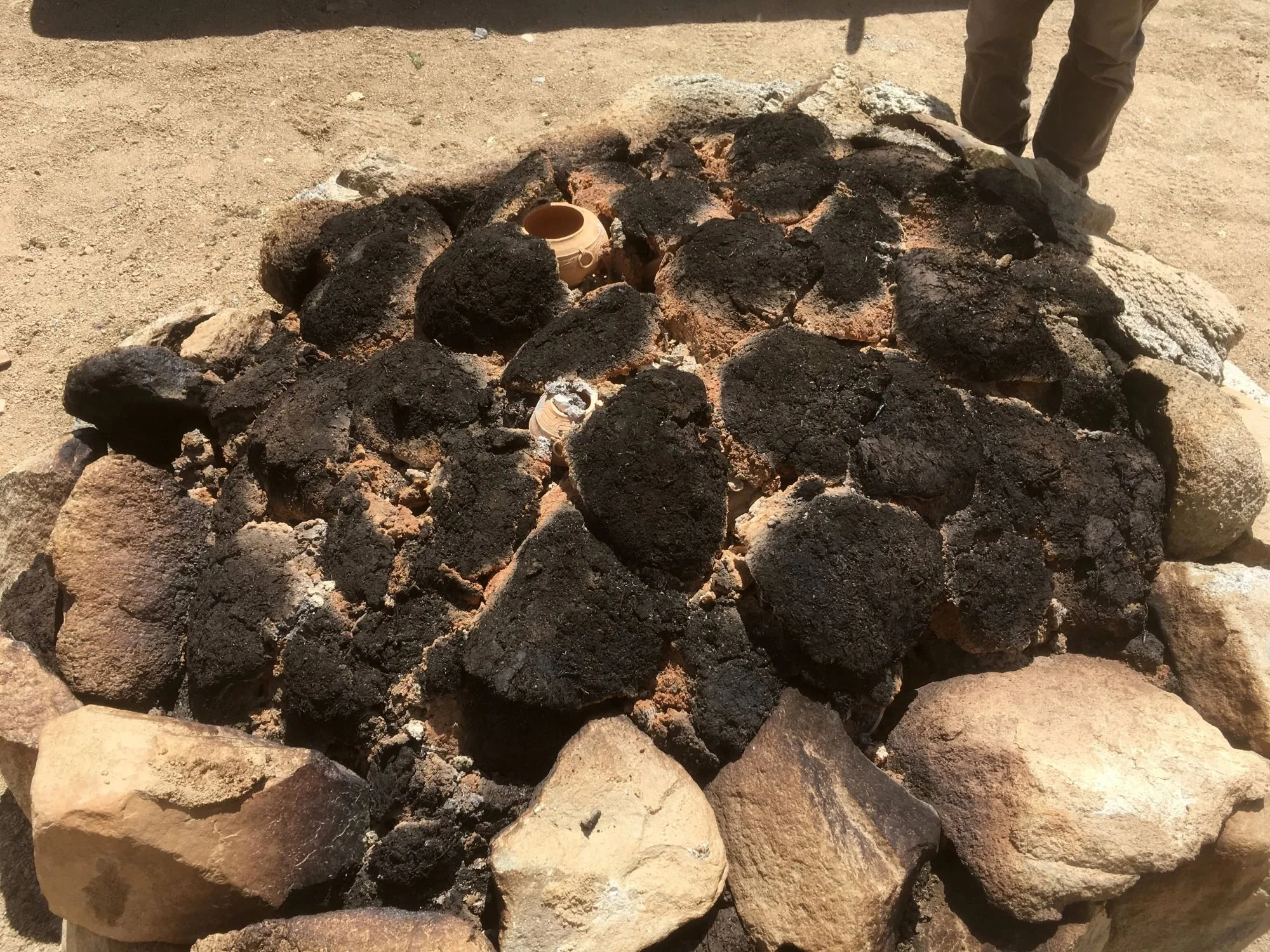
The following morning
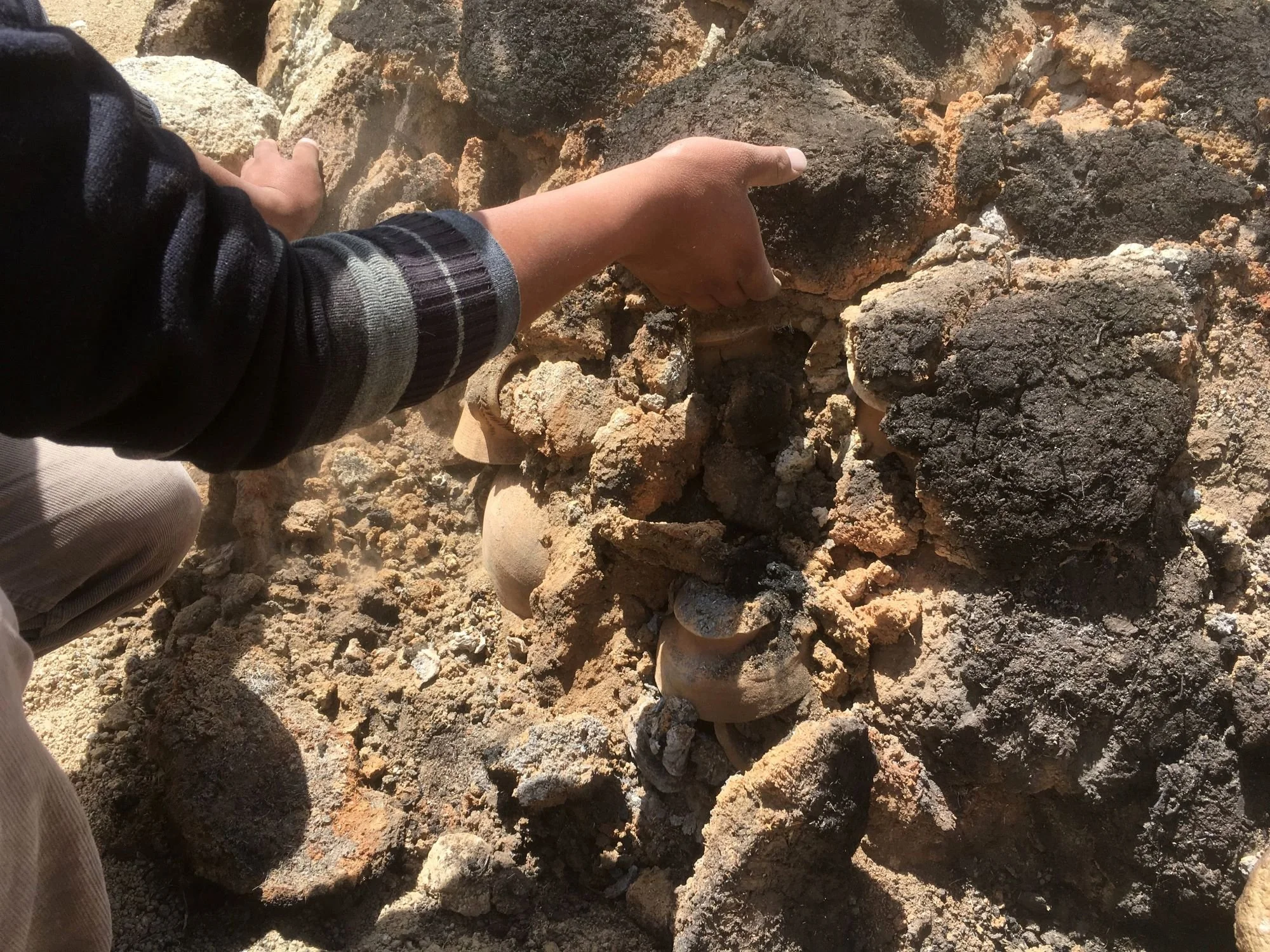
Moment of Truth! Fingers crossed!
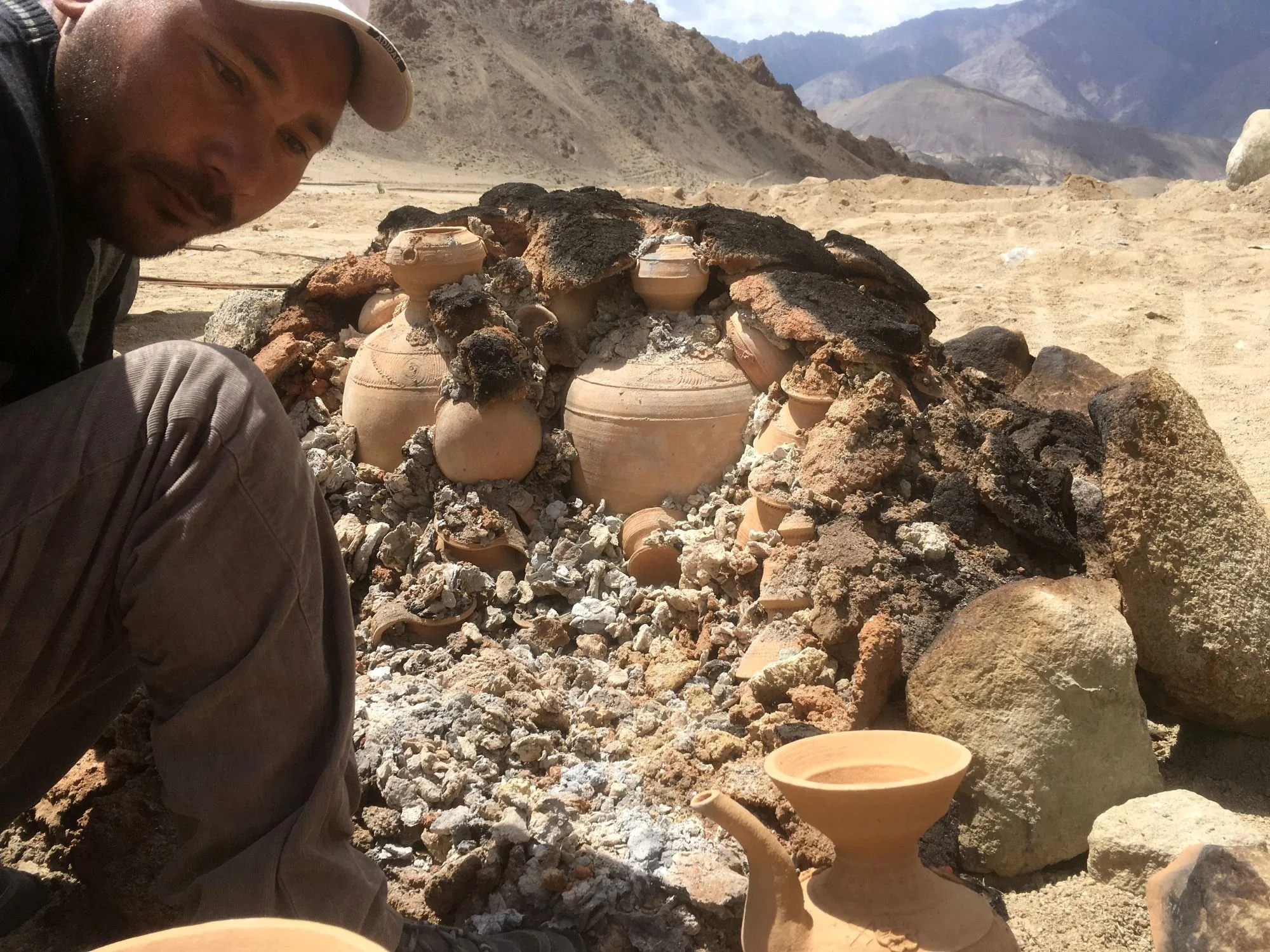
Everything seems to be good! A good Firing
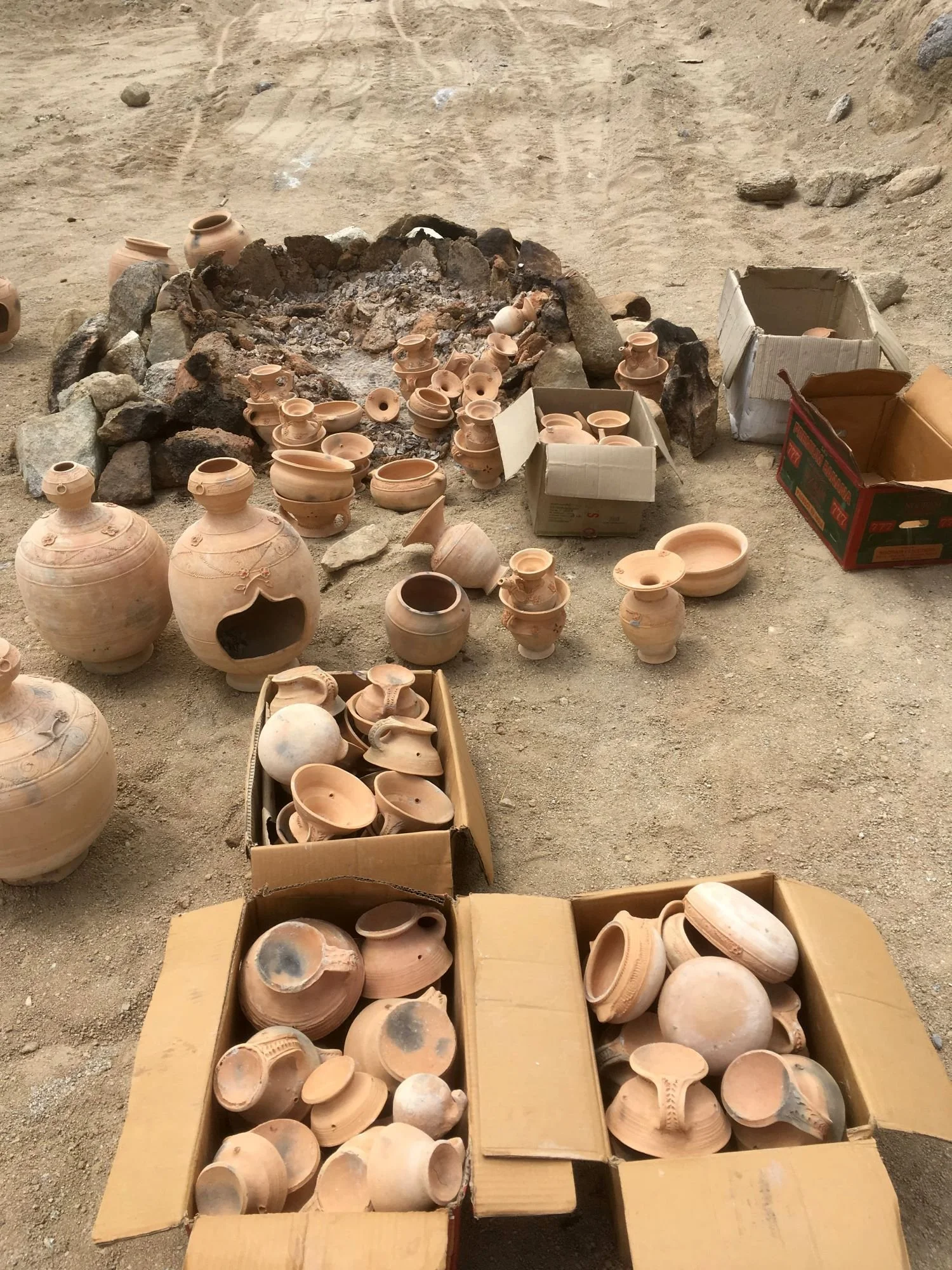
Hot fruits of Labour!
Pit Firing
Stones are arranged in a wide circle in an open, well-ventilated space. Cow dung cakes are placed upright, and the pots are carefully nestled among them. The entire structure is then covered with Spung in a dome shape, creating insulation, and secured with stones at the base. Fire is introduced through two or three small openings.
Firing begins in the evening, burns for about six hours, and is left to cool overnight. Cow dung cakes are an excellent fuel source. Unlike wood, they hold their shape as they burn, keeping the pots stable and preventing them from collapsing into one another. Around 200 earthenware pieces are fired at a time, and the pit is opened after roughly sixteen hours.
Traditional firing Documentation | Video Credit: amuddyroad.com
During the growing season, from Buddha Purnima until harvest, firing is not permitted within the village, as it is believed to harm crops and other living beings. During this period, pit firing takes place beyond the mountains, away from green fields.
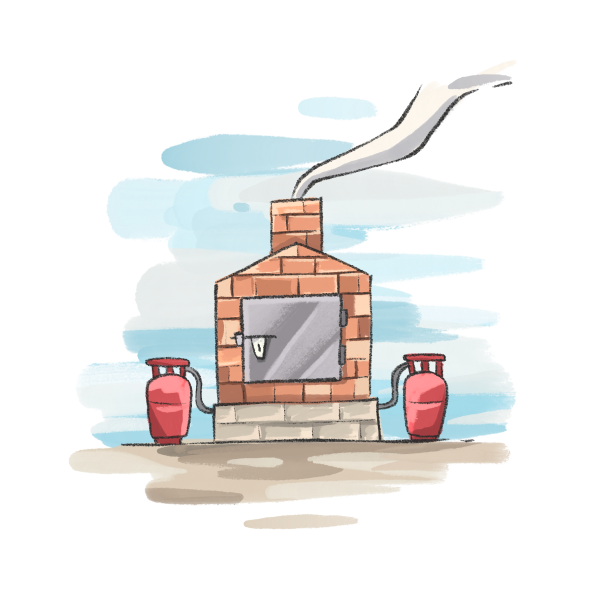
04 b
Firing
the Contemporary way
CHANGING TIMES
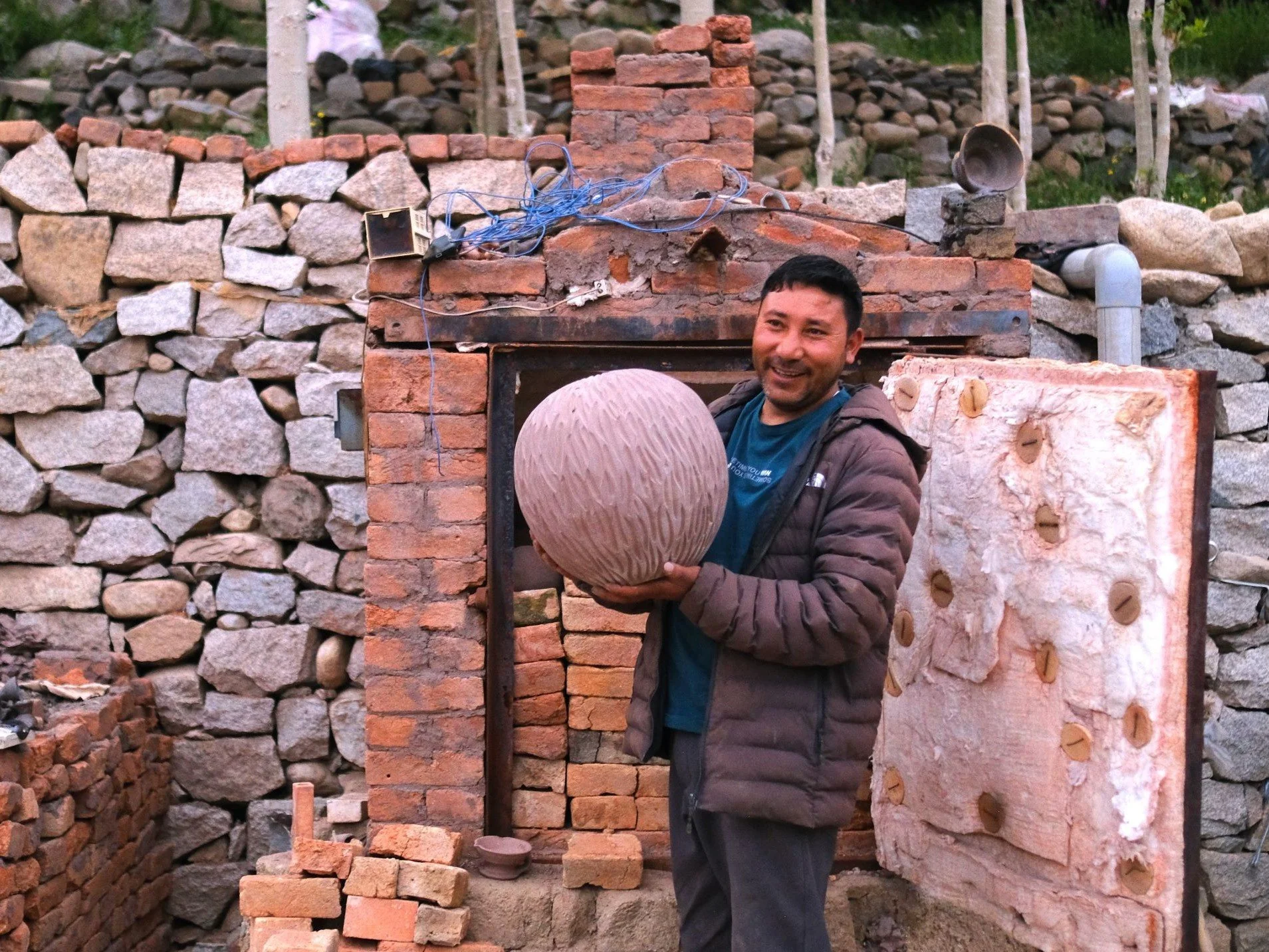
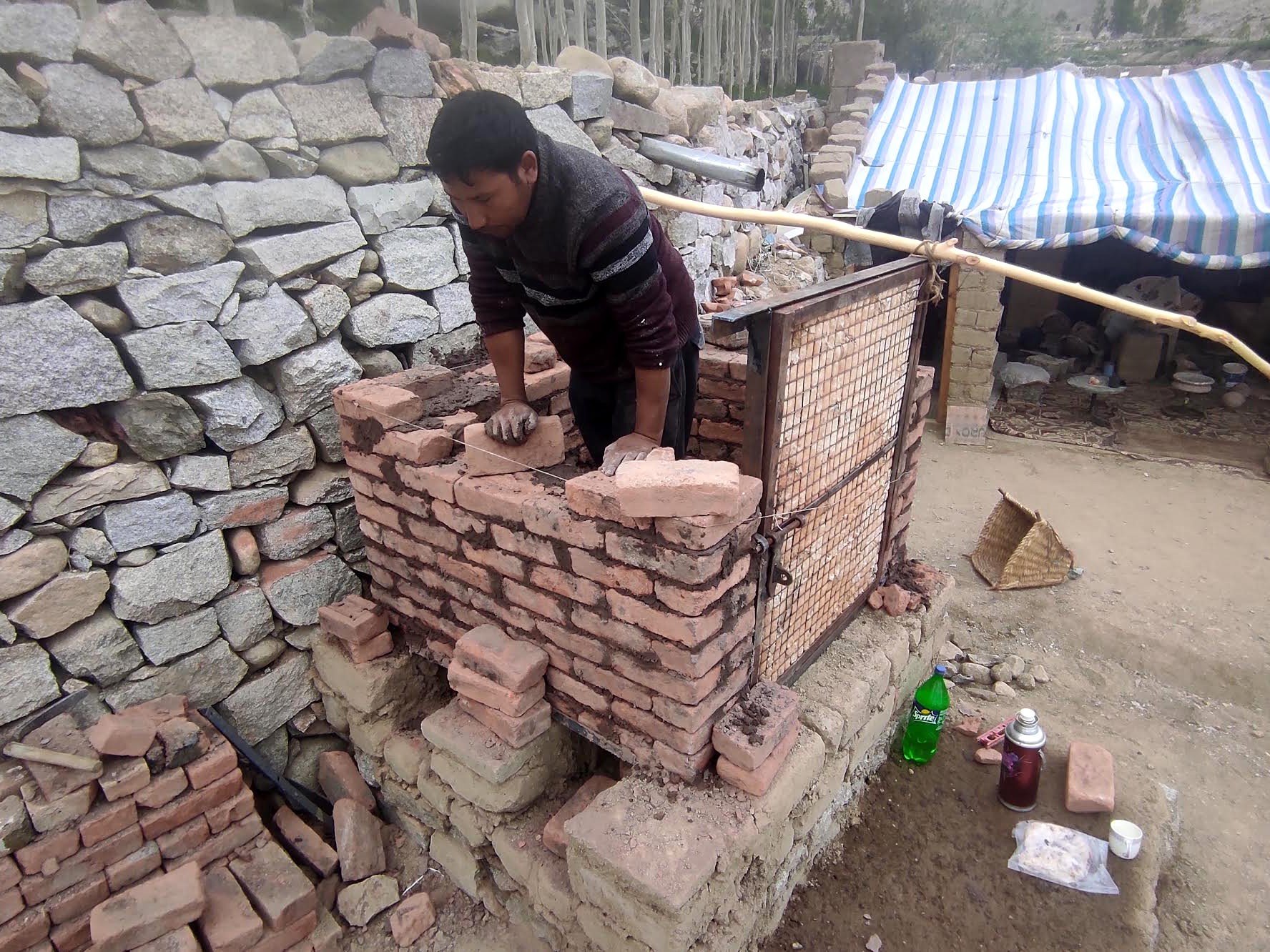
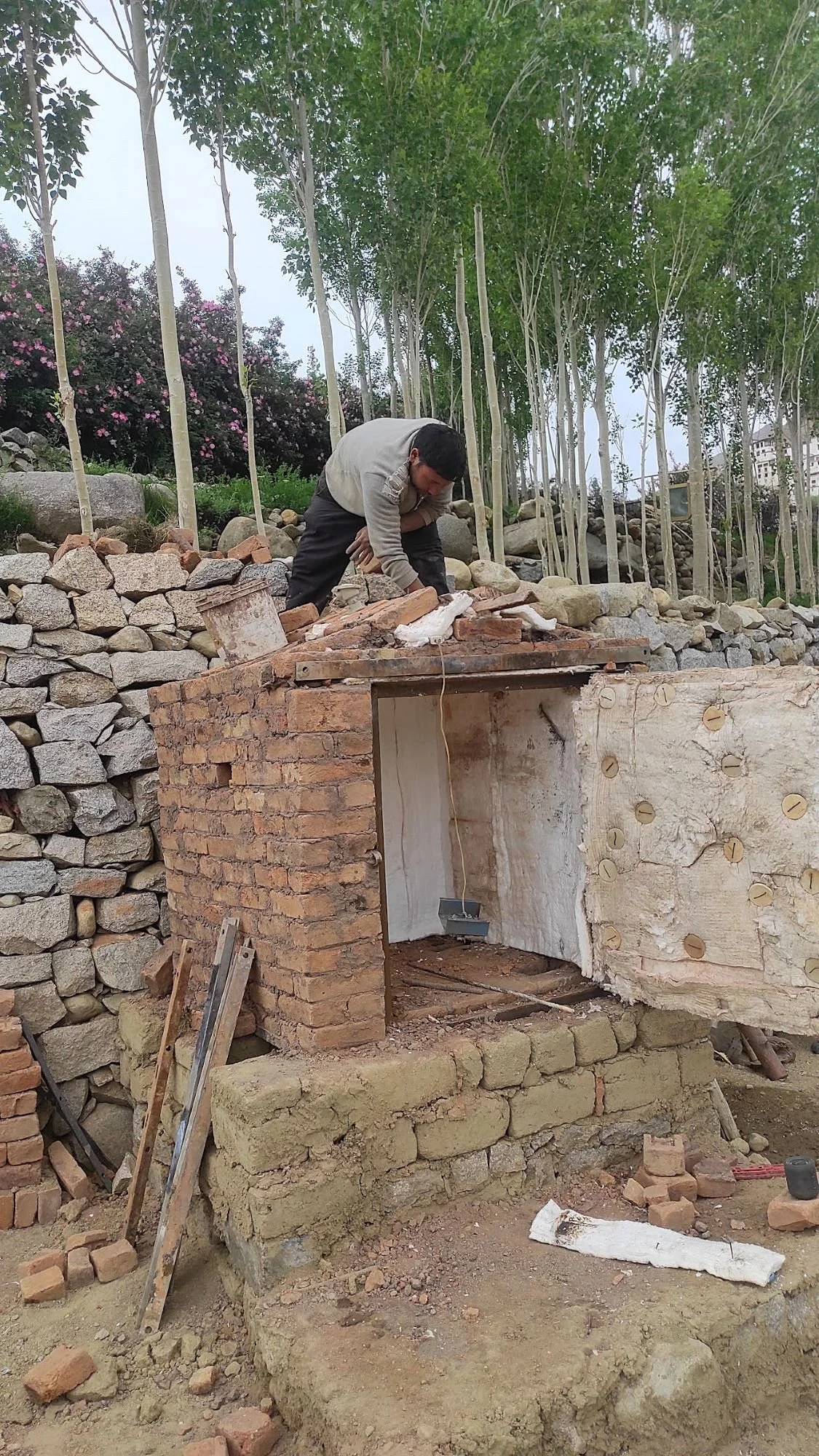
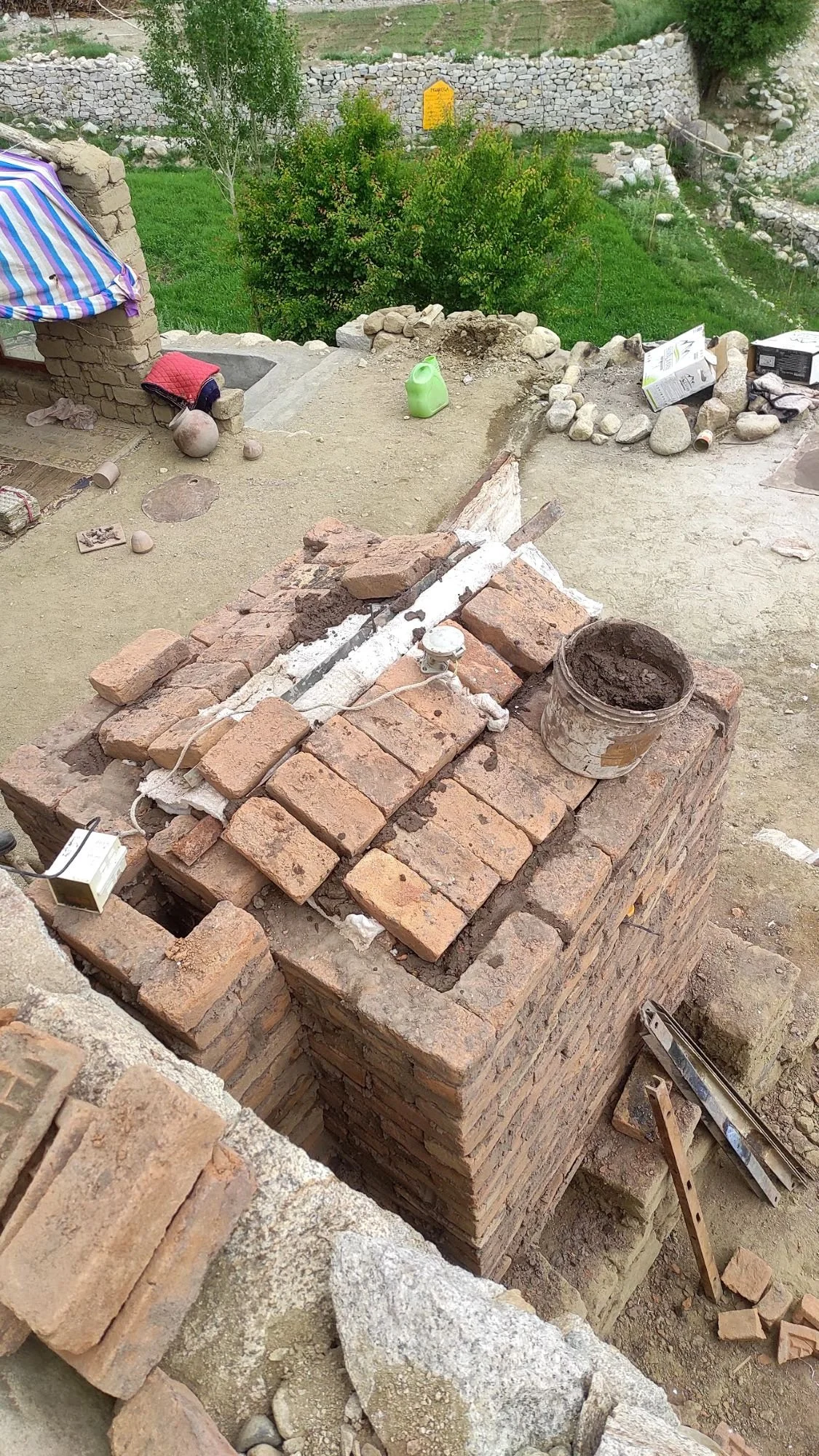
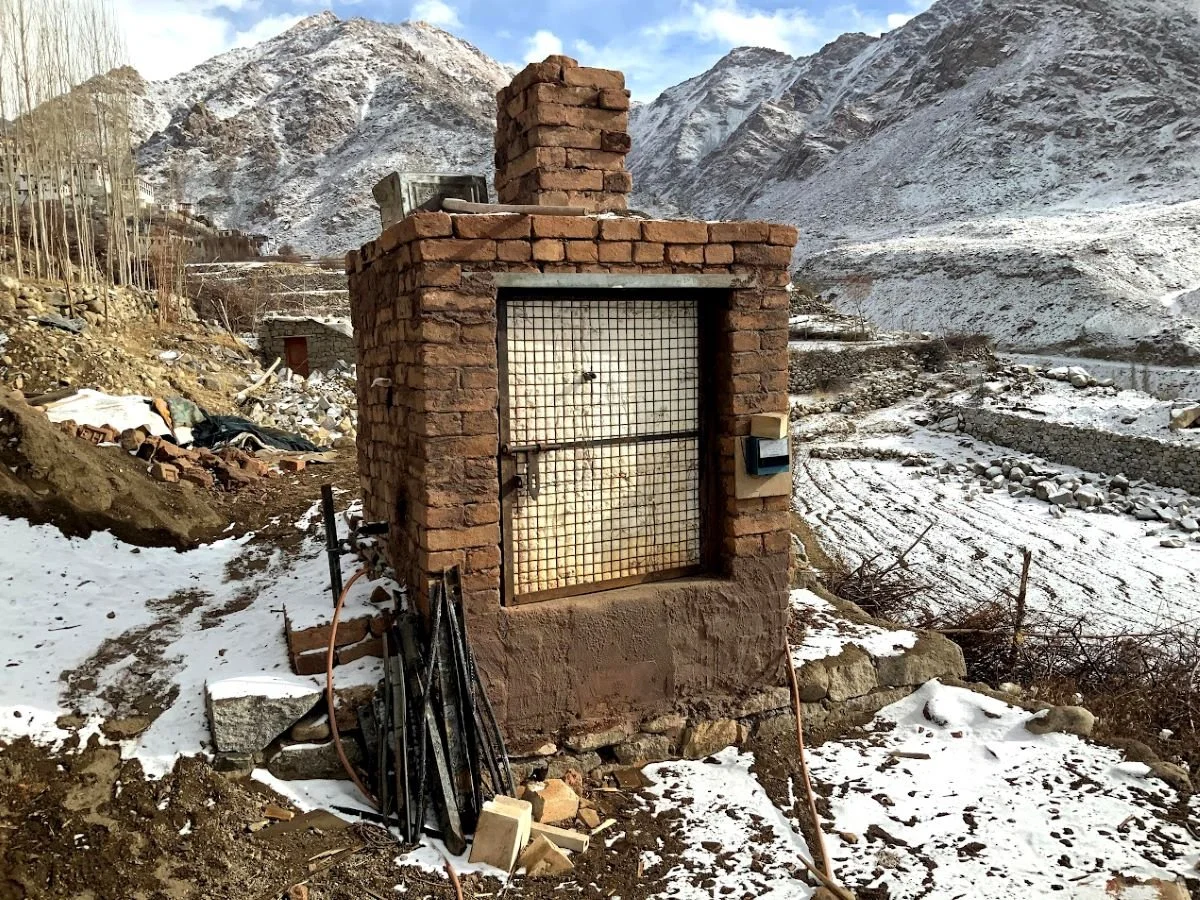
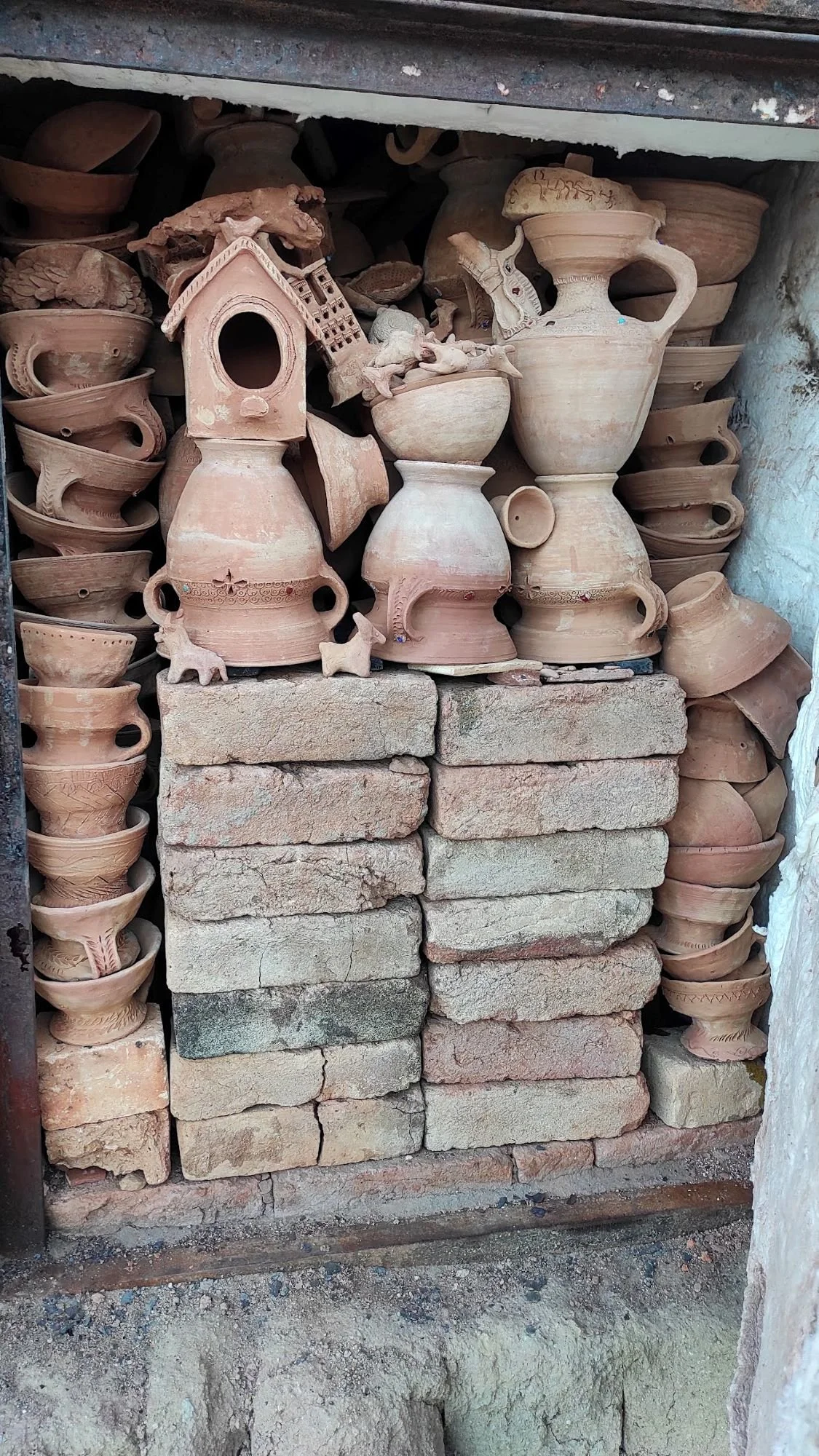
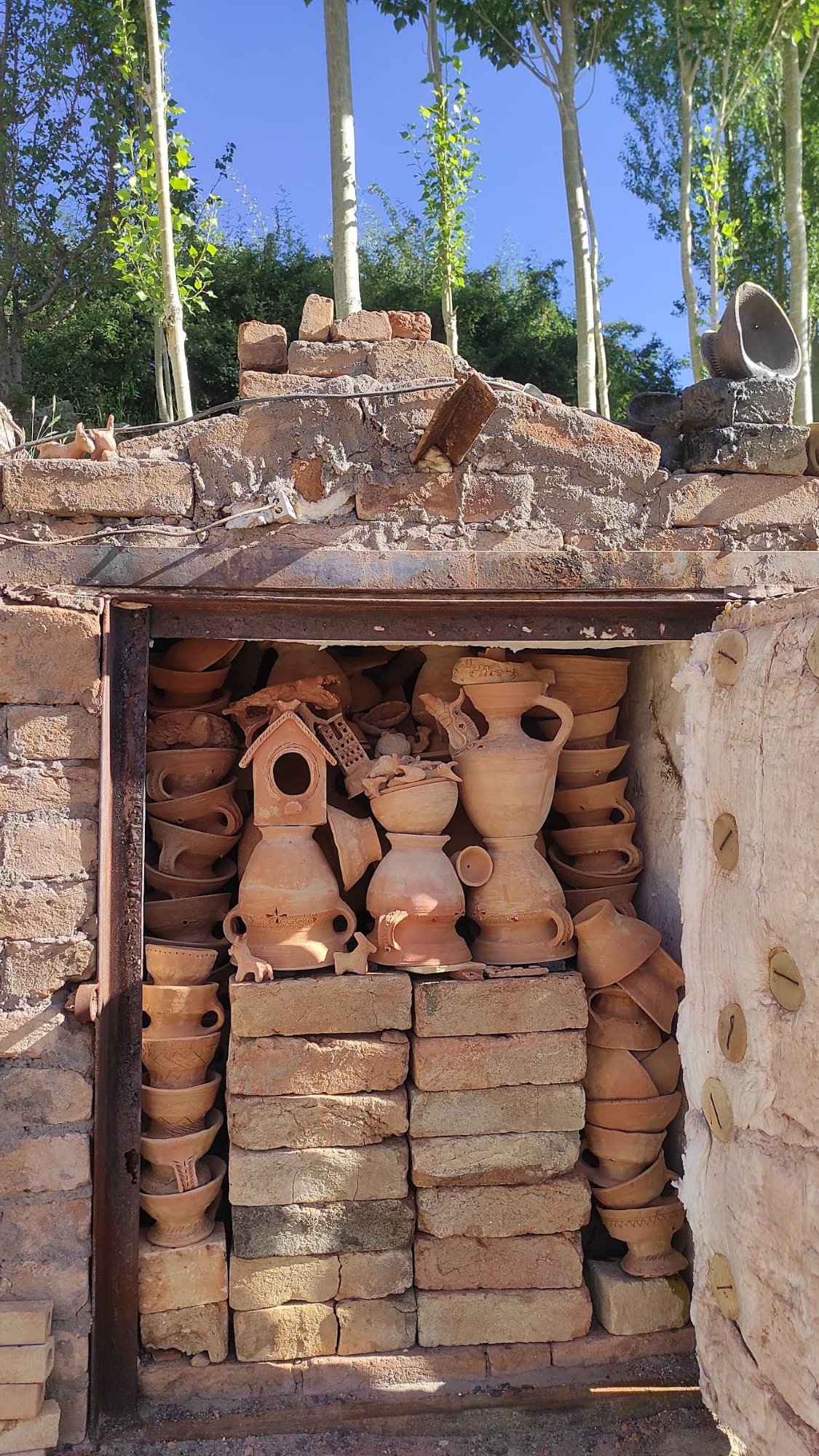
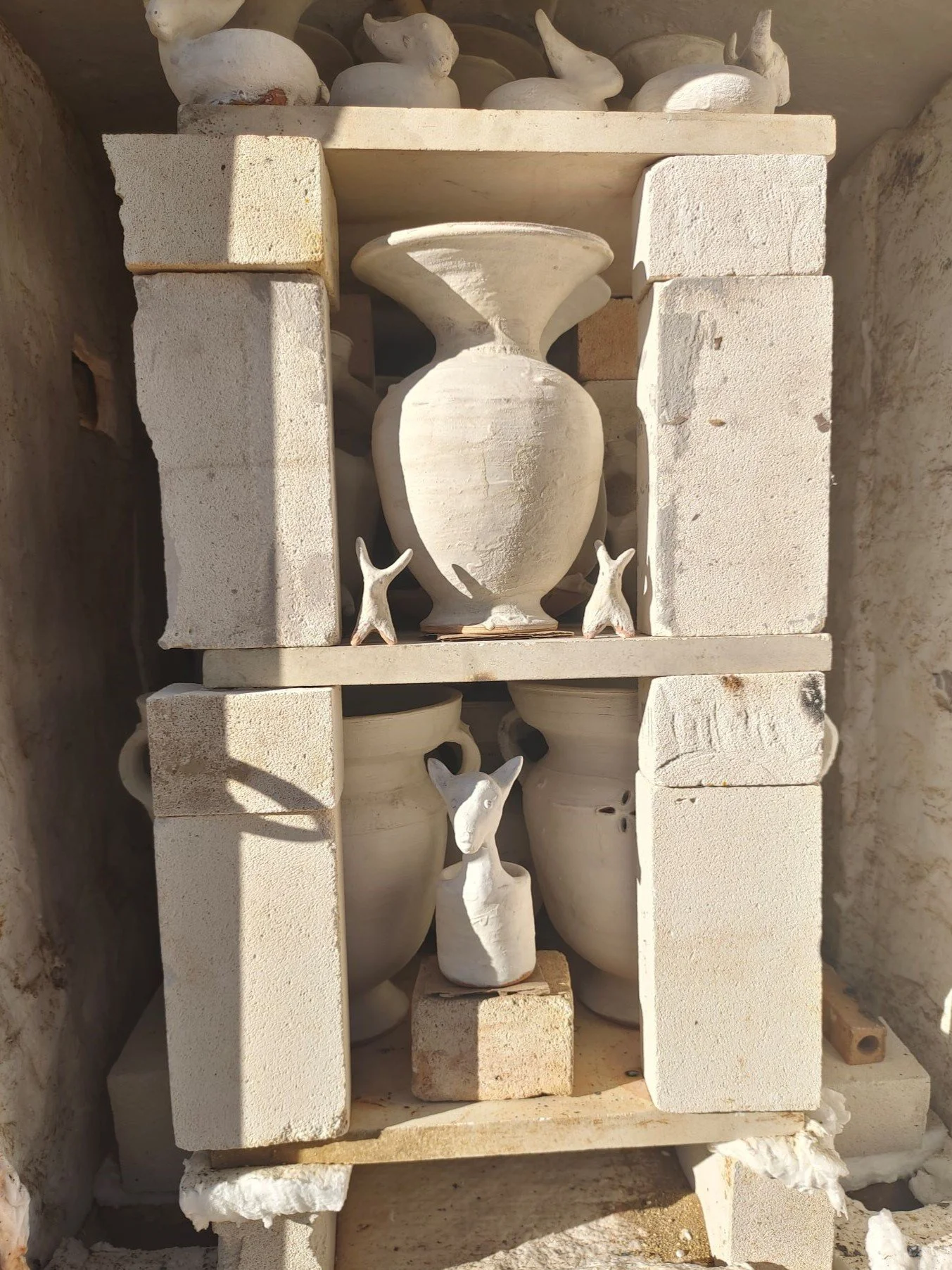
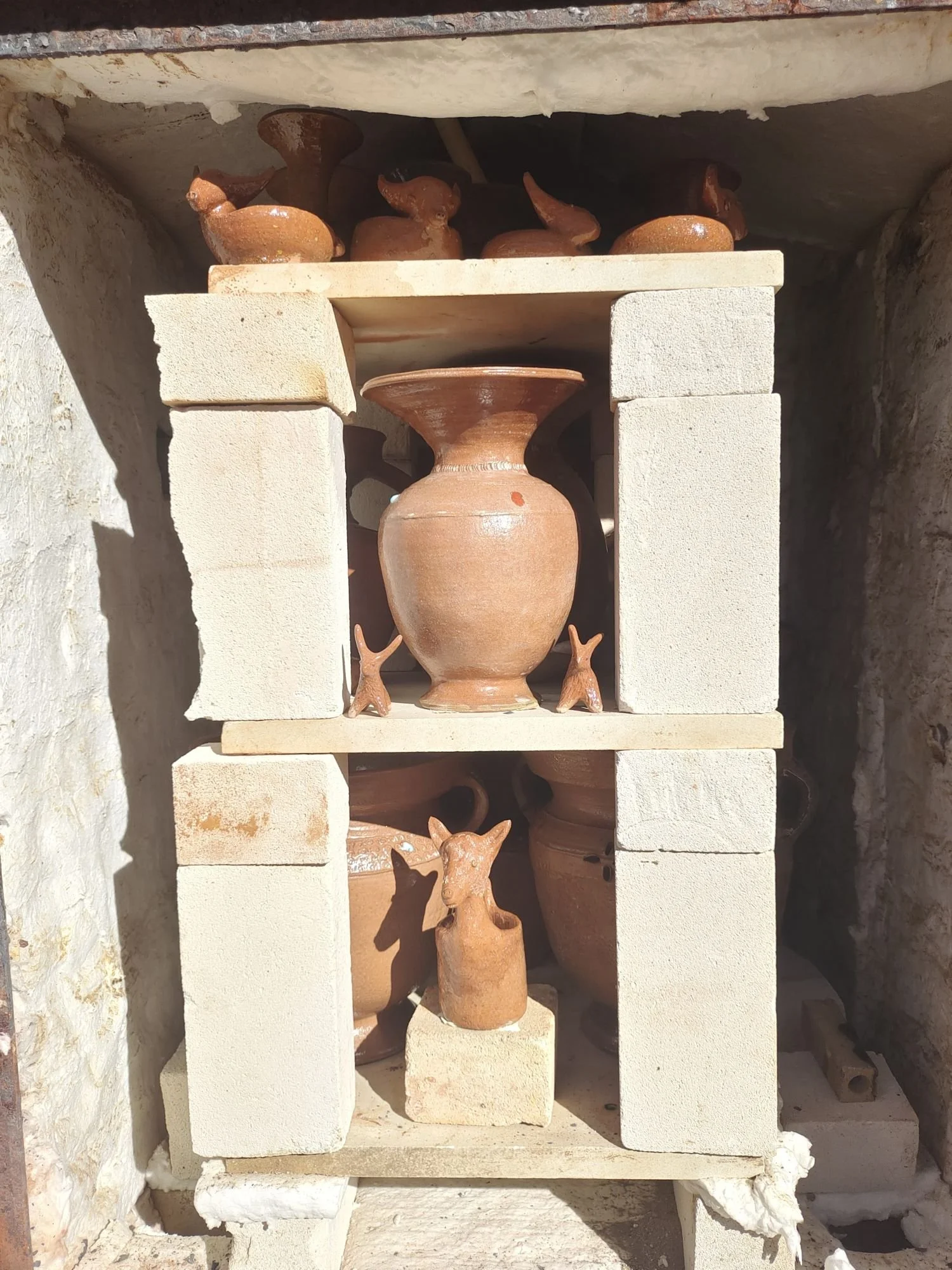
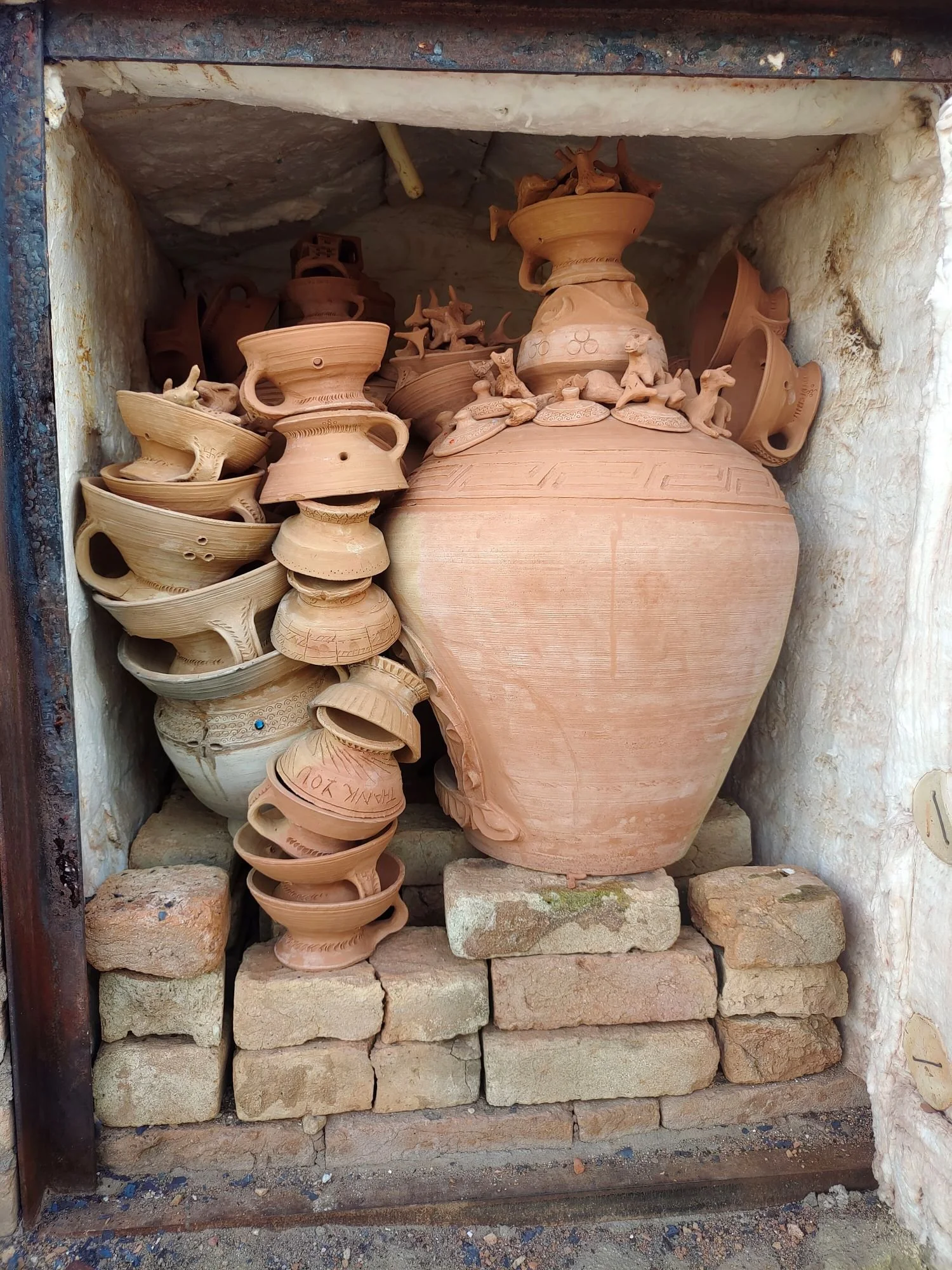
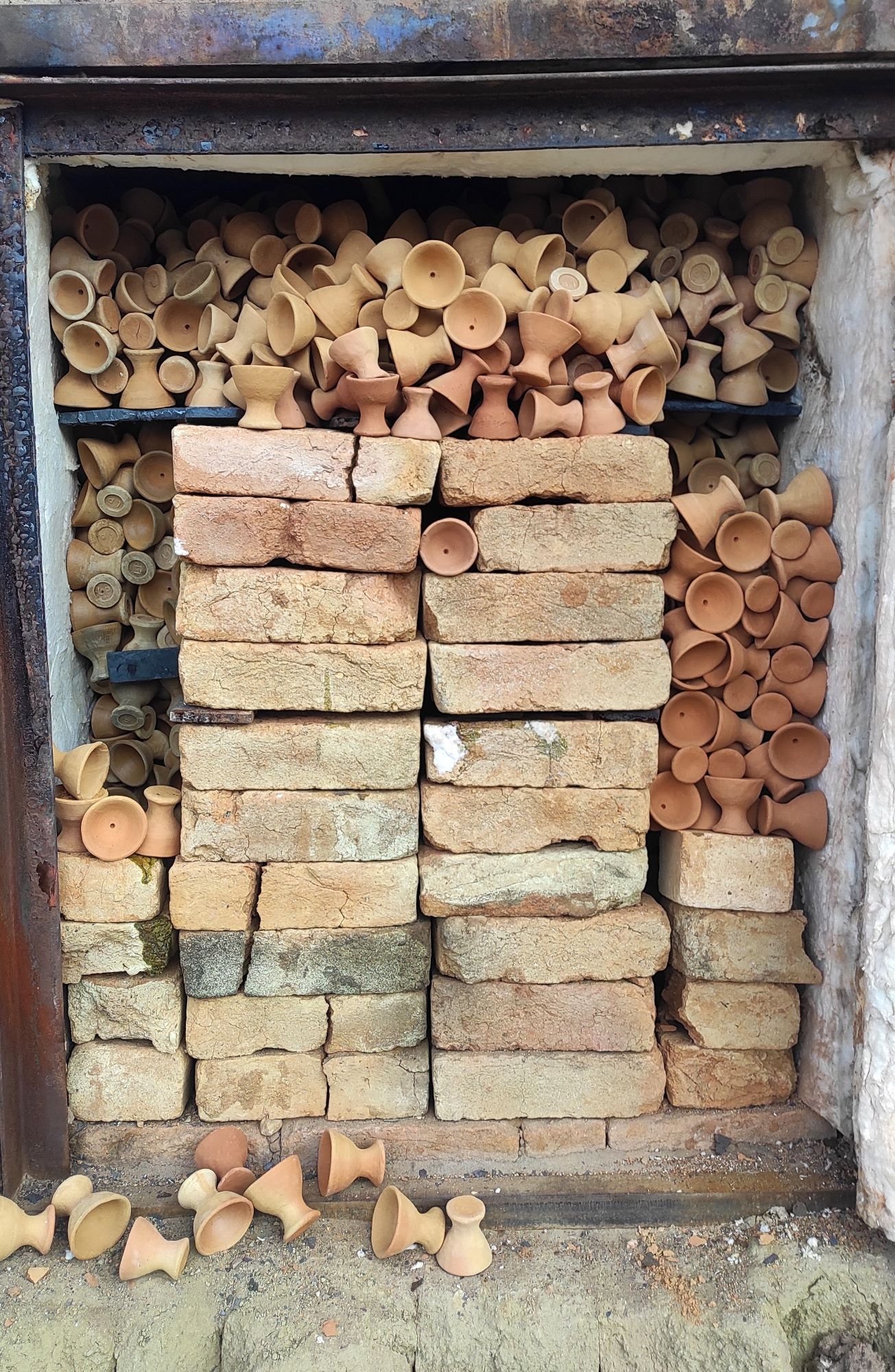
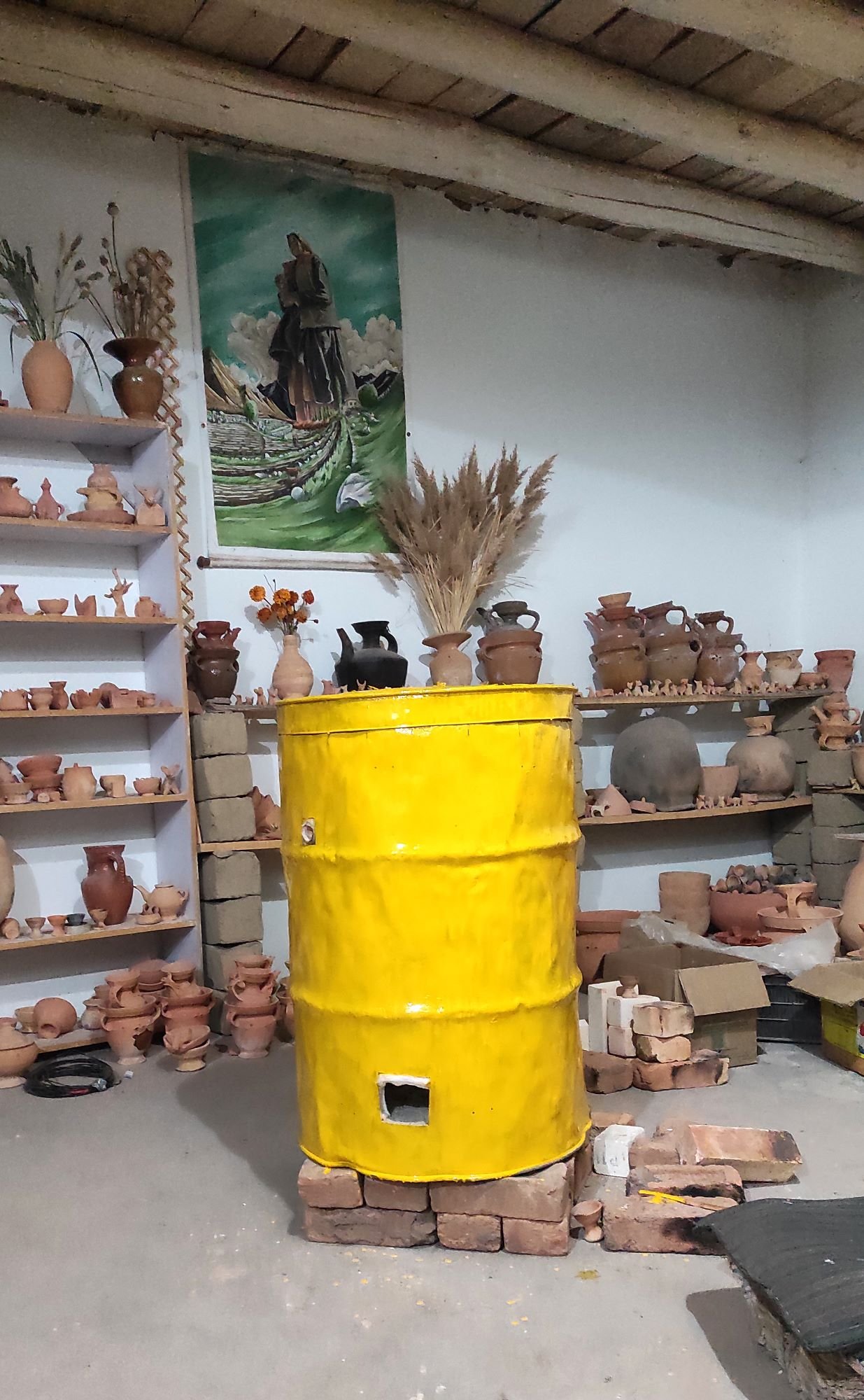
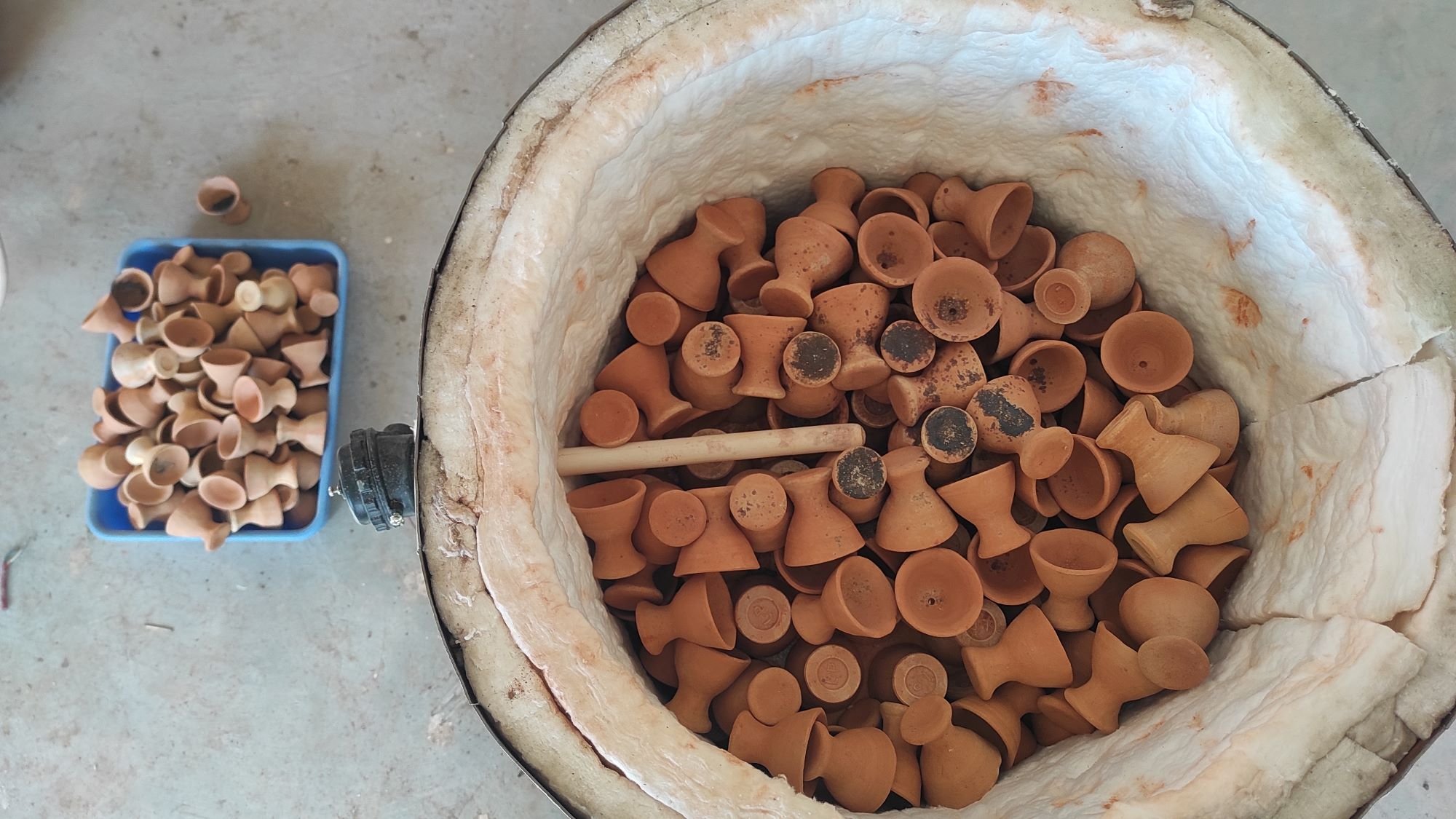
As many villagers left farming for more modern livelihoods, the number of cows and dzos in the village also dwindled. Thus leading to scarcity of dung and lack of raw material for firing. Wood, too, remains a limited resource in this cold desert.
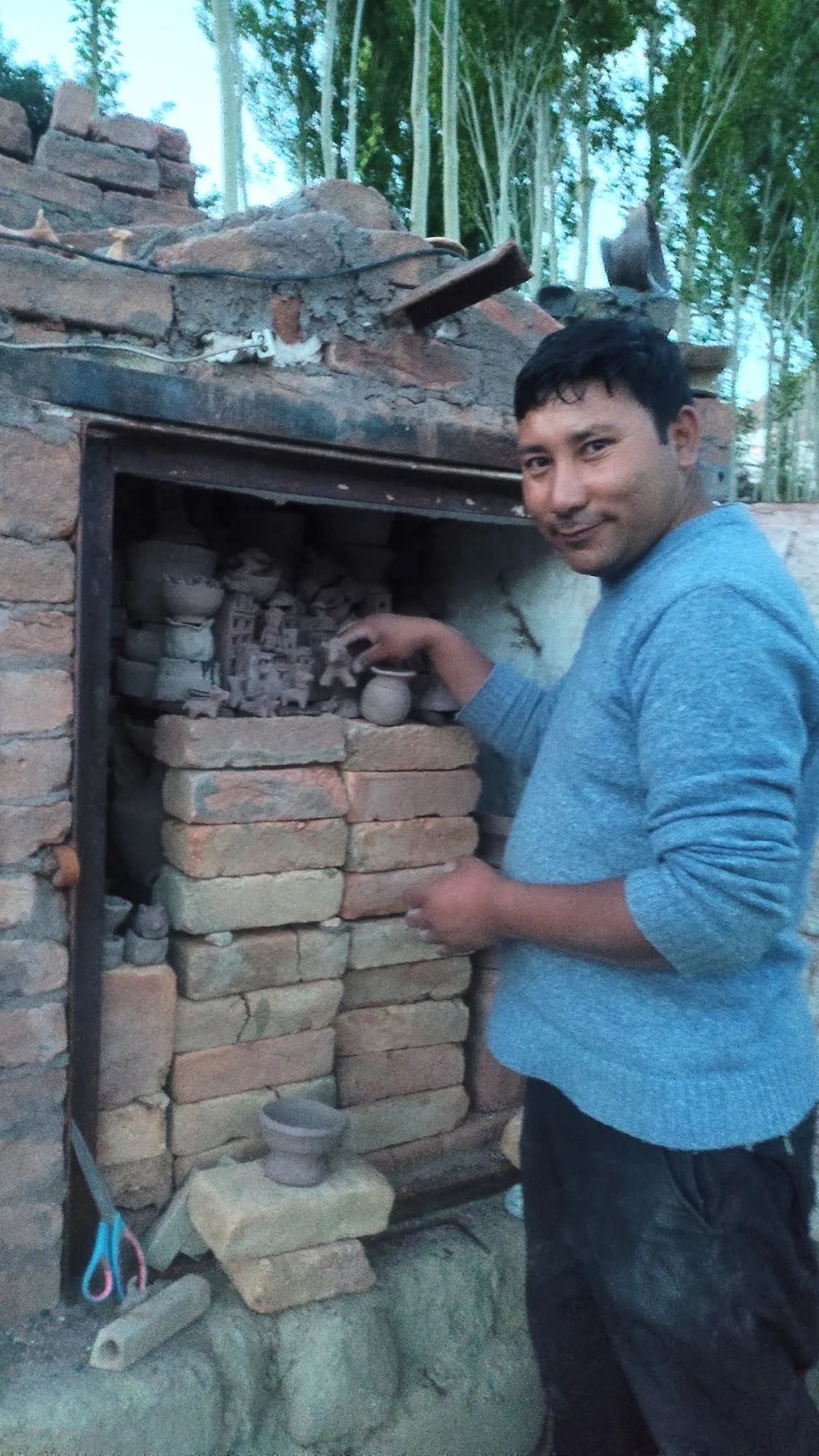
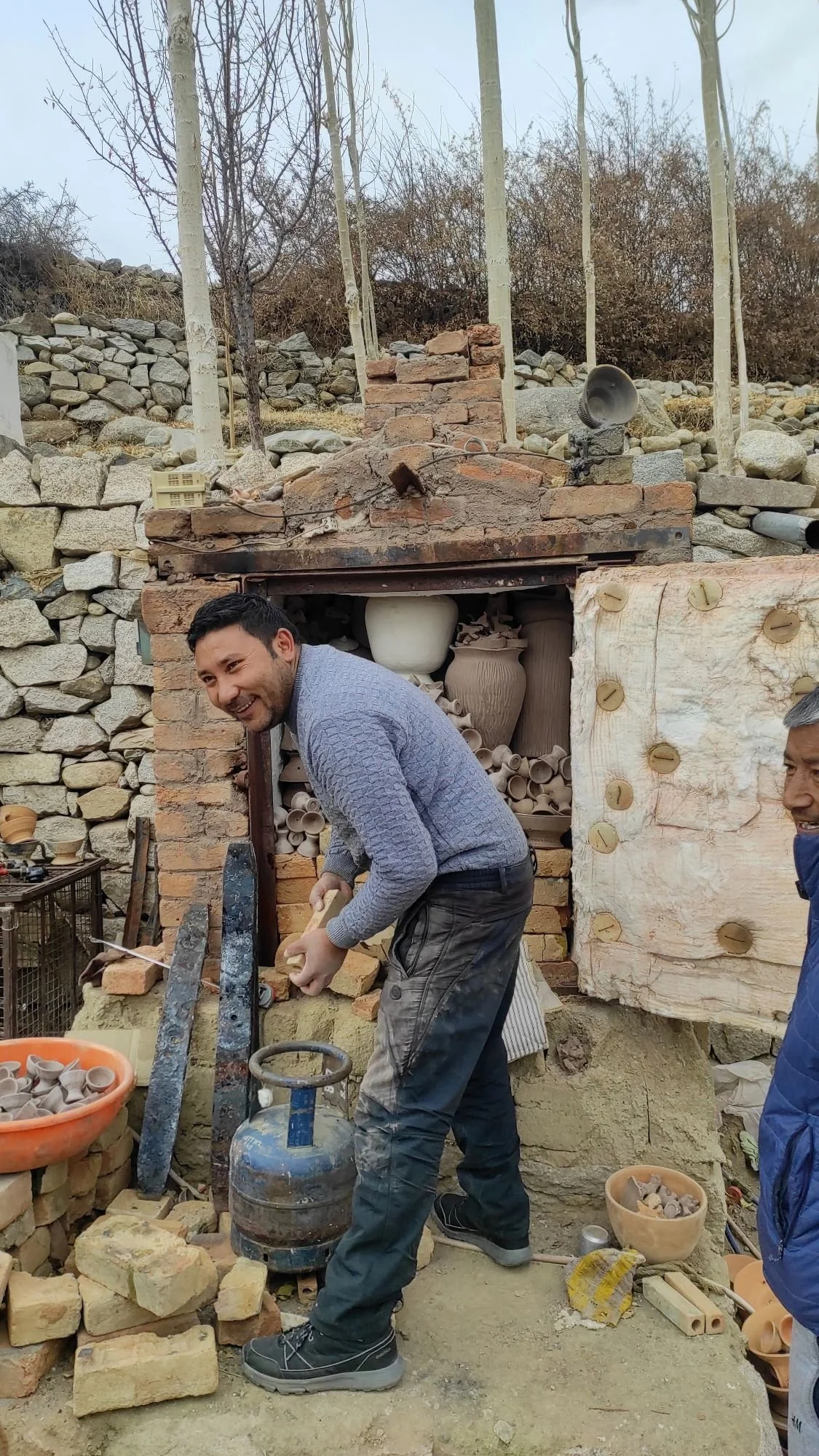
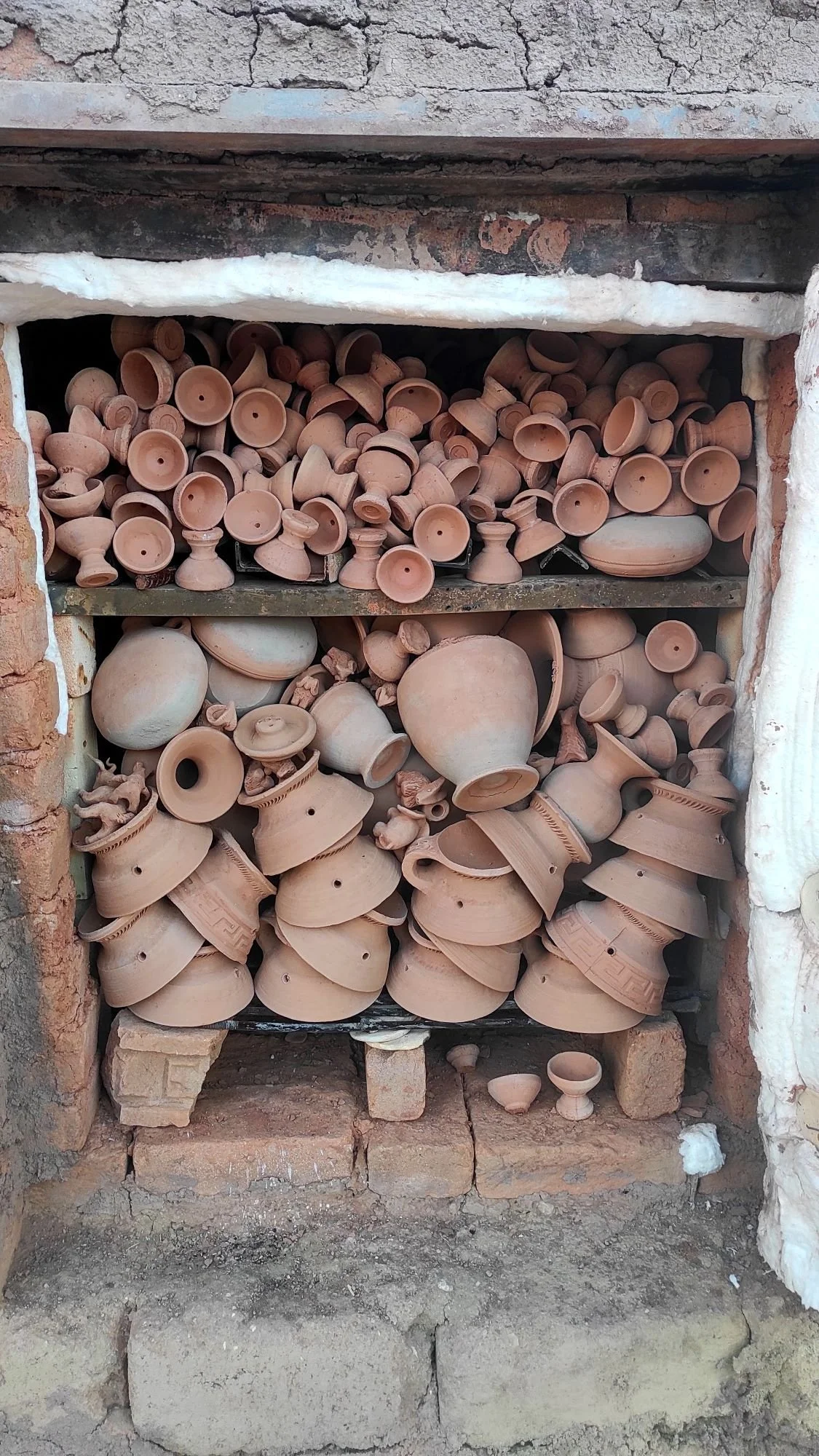
After many trial and errors, a gas- kiln was developed. This adaptation allows firing to happen more regularly, helping sustain the practice while responding to changing realities.
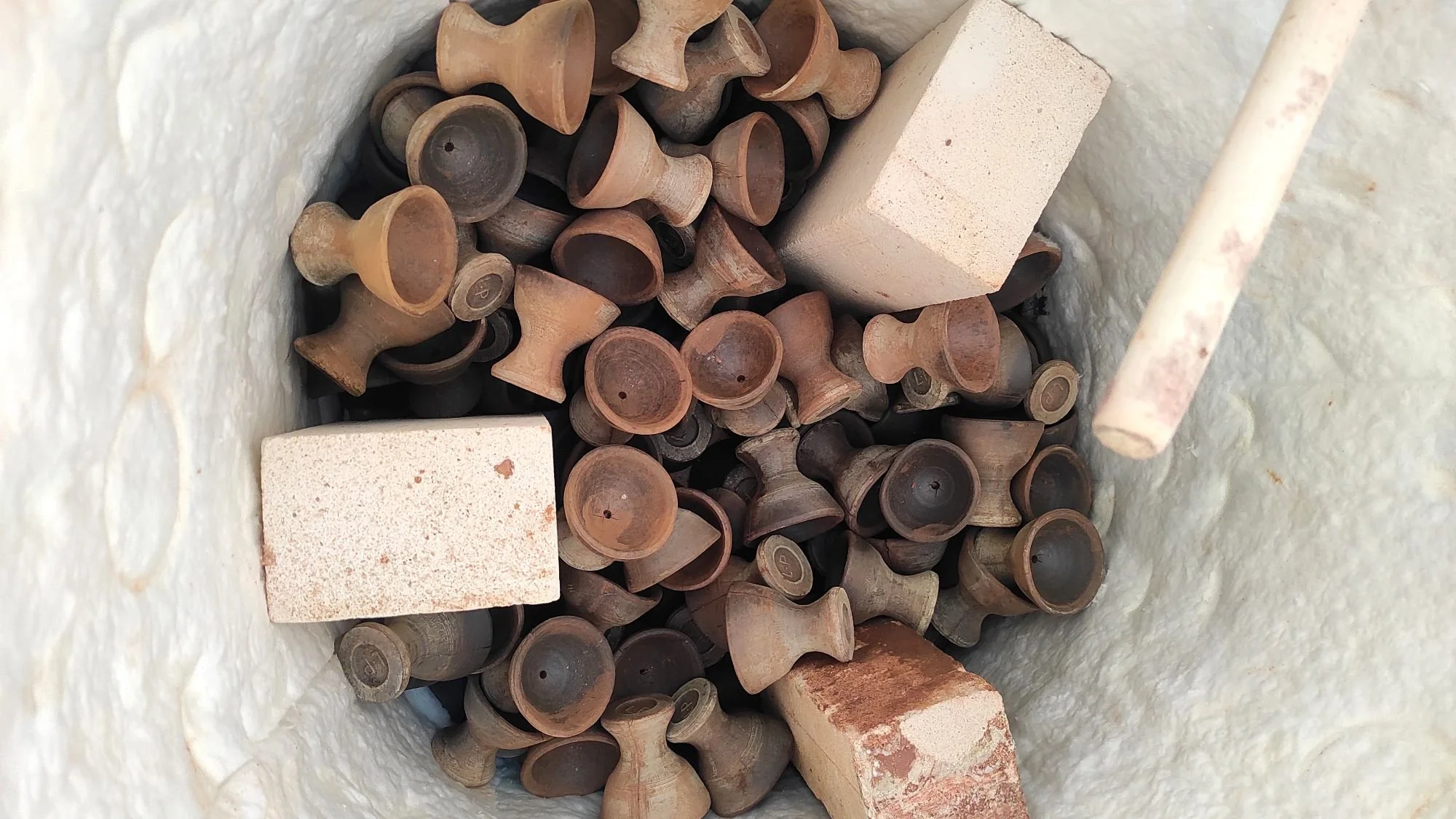
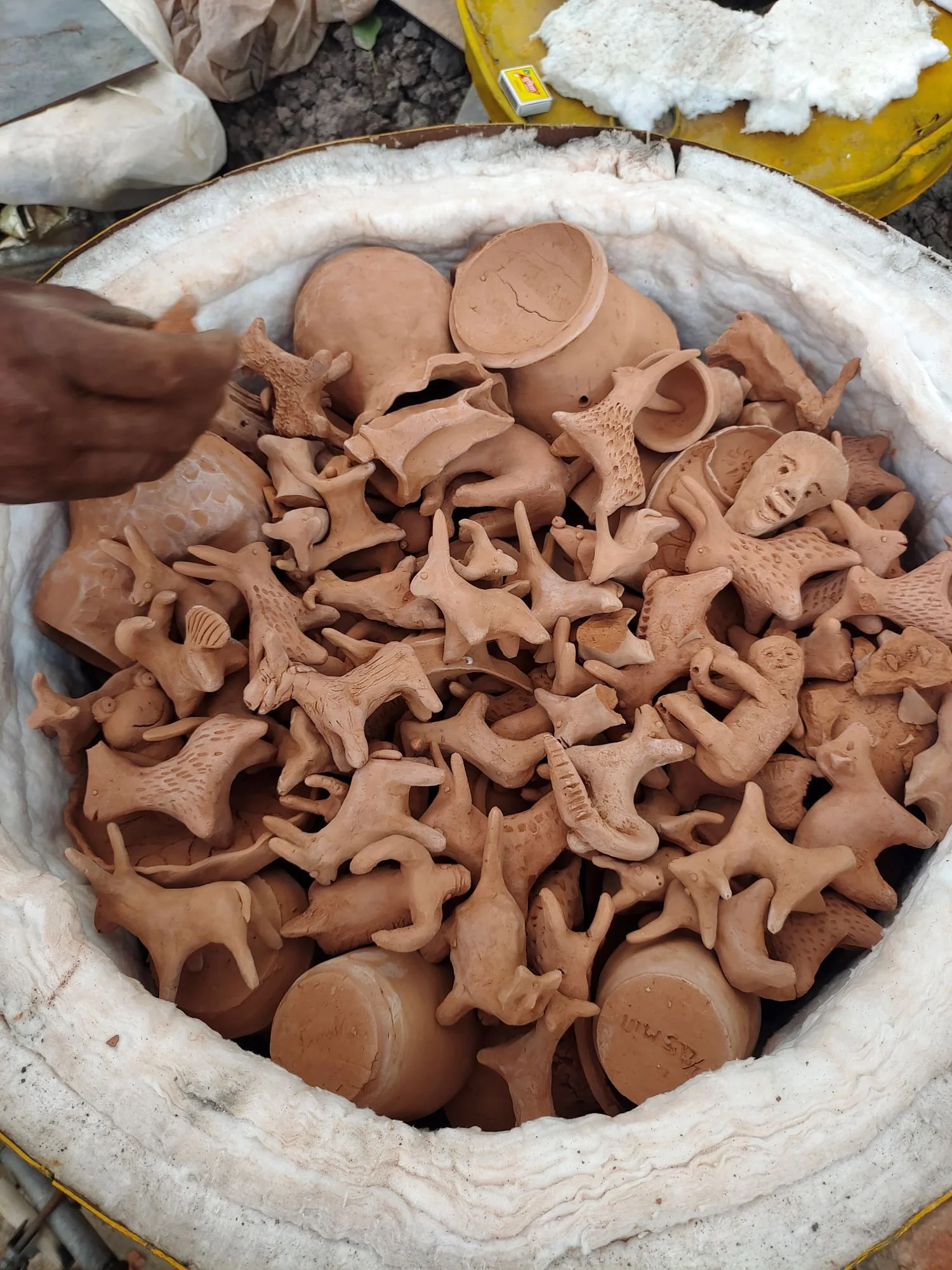

05
Glazing
COLLECTION OF RAW MATERIAL
The glazing material, Chhale, is a crystalline powder believed to be a borax compound, sourced from the Puga Valley in Changthang. It forms as a thin surface deposit near streams and is carefully sliced and collected using a shovel, ensuring it is not mixed with the mud beneath.
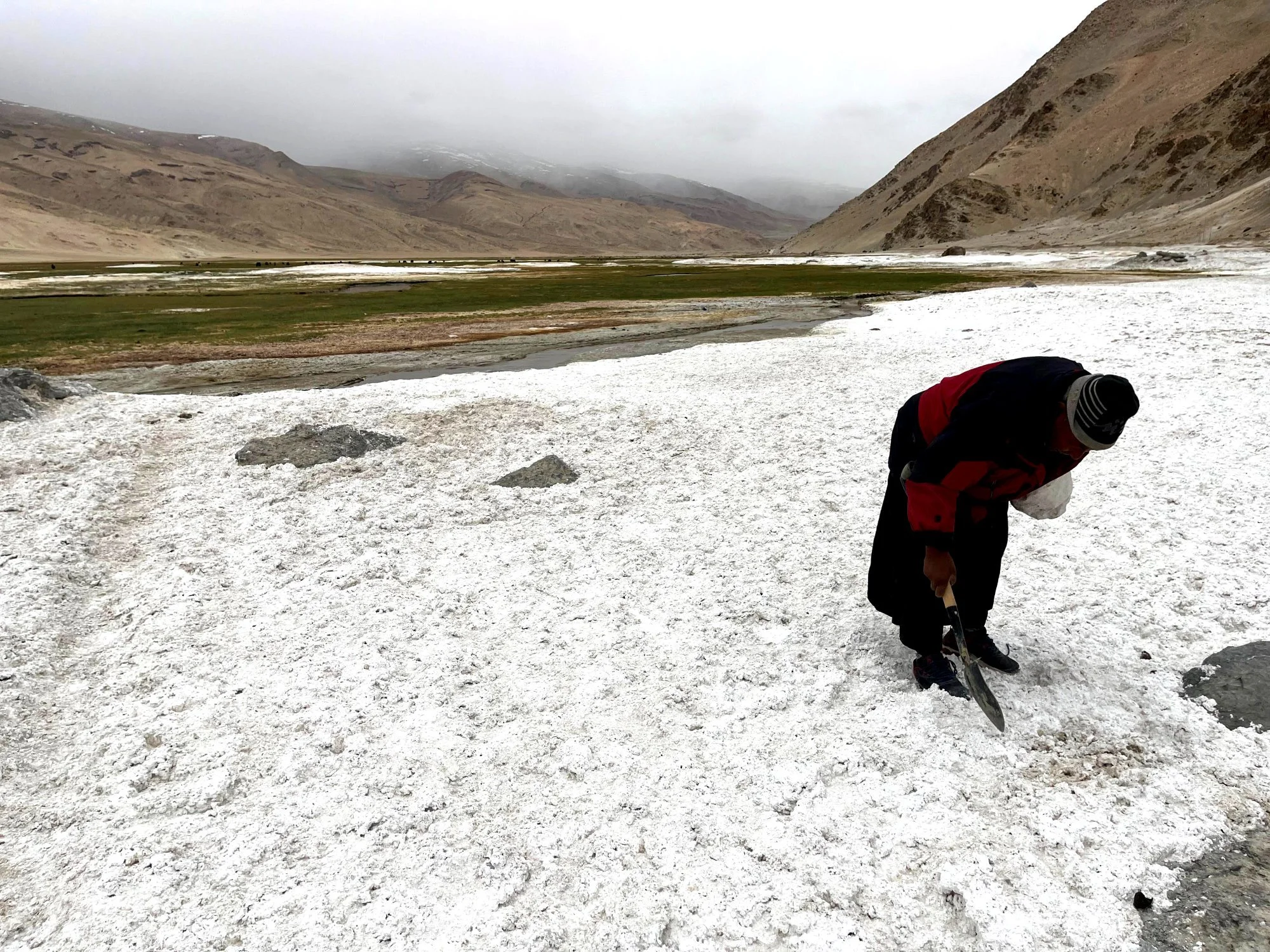
Abbaley at Puga valley in Changthang looking for the right spot to collect glaze
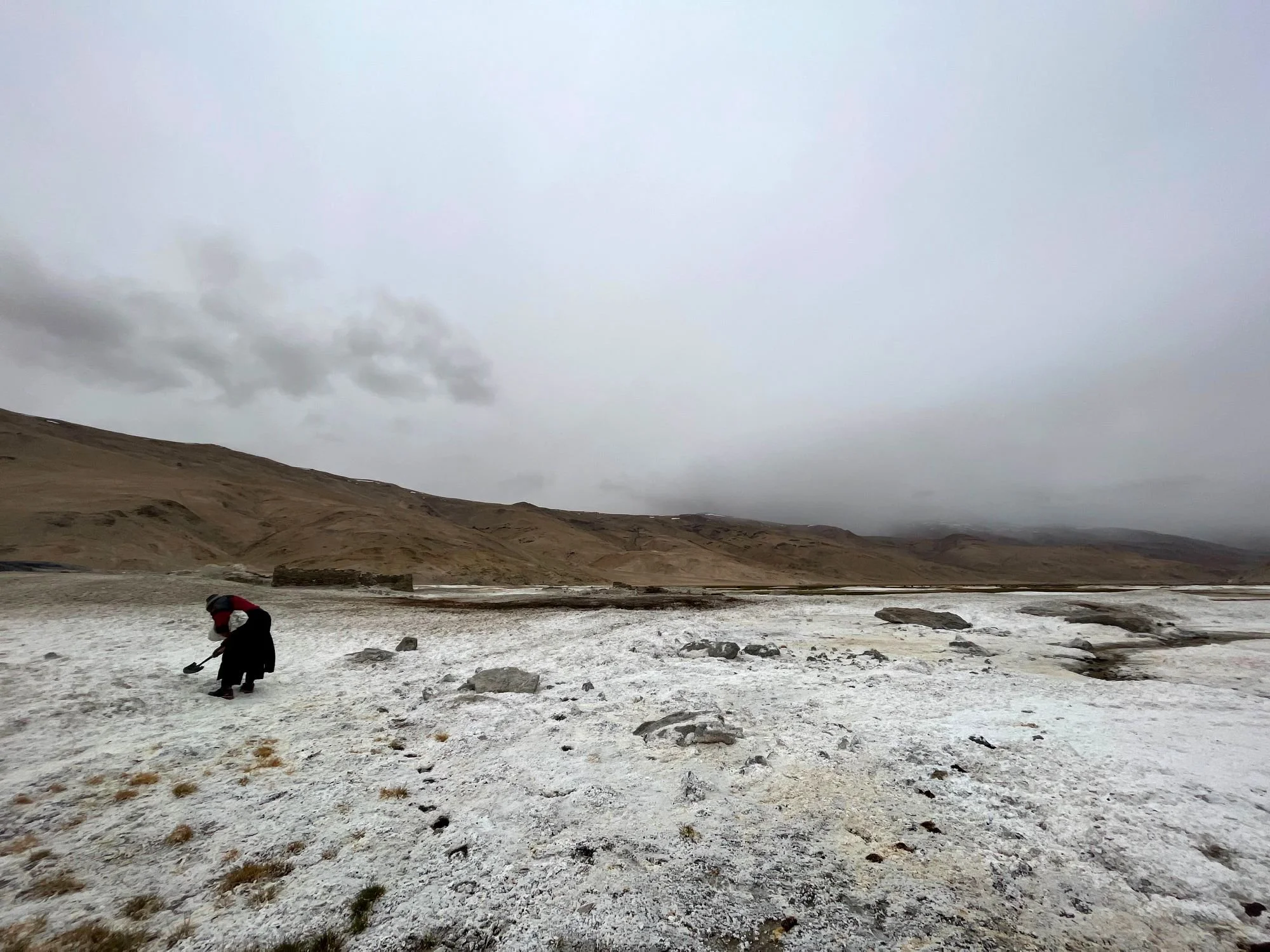
Deposits are very thin, so he is scouting more spots
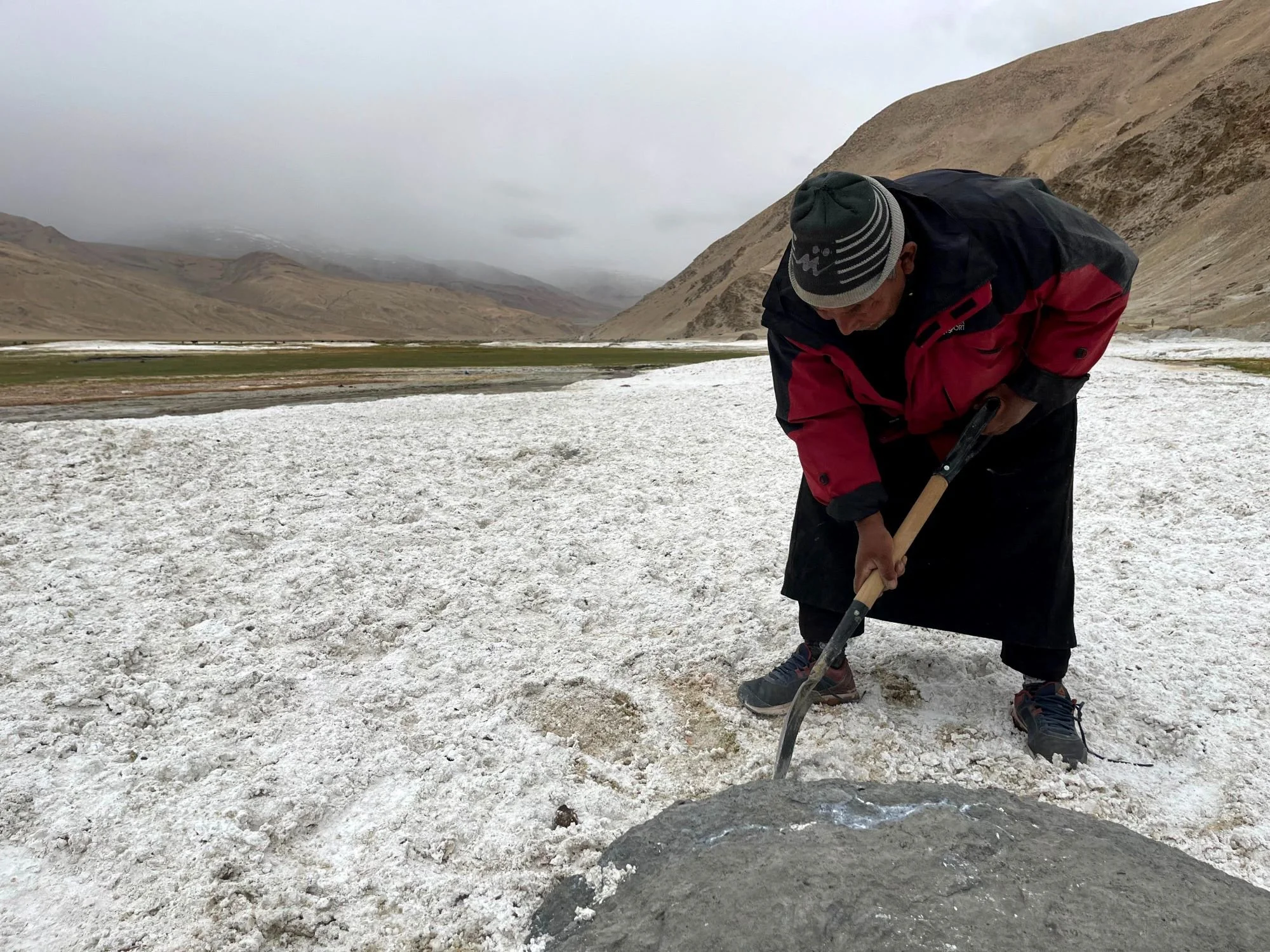
Harvesting raw material for Glaze
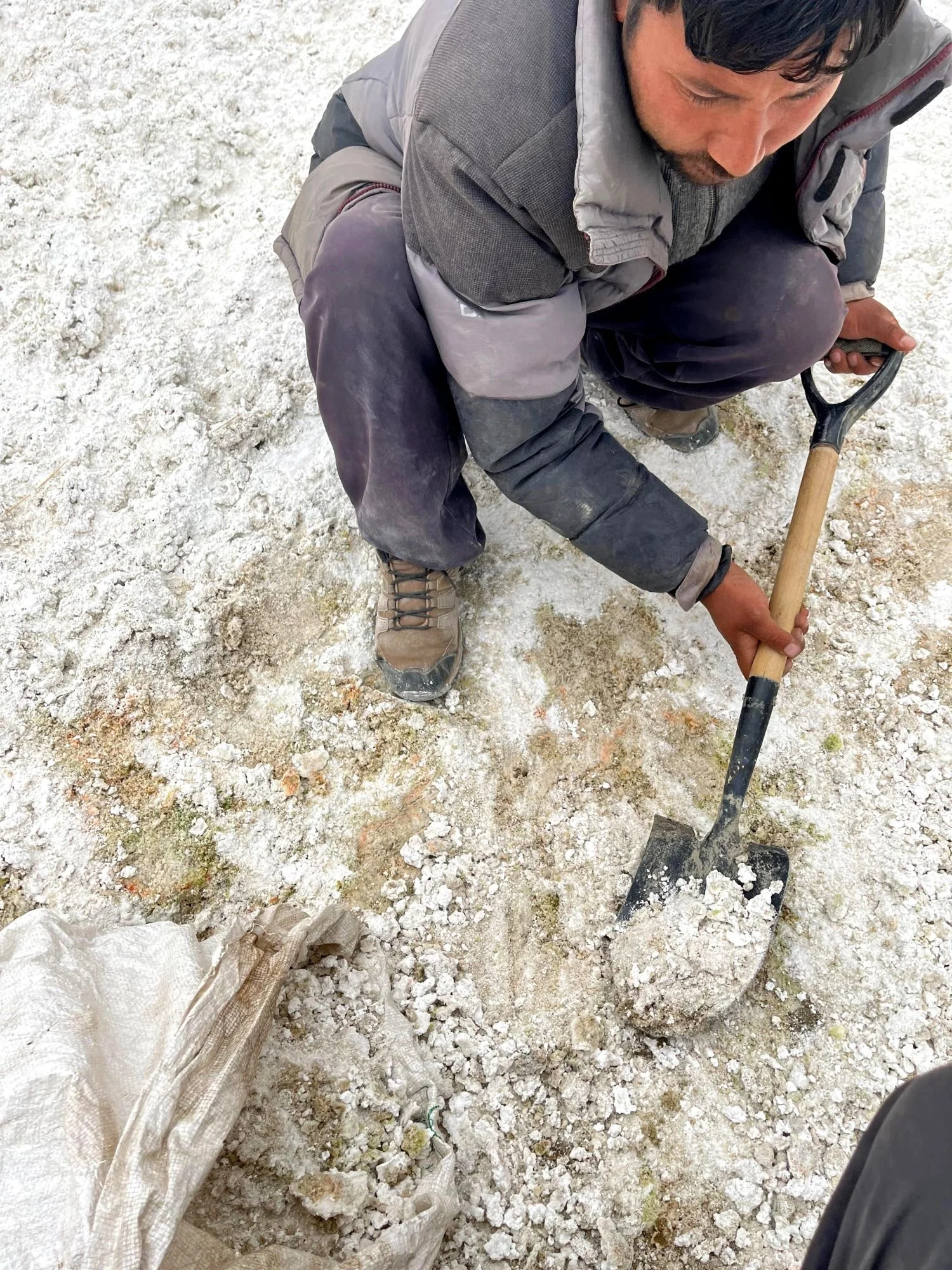
Rigzen shoveling the Glaze into a sack
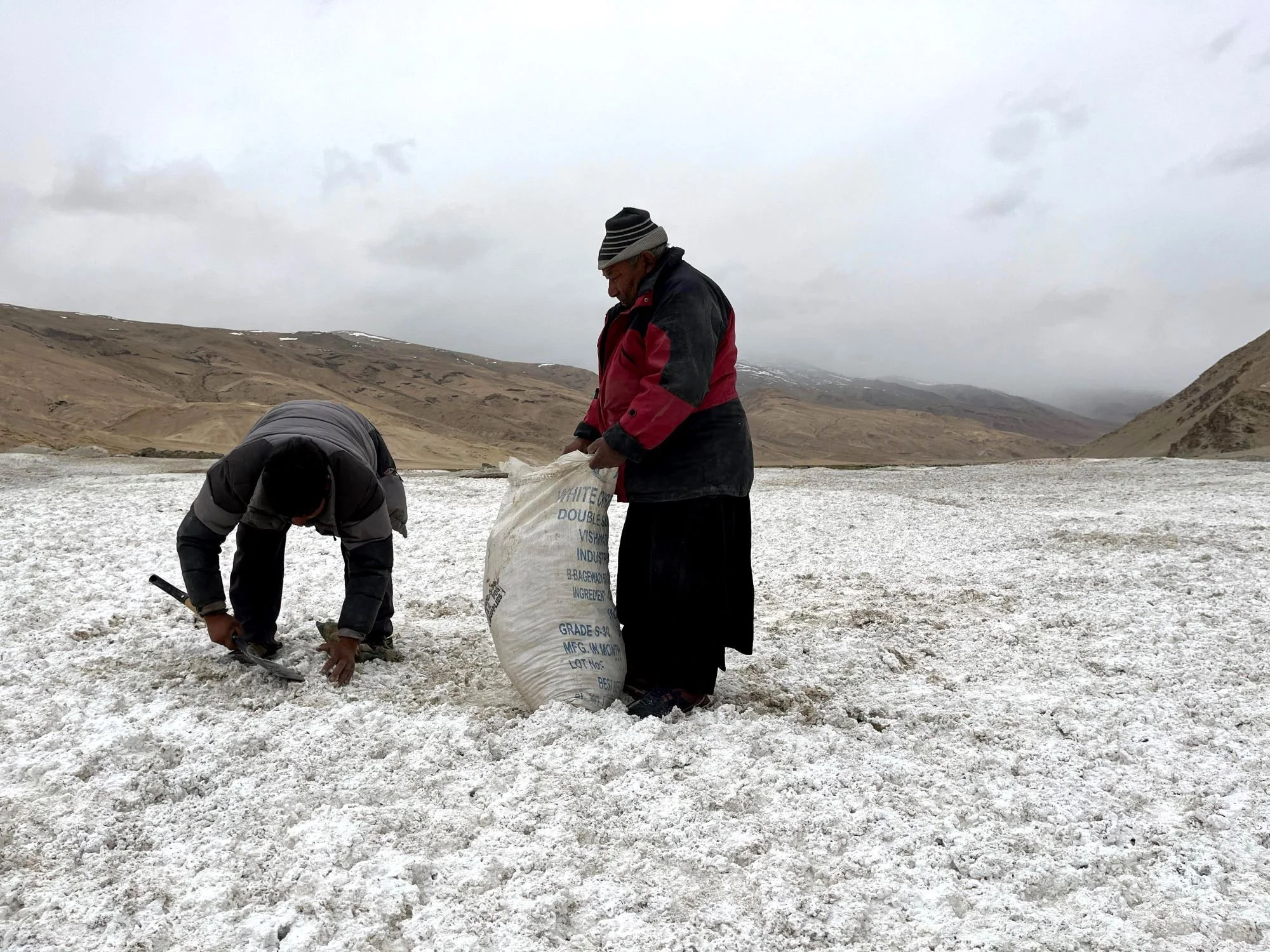
Packing up
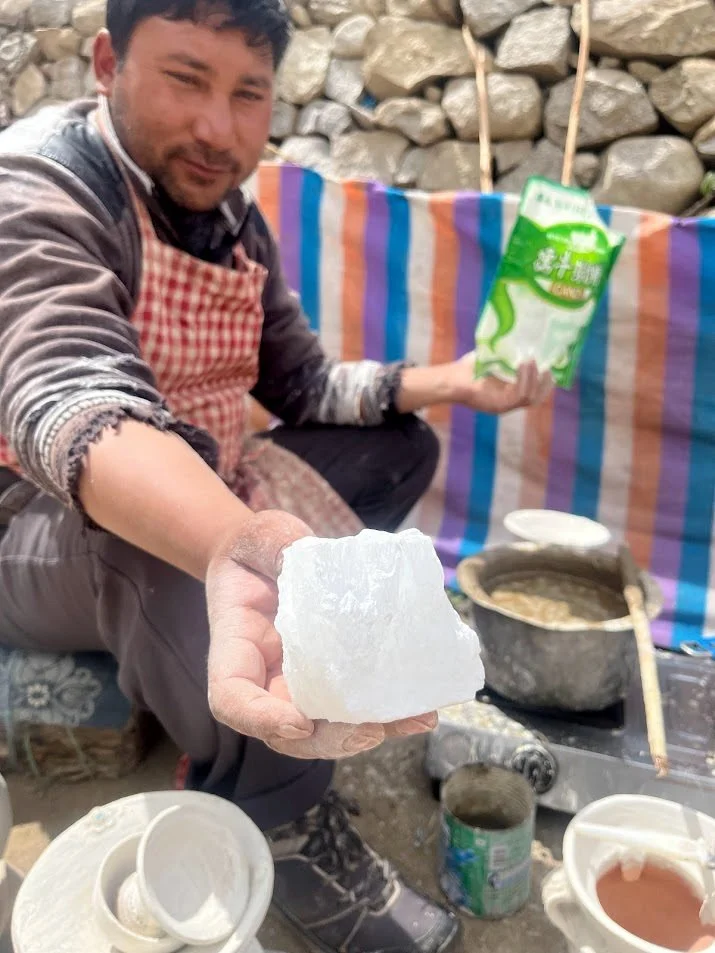
A Glaze sample collected near the Tso Kar Lake
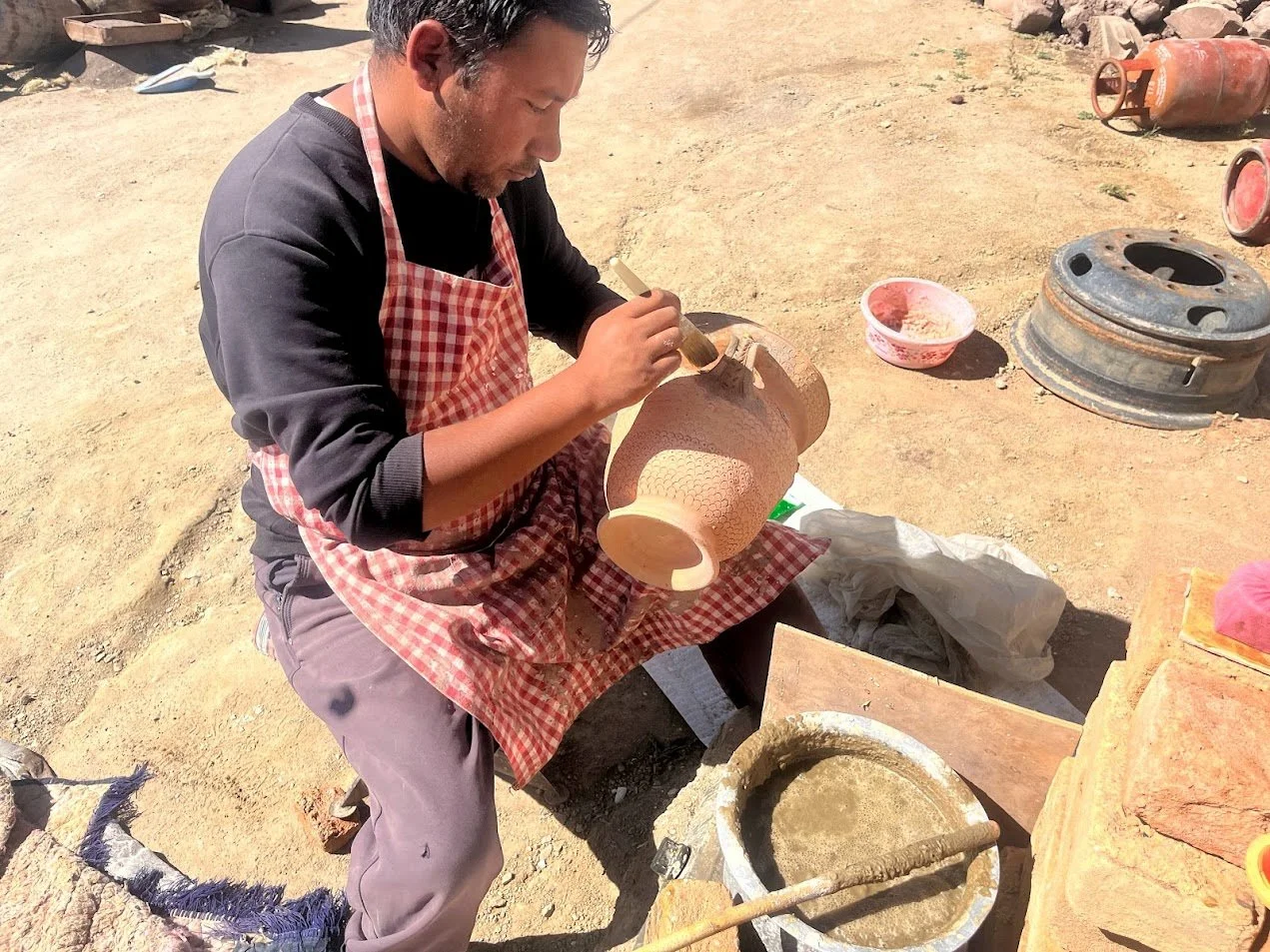
Rigzen boiling the collected Glaze raw material in water and applying it over pots with a brush
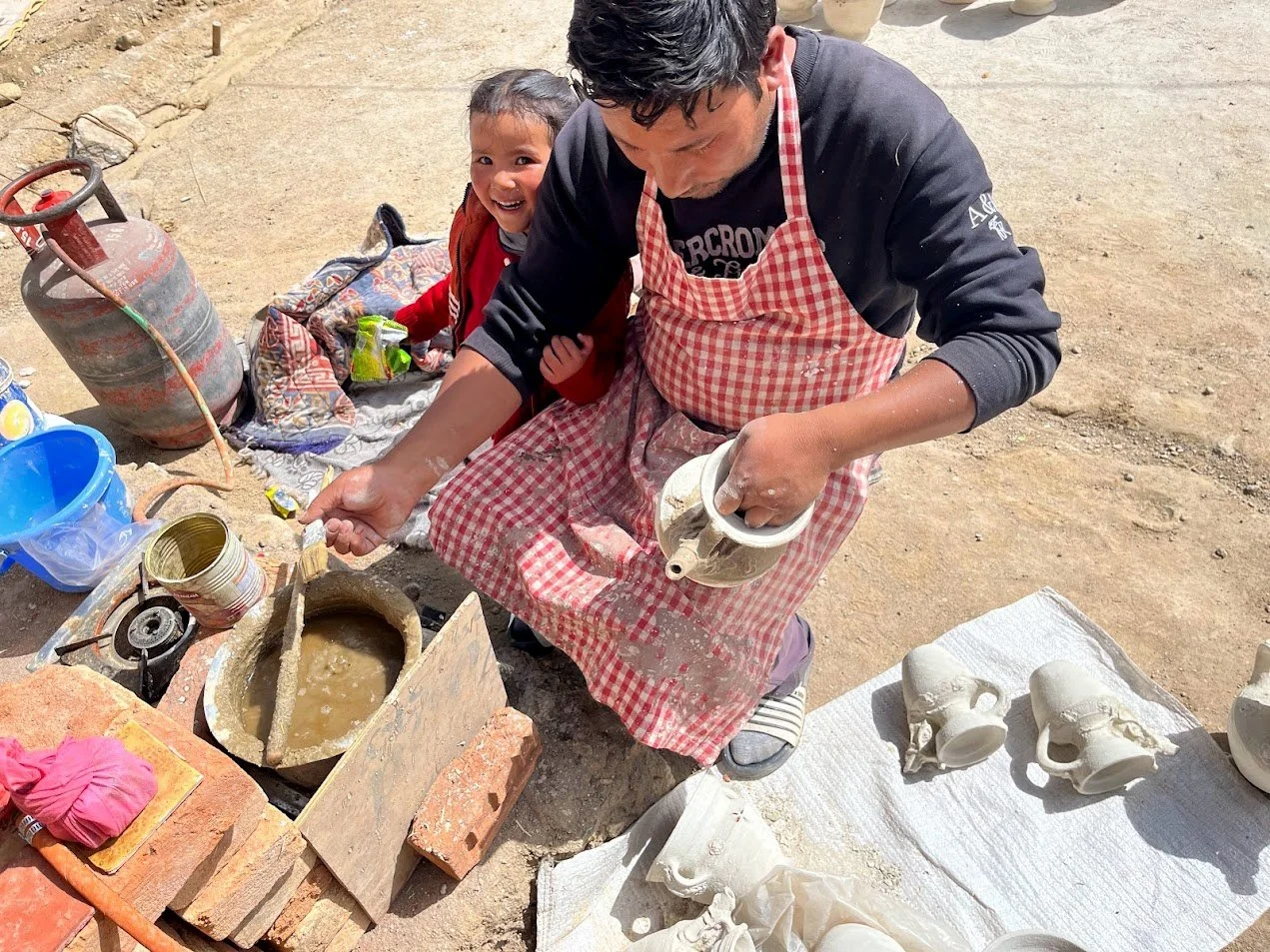
Adding a second coat once the first is dried
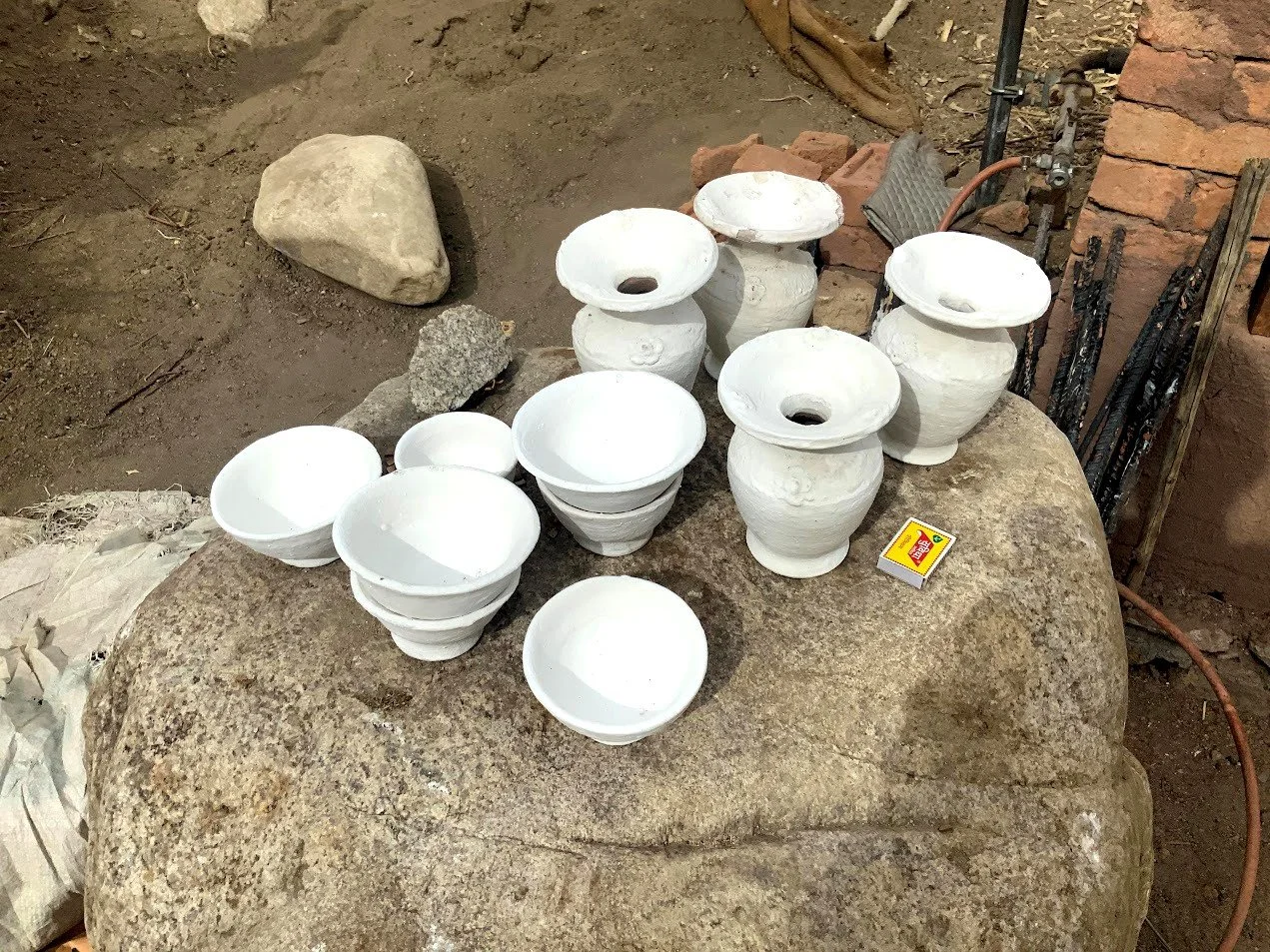
Drying the Glazed pots before firing
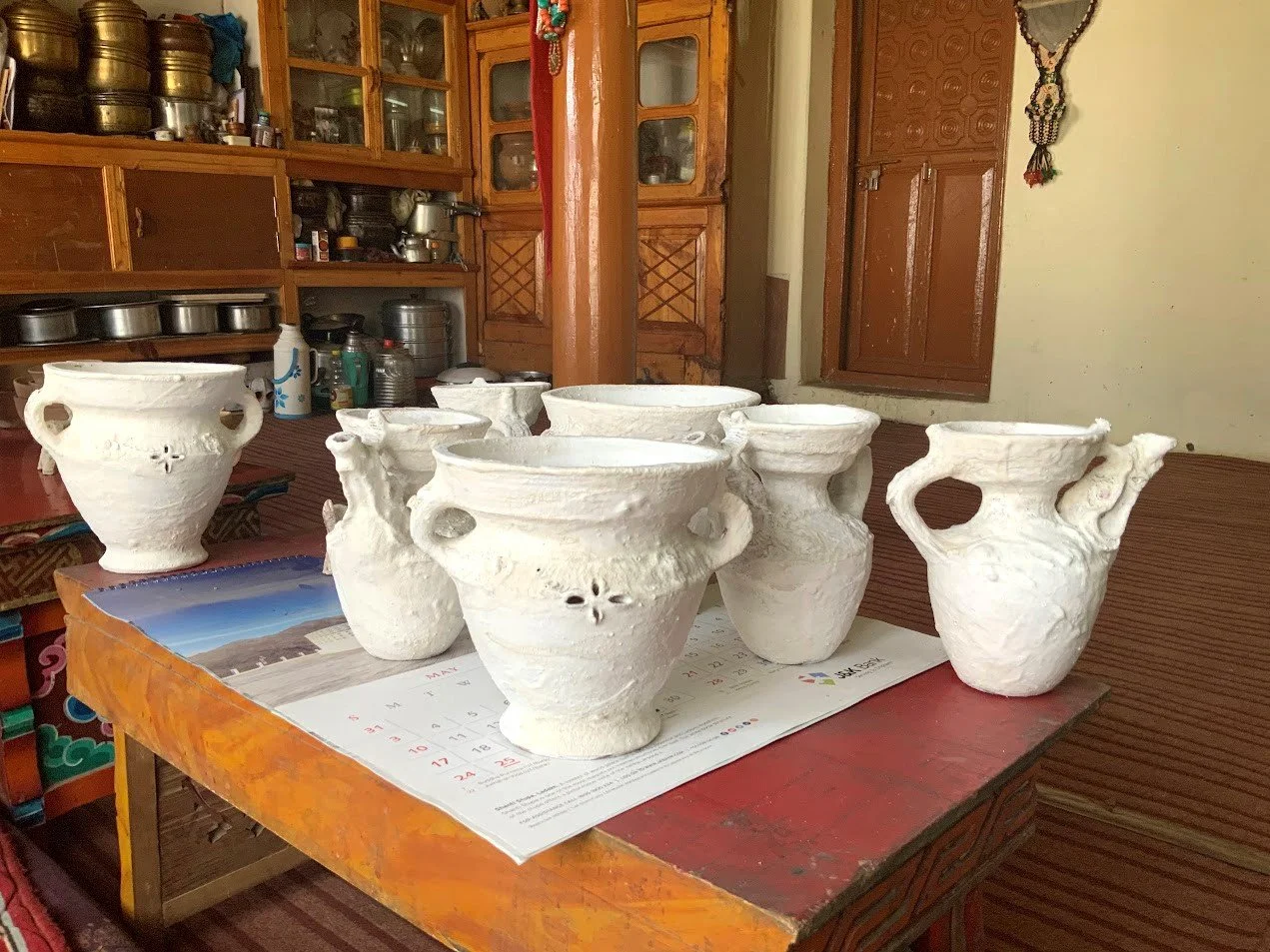
Drying the Glazed pots before firing
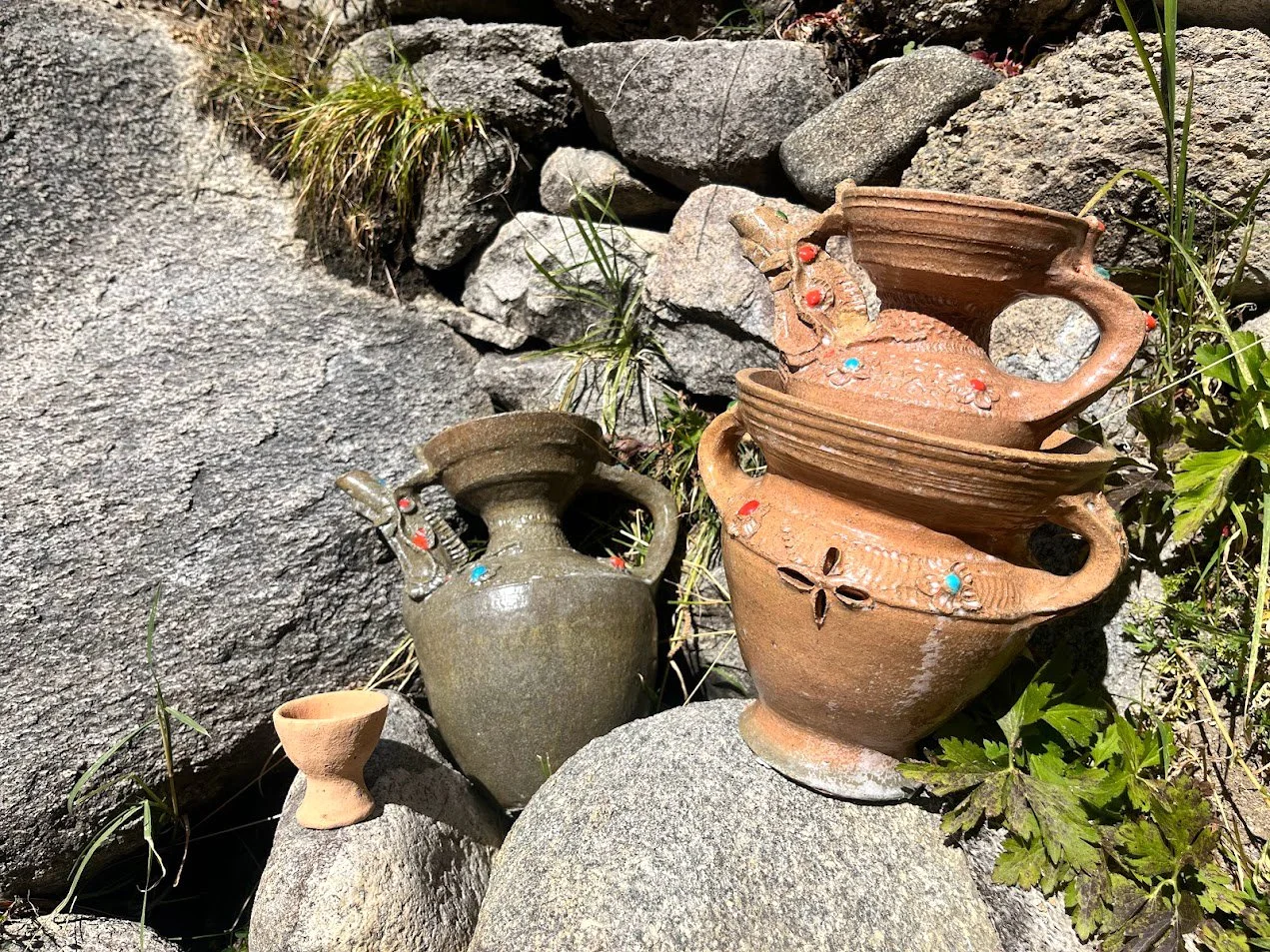
Glazed and fired Tibril and Meslang
PROCESS
The powder is boiled in water over a slow flame for around two hours. The hot glaze liquid is applied to the pots using a tool made of woolly sheep skin tied to a wooden stick. The pots are then cooled in the shade, allowing the glaze to set.
The glazing firing setup resembles pit firing. Glazed pots are spaced apart, separated by tin sheets with perforations along the sides to allow heat flow. The sheets placed on top are left unperforated to prevent dung ash from falling onto the glazed surfaces. Small tin sheets are placed beneath each pot.
Conclusion
This way of pottery is inseparable from the land it comes from. Each step carries the memory of those who practiced it before, shaped by seasons, scarcity, and care. The process asks for patience and attentiveness for listening to the clay, the weather, and the rhythm of the day. What emerges is not only a vessel, but a quiet record of place, time, and human presence, held together by hand, earth, and fire.