Our Story
story of pottery in likir
Perched on the edge of Likir village, 60 km west of Leh, lies our home, farm, and earthenware pottery studio. The roots of our craft stretch back centuries, to the time of Ladakh’s kings, when each village was entrusted with a distinct responsibility.
The story of this craft is said to go back to King Lhachen Gyalpo’s reign in the 10th–11th century, when he assigned Likir the task of pottery-making due to the abundant clay found in the region. The nearby villages of Ney and Nyemo were tasked with collecting cow dung and grass for firing the pottery. In those times, every household in Likir was engaged in the craft, shaping and firing clay into functional wares essential to daily life.
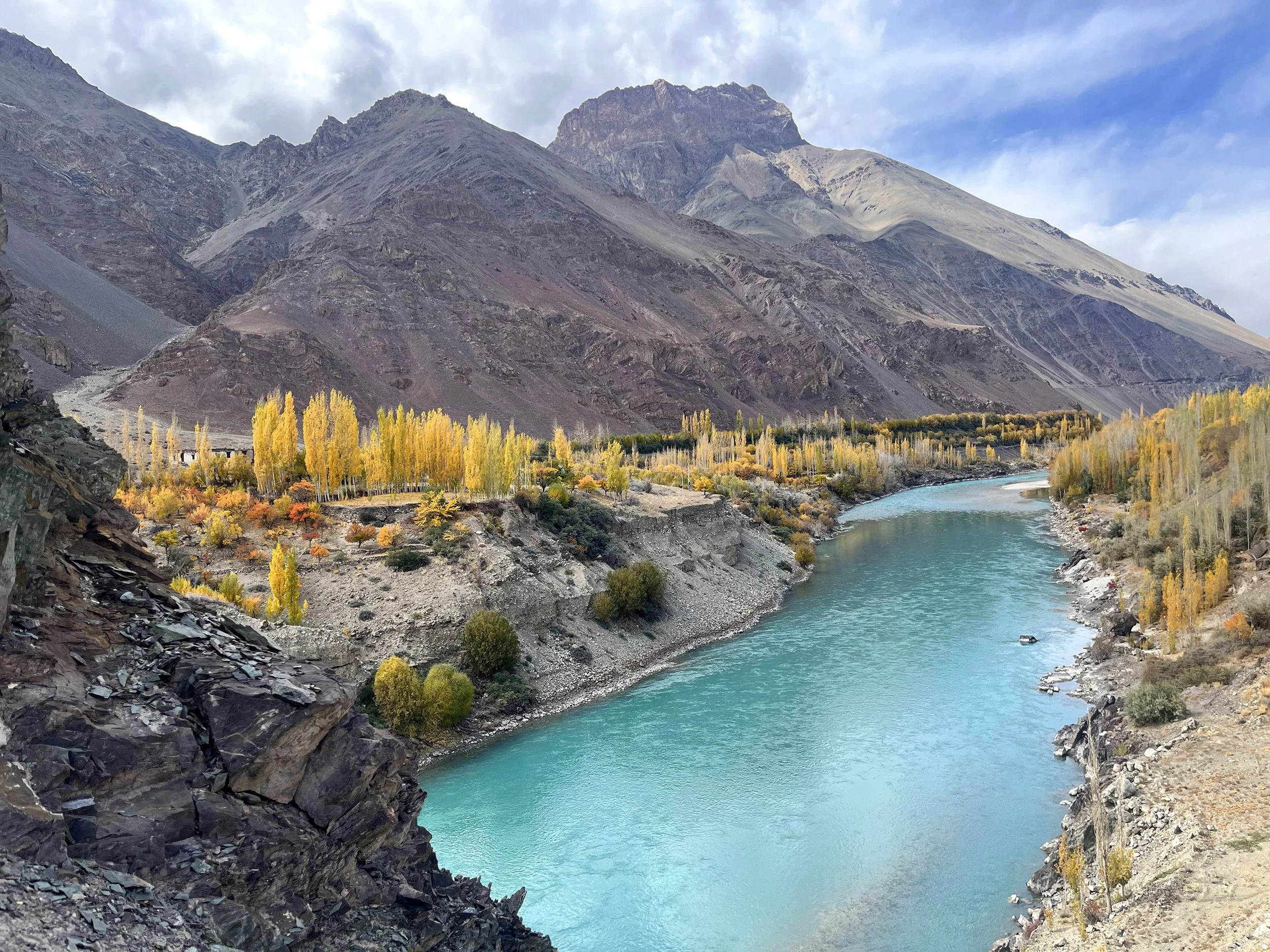
Our craft is a deep dialogue with the ladakhi landscape.
Over generations, this practice became more than just a livelihood. It was a reflection of deep environmental knowledge and resourcefulness. Ladakh, a high-altitude cold desert, presents extreme climatic challenges and scarce resources. Yet, the potters of Likir thrived, adapting their techniques to the land’s limitations and transforming natural elements into enduring, functional art.
With the opening of Ladakh to the outside world in the 1970s, modern education and job opportunities in tourism and the army lured the younger generation away from this labor-intensive craft. As a result, pottery, once integral to village life, dwindled, taking with it an irreplaceable connection to the land and a vital part of Ladakh’s material culture.
Clay &
our Family
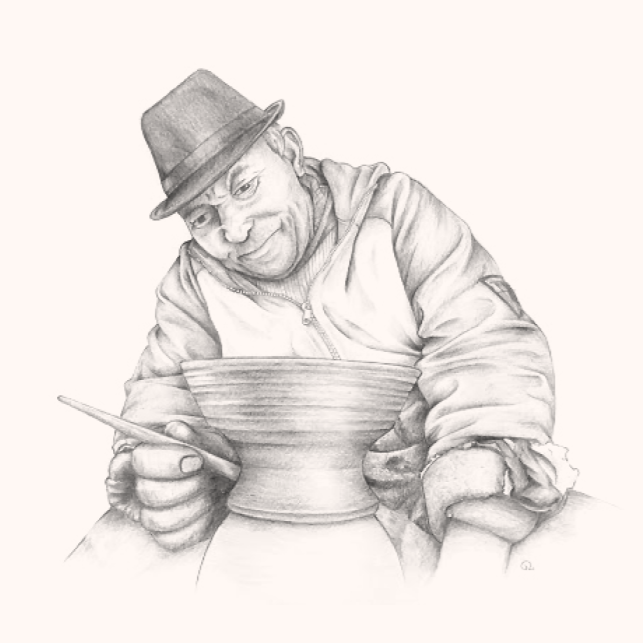
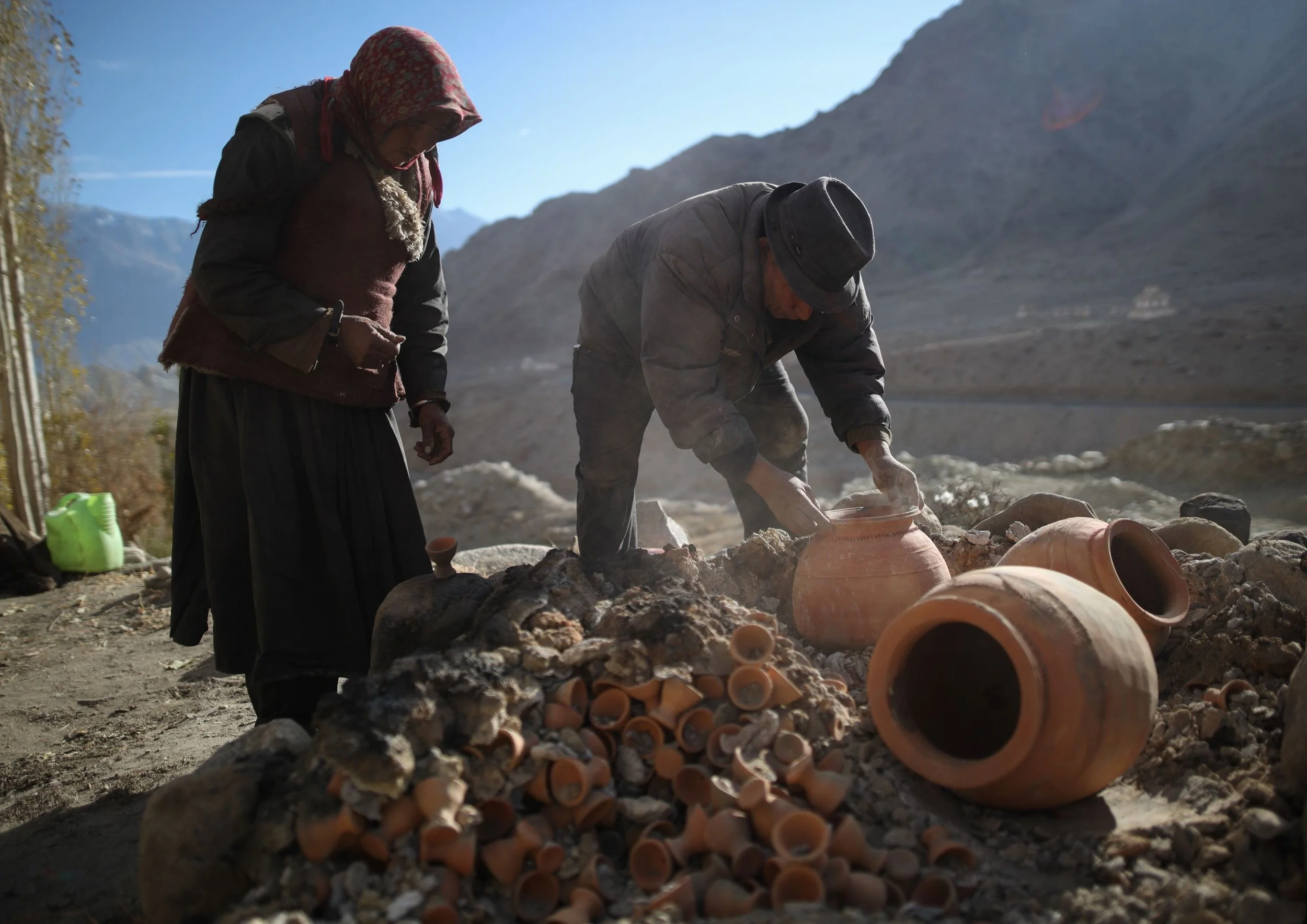
Around 1975, at the age of 15, our Abba’ley (father) Lamchung Tsepal began working with clay. His journey into pottery was not born from choice but necessity. After losing his father, he turned to the ancestral craft to support his family, struggling under loss and debt.
He sought to learn from the village elder, Meme Eshey Morup, but was not taken seriously. Undeterred, Abba’ley observed him at work, absorbing each movement, each process, until he grasped the essence of the craft and mastered it.
As the years passed, fewer and fewer villagers continued the tradition. Eventually, Abba’ley was the last potter in Likir. Yet, he remained devoted to his craft, evolving it to meet contemporary needs while keeping the craft alive. He collaborated with the village Thangka painter to incorporate dragon-inspired relief work on teapots, and experimented with colorful glass beads and floral motifs, blending heritage with innovation.
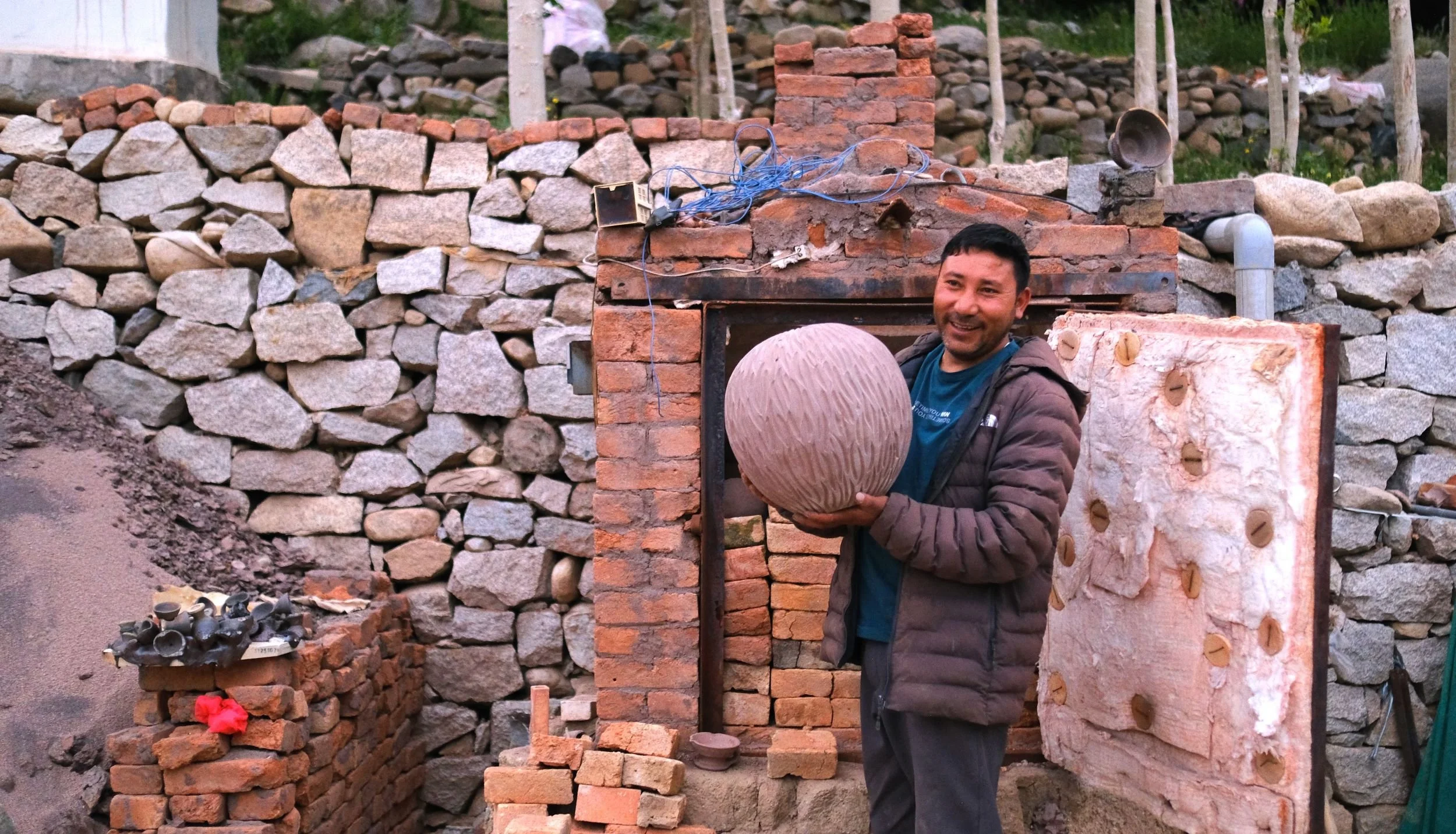
In 2006, his son Rigzen Namgail met with an accident that kept him homebound for several months. During this time, he learned the craft under his father’s close guidance and went on to master it. Over the years, Abba’ley and Rigzen have trained many villagers, including women’s self-help groups, local youth, and visitors from around the world. Together, they have collaborated with several government and non-profit organisations to teach, promote, and exhibit the craft across India.
In 2022, the National Institute of Design, under the USTTAD programme, conducted pottery workshops in Likir and Ahmedabad. Rigzen led the training, introducing 20 villagers to traditional techniques while also exploring new forms and product ideas to adapt the craft for contemporary needs.
In 2026, he taught 18 NID students as part of an International Open Elective, sharing the techniques of Likir pottery in collaboration with Shilp Sangam. In the same year, he received the Leh District Award for his work in preserving the age-old pottery tradition of Likir.
Preserving the craft
With each passing generation, traditional crafts face the risk of fading into memory. The revival of Ladakh’s pottery tradition is not just about preserving an art form, it is about safeguarding a way of life, an ancestral connection to the earth, and the wisdom embedded within it.
Revival efforts must go beyond mere documentation; they require active training, awareness, and opportunities for practice. With increased exposure, new learnings, and creative interventions, the craft can find its place in contemporary society, both as a cultural heritage and a sustainable livelihood.
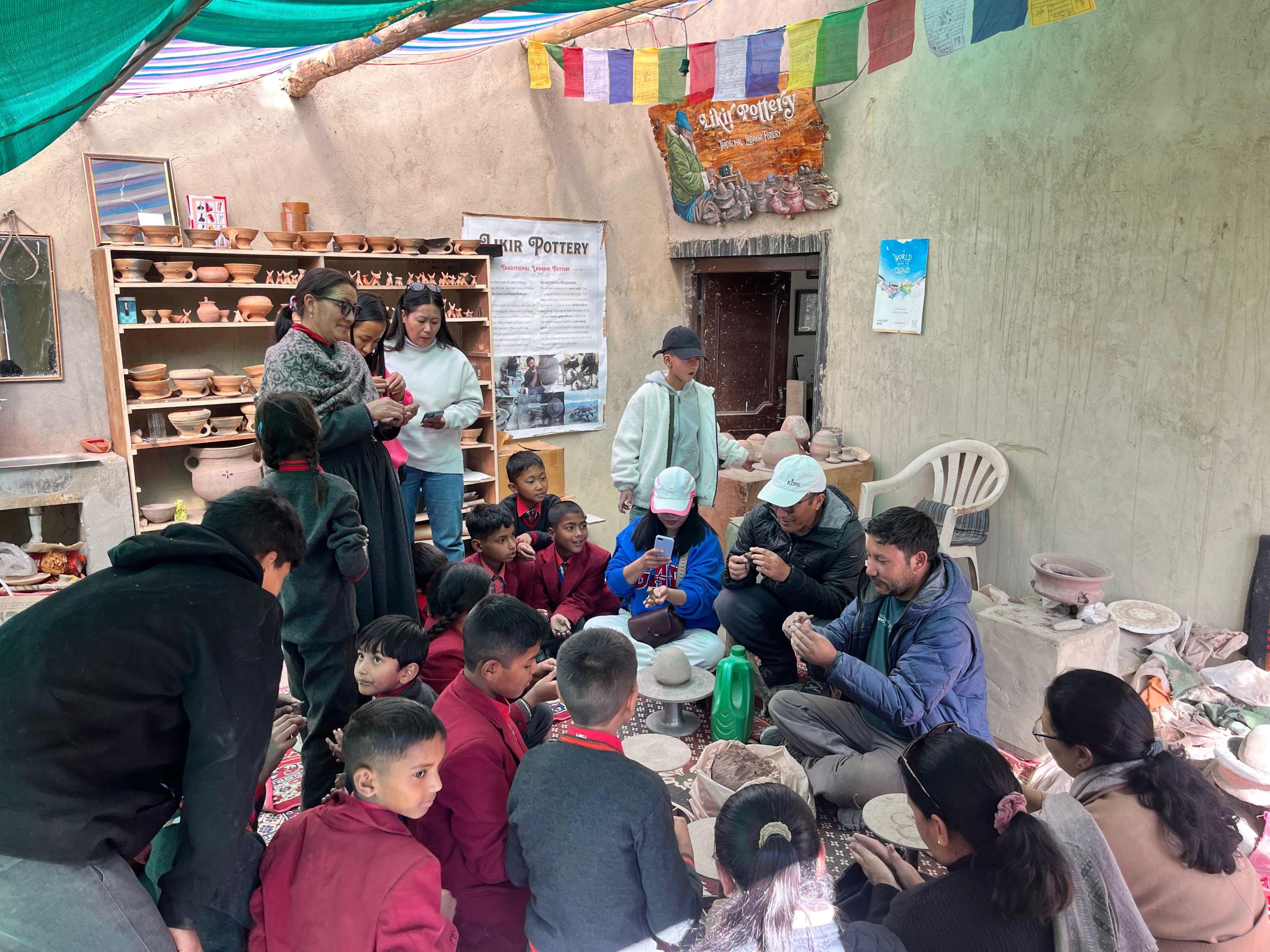
In recent years, there has been a growing demand for Ladakhi pottery, both among locals and visitors eager to learn this ancient technique. This has renewed the interest and respect for the craft among the villagers. However, with so few potters left, and local market flooded with products from other parts of the country, there is an urgent need for structured programs that provide exposure, skill enhancement, and market opportunities to sustain the craft.
The craft of pottery in Likir is more than just clay and fire. It is a testament to resilience, adaptation, and an intimate relationship with the land. While modernization has pushed many traditions to the brink of extinction, we believe in the power of storytelling, collaboration, and hands-on learning to breathe life back into this fading craft.
How can you
contribute?
You can be part of this journey in simple and meaningful ways. Stay with us, learn from the clay, and experience the rhythm of life around the wheel.
Join a workshop, support handmade pottery, and help keep traditional knowledge in circulation. Share our story, collaborate with us, or simply spend time here listening, observing, and learning.
Every visit, conversation, and shared moment helps keep this craft alive, for today, and for generations to come.